Search This Blog

Wednesday, March 26, 2014

'Here Comes the Navy' DVD: Cagney Fought the Military and Someone Won

Here Comes the Navy (1934)
Watching the DVD release of the 1934 James Cagney film "Here Comes the Navy" clearly shows how that flick earned the dual honors of a nomination for a "Best Picture" Oscar and inclusion in the Warner Archive library during the celebration of the five-year anniversary of this great descendant of former Warner division Rhino.

The action is this great drama with wonderful touches of comedy starts with a fateful Popeye and Bluto/Brutus meeting between Cagney's Chesty O'Connor and Chief Petty Officer (with the emphasis on petty) Biff Martin. The equally great (and real-life Cagney friend) Pat O'Brien plays Martin.

Martin getting into a war of words that escalates into an exchange of punches with O'Connor regarding these men goading each other when the tour that Martin is leading through a shipyard comes across iron worker O'Connor on the job perfectly sets the tone for the film. Their initial meeting is a riveting encounter on a couple of levels.

Reminiscent of the hilarious elaborate revenge schemes on the classic '90s sitcom "Seinfeld," Martin getting the better of O'Connor prompts the latter to join the navy to get a chance to even the score. O'Connor seeing Martin with Martin's loving and hubba hubba sister soon after joining him on the U.S.S. Arizona, which was later memorably sunk during the attack on Pearl Harbor, prompts O'Connor to enhance his planned revenge on his (largely one-sided) nemesis.

Gloria Stuart, who is best known to modern audiences for her uber-awesome job in "Titanic," does a great job playing Dorothy Martin as a smart and sensitive woman who greatly outshines Olive Oyl in keeping her brother and her suitor from pummeling each other and in getting them to respect her wishes regarding the other.

The talent of the three leads and the special chemistry that they share are a large reason that this movie with a decent story rises above the typical films of the day. Each fully gets into his or her role and relishes the inter-connected relations.

A B-story revolves around the resistance of O'Connor to adapt to the discipline and other values associated with Navy life and the efforts of that branch of the service to get O'Connor to shape up or ship out.

The following preview clip, courtesy of YouTube, of "Navy" offers a good sense of both the performance of Cagney and the plot involving the conflict between Cagney and the Naval lifestyle.


A scene in which Cagney dons black face is not uncommon for films of that era (and a handful of later ones) but serves a more noble cause and is much less offensive than similar scenes in other movies.

All of these elements add to a film that is wonderful nostalgia for members of the greatest generation and an undiscovered gem for fans of the films that first entertained those folks.

Anyone with questions regarding "Navy" is welcome to email me; you can also connect on Twitter via @tvdvdguy.





 

Tuesday, March 25, 2014

'The F.B.I." S7 DVD: This Season Its Personal

The FBI: The Complete Seventh Season
Warner Archive recently releasing a six-disc DVD set of the 1971-72 seventh season of the hit anthology true-crime series "The F.B.I." leaves only two seasons of this program unreleased. The pattern of releases indicates that the eighth and ninth season will hit actual and virtual store shelves by the end of 2014.

Readers who are unfamiliar with this terrific series that features Efrem Zimbalist, Jr. as textbook intrepid FBI agent Inspector Lewis Erskine interacting with awesomely cast current, faded, and upcoming stars as perpetrators, victims, and plain ole innocents in stories based on actual F.B.I. cases are asked to please refer to the Unreal TV review of the fifth season review of this series. This posting also discusses the greatness of the library of great Quinn Martin productions from the '60s and '70s to which "The F.B.I." belongs.

Folks who are interested in the thoughts of Unreal TV regarding the sixth season of "The FBI" are welcome to click this link. Folks who want these thoughts regarding the eighth season must use their time machine to travel forward a few months.

The seventh season continues the tradition of excellence that the prior seasons established. One observation based on watching 9 of the 25 episodes, including a special two parter titled "The Mastermind," is that an unusually high percentage of these episodes involve a crime with a personal element.

The season premiere, which has the typically dramatic title "Death on Sunday," has a professional football player targeted by a blackmailer who is seeking revenge for an incident that occurred several years before.

The second episode, titled "Recurring Nightmare," has a late-teens girl abducted for the purpose of forcing her to lead the former partner-in-crime of her father to the loot that said parent hid years ago. Much of the drama relates to the girl having blocked the earlier traumatic injury from her memory.

"The Deadly Species" from much later in the season is a wonderful especially pulp fiction/film noir episode about a woman who commits a series of robberies with the aid of her himbo du jour for the purpose of funding her search for her ex-husband and son. Said quest involves hiring a stereotypical down-on-his-luck private investigator. Negotiations with said gumshoe regarding a daily fee and reimbursement for expenses are particularly amusing.

"Species" additionally well illustrates the use of guest stars in "The F.B.I." and other Quinn Martin productions. James Hampton, whose popularity is quickly fading by the early '70s, of the '60s sitcom "F Troop" plays one of the male molls. Future Beiber-like pop sensation Leif Garrett plays the son of the woman.

The episode titled "The Corrupter" has future "Corvette Summer" star Mark Hamill playing a young guy in an informal gang formed by a slightly older ringleader.

The following clip, courtesy of YouTube, provides a decent sense of the series and includes scenes with Hamill's character; if filmed later in Hamill's career, this scene would have clearly show that despite any pleas from that "guy" that Luke be a Jedi tonight that Luke may have been a Jedi before but was not a Jedi once more. (Thank you "The Simpsons.")


The episode titled "Dark Journey" is one of the more memorable of the seventh season. This unusually light and mildly campy outing has character actor Claude Aikens playing a traveling conman who teams up with his daughter, played by future "Bionic Woman" Lindsay Wagner, to bilk folks in schemes that involve Aikens' character presenting himself as actual but reclusive individuals.

The cheesy elements extend beyond the fairly standard cons to Aikens' character running afoul of bad guys who are tougher than him leading to his involuntary involvement in a robbery. Having said thugs hold Wagner's character hostage is icing on the cake.

Supporting actors in this one include Vic Tayback in his pre "Alice" days and William Schallert, who plays father figures in the '60s sitcoms "The Many Loves of Dobie Gillis" and "The Patty Duke Show."

The season finale "Escape to Nowhere" somewhat follows the "personal" theme of the season in having a not-so-bright crime boss with a strong motive for not wanting an escaped convict recaptured operate a not-so-covert search for that man that parallels the pursuit of Erskine and his team. An inevitable colliding of worlds makes for good drama and ends the season on a high note.

The final outcomes regarding these true-crime stories are that Erskine always gets his man (or woman) and that the evil that lurks in the heart of man (and woman) provides plenty of material to keep "The F.B.I." fresh well beyond its nine-year run.

Anyone with questions or comments regarding "The F.B.I." is welcome to email me; you can also connect on Twitter via @tvdvdguy.


Monday, March 24, 2014

'Free and Easy' DVD: Keaton Speaks

Free and Easy/Estrellados Double-Feature
As the recent review on the Warner Archive DVD release of the early and comedic version of the classic Judy Garland drama "A Star is Born" "What Price Hollywood" promises, this review shares thoughts  on the similar 1930 film "Free and Easy." This tale of a small-town beauty queen seeking Hollywood stardom is primarily noted for being the first "talkie" in which silent-film comic genius Buster Keaton appears.

Archive makes this release even more special by including it in the year-long celebration of Archive's fifth birthday. In this case, Archive is including the full-length Spanish version of "Easy," which is titled "Estrellados."

Archive explains on the back cover of the "Easy" release that studios typically filmed these foreign-language versions with a cast that spoke said language at the same time as the American version. (Keaton stars in both versions.) This practice helped overseas sales of the film.

"Easy" opens with recently crowned Miss Gopher City, Kansas Elvira and her overbearing mother boarding a Hollywood-bound train to pursue Elvira's dream. Anita Page, who made several silent and early talkie films, does a great job as Elvira. Page also outdoes Betty White by appearing in films up until her September 2008 death at the age of 98.


The aptly named Trixie Friganza does equally well portraying "Ma" as a stage mother who makes Charles Bronson look like a wimp and Patsy Ramsey seem like June Cleaver.

Keaton plays Elmer Butz, who is a bumbling manager thrust on Elvira and Ma. This role allows Keaton to show off the slapstick talent that has made him a genuine American idol. His best bits include running for the train earlier in the film and mercilessly being repetitively grabbed, thrown to the ground, and stomped on in a later segment.

Keaton additionally wonderfully plays the stooge in numerous scenes that simultaneously prompt laughter and genuine sympathy. Achieving this is an even neater trick than mastering a prat fall.

The following clip, courtesy of YouTube, of an "Easy" scene illustrates Keaton's talent for schtick (slap and otherwise) and the wonderful silent film vibe that remains in this infancy of talkies,


Leading man Robert Montgomery, who both worked with "Star" and "Hollywood" director George Cukor and fathered uber-awesome "Bewitched" star Elizabeth Montgomery, plays the role of established star who takes Elvira under his wing in "Easy."

Much of the "Easy" fun relates to watching Keaton get into the act in every sense of the word; seeing him suffer varying forms and degrees of abuse from Ma is equally entertaining.

Audiences will also delight in a vivacious and amusing cameo by charming child star Jackie Coogan years before he learns that his parents stole all his earnings and decades before playing Uncle Fester on the classic '60s sitcom "The Addams Family."

The absence of some elements of the stereotypical Hollywood happy ending further sets "Easy" aside and reflects the depth that sets Keaton aside from contemporaries who lack his substance.

The most important takeaway from all this is that the plethora of talent-competition reality shows that populate prime-time schedules show that Americans still have not tired of tales of "nobodies" who dream big and often suffer in one form or another at the hands of those whom they meet on starting to ascend the ladder of success. The difference is that Keaton et al do a much better job than Cowell and his ilk.

Anyone with questions or comments regarding "Easy," Hollywood," or "Star" is welcome to email me. You can also connect on Twitter via @tvdvdguy.



Sunday, March 23, 2014

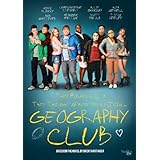
'Goegraphy Club' DVD: Mapping Out Good Global Support for LGBT Teens

Product Details
The witty and charming modern-day teen dramedy "Geography Club," which Breaking Glass Pictures is releasing on DVD on March 25, 2014, is the latest example of Glass giving fellow Philadelphia producer of independent gay and lesbian fare and other art-house films TLA Entertainment a run for its money in the same manner as all-time Unreal TV favorite Warner Archive outshines Shout! Factory on numerous levels.

It is also fair to assert that the late great John Hughes might have made "Club" if he produced films today.

The humor and overall honest tone of "Club" creates a moderate desire to man up and hit the young adults section of the local Barnes and Noble to buy the Russell Middlebrook novels by Brent Hartinger on which the film is based. Considering that that is as unlikely as being able to buy an uber-tasty Chick-fil-a chicken biscuit sandwich in Boston, one can only hope and pray that Glass will produce more films based on those books.

The titular club is an organization that a small group of LGBT high school students formed to covertly meet to openly gossip and candidly discuss issues that they are facing in that order. The idea is that no one who is not in on the secret would want to join a club apparently centered around such a boring topic.

Club member Min catching (then confused) Russell making out with dreamy quarterback Kevin during a weekend school outing (of course, pun intended) prompts her to invite Russell to literally and figuratively join the club.

Russell portrayor Cameron Deane Stewart, who clearly exceeds the age of his character by at least eight years, does a nice job playing Russelll as an everykid.

This boy next door who is meeting the world seems to fit in well but does not have a perfect life even before beginning to realize that he like boys;  he also balances his sensitive side with a playful nature and a good sense of responsibility. The overall image is that he belongs to the class of nice young men who work at the pizza place down the street.

Russell does a great gazelle impression regarding how he cautiously observes and ultimately (but still secretly) embraces the club while even more covertly embracing Kevin, who is still scared to venture from the dark recesses of the wardrobe.

The manner in which Justin Deeley, who is perhaps best known for his role in the recent "Beverly Hills 90210" remake, sensitively plays Kevin both makes us wish that he would find a portal to the fantasy land of Narnia in the dark and allows for creating a suspension of disbelief regarding that mid-20s man playing a 17 year-old.

Kevin convincing Russell to join the football team to provide them a cover for hanging out without it appearing gay causes Russell further angst regarding pressure to go along with other team member's anti-gay remarks and a brutal bashing of an intensely quiet and nervous member of the Geography Club.

The overflowing similarities between "Club" and "Glee" are so obvious that one expects the kids in the film to break into a rendition of "I Am What I Am" from the musical version of "La Cage Aux Folles" at any moment. Having Alex Newell, who plays an effeminate cross-dressing teen on "Glee," play an effeminate teen-in-denial regarding his placement on the Kinsey Scale on "Club" only adds to the vibe described above.

The following spoiler-filled trailer, courtesy of YouTube, provides a good sense of the appropriately dramatic tone of this film and a hint of laugh-out-loud humor in it.


Fanboys of all ages will rejoice in "Club" producer Michael Huffington casting "Quantum Leap" and "Star Trek: Enterprise" dreamy hunk Scott Bakula as the stereotypical television veteran in the role of Kevin's very liberal father. Folks who encounter Bakula on his real-life Sunday morning forays to the convenience store know both that he is tailor-made for the role and that he apparently proudly favors a military form of dress.

"Saturday Night Live," "Mean Girls," and "Suburgatory" fans will be equally pleased to see Ana Gasteyer as an equally awesome wacky health teacher who truly places the needs of her students above her own; her scene in which she confronts a shoe flinging boy is one of the best in the film.

The year-end report for this high school based film is that it earns a solid B+. It largely avoids casting hyper and/or overly emo doe-eyed twinks in roles that fit those personalities but still succumbs to some stereotypes. It also offers suffering LGBT teens limited hope for happier lives but wraps things up a little too neatly.

Anyone with questions regarding "Club" is welcome to email me; you can also connect on Twitter via @tvdvdguy.



Friday, March 21, 2014

'Beware the Batman: Shadows of Gotham' S1 Part 1 BD: Awesome Batman Series for the 2010s

Beware the Batman: Shadows of Gotham Season 1 Part 1 (BD) (13eps)
Warner Archive following up its December 2013 Blu-ray release of the first season of the wonderfully campy Cartoon Network series "Batman: The Brave and the Bold" with an equally awesome February 2014 Blu-ray release of "Beware the Batman" S1 Part 1 shows that Archive fully has the backs of old and new present day batfans.

Those of us who grew up with both the wonderfully mod '60s Adam West series and the '70s incarnation of the Justice League in the "Super Friends" series love the silly "Brave" series; true fanboys and budding fantweens and teens will derive just as much joy from the darker "Beware."

The "Beware" release a few weeks ago also created restrained hope that Archive would adopt the similar Cartoon Network show "Green Lantern: The Animated Series." Both series present a very modern take on classic heroes in video game style CGI forms, which are tailor-made for Blu-ray, that have action sequences that likely find their way into those games.

Learning earlier this week that Archive released the complete "Lantern" series on March 18, 2014 was very exciting. Unreal TV is checking the mailbox every day for this one and will review it in mid-April 2014.

The following clip, courtesy of YouTube, of the promo for "Beware" does a great job conveying the aforementioned visual style and fast pace of this series.


The "Beware" adventures do not follow the same open-ended quest story arc as "Lantern" but do have continuous themes, which include the titular character grooming someone to be the equivalent of Robin.


"Beware" also retains the awesome visual and story-related atmospheric elements of the Christopher Nolan "Batman" trilogy. Our animated hero still uses darkness to create fear and realizes that he is as damaged as the crazed villains whom he pursues. 

The pilot sets the tone of the new series by establishing that Bruce Wayne's butler/Batman's assistant Pennyworth, Alfred Pennyworth is a former MI-6 operative who relishes assertively speaking out of turn when necessary. This episode additionally follows the modern trend of presenting one-percenters in a very negative light.


Villains who come along for the ride in the League episodes include the chaos-loving Anarky (voiced by Wallace Langham of the '90s sitcom "Veronica's Closet" and the current procedural the original "CSI.") and someone from the universe of the wonderfully wacky Magpie.

As a side note, many other notable veterans of screens large and small (and real-life and animated) and some voice actors from prior "Batman" series lend their talents to this series. One example of the latter is Cree Summers of the '80s sitcom "A Different World," who also provides the voice of Max in the uber-awesome 1999-2001 animated series "Batman Beyond."

Including subtle homages to classic films is another fun element of "Beware." Scenes in which Alfred launches a ninja-style attack on Bruce Wayne as a training exercise has great shades of the classic "Pink Panther" film series, and one adventure very aptly brings Batman to a house that looks very much like the Bates abode in the "Psycho" films and the current "Bates Motel" television series.

Multi-story arcs revolve around a new innovation that Bruce Wayne's company has developed and battles with Lady Sheba and the League of Assassins for possession of a mystical article known as the soultaker sword, which makes Exclaibur look like a plastic souvenir from a Renaissance fair.

The final episode in the set nicely unites the themes from the 12 that precede it; it offers the bonuses of some great flashbacks with a very arrogant tween Bruce Wayne and a separate cliffhanger that has batfans drooling for Archive's release of the second half of of "Beware's" first season.

The dramatic conclusion to all this is that "Beware" offers long-term batfans a chance to watch a fun and exciting series starring the caped crusader/dark knight in a format that the wifi keyboard kids of today will equally enjoy.

Anyone with questions or comments regarding "Beware" or anything else Batman related will waste their time shining a symbol of a sofaspud in the sky but are welcome to email me; you can also connect on Twitter via @tvdvdguy.


Thursday, March 20, 2014

'What Price Hollywood' DVD: Terrific Screwball Comedy Version of "A Star is Born'

What Price Hollywood?
Warner Archive's DVD release of the 1932 screwball comedy "What Price Hollywood" is another recent example of Archive providing a "shouldabeen a classic" film new life.

One particularly awesome aspect of "Hollywood" is that it is a George Cukor movie about a starlet whose career soars as her marriage crumbles and her benefactor goes into a tailspin 22 years before Cukor presents a more dramatic version of this tale in the classic film "A Star is Born."

"Hollywood" is also notable for having its DVD release coincide with releasing "Free and Easy" from 1932. This film, which is the first talkie for comic genius Buster Keaton, tells the tale of a small-town girl from Gopher City, Kansas who tries to makes it big in Hollywood with the help of a matinee idol. Unreal TV is reviewing this one the last week of March 2014.

Aside from the fine company that it keeps, "Hollywood" independently shines in large part thanks to Constance Bennett of the "Topper" films doing a great job as a Brown Derby waitress whose chance encounter with film director in decline Max Carey quickly has her reborn as movie star Mary Evans.

The following witty preview clip, courtesy of YouTube, shows how this wannabe star is immaculately conceived.


Cukor shows off his well-known talent by using a very dreamy montage to convey both Mary's quick rise to the top and a subsequent scandal that threatens her success. Suffice it to say that two of the three main characters in "Hollywood" buy the farm but not necessarily irrevocably.

The trappings of Mary's success include a seemingly fairytale marriage to wealthy playboy Lonny Borden, played by Neil Hamilton. Hamilton is best known to modern audiences as Commissioner Gordon of the campy '60s "Batman" series.

Bennett and the rest of the cast strike a great balance between the over-emoting that is characteristics of silent films and live theater and the more deadpan style of acting that characterizes most modern performances. She is particularly skilled at communicating with her expressions and stage business.

An early scene in which Mary does hilariously horribly regarding her first attempt at acting is both a perfect example of Bennett's skill and one of the best scenes of the film; Bennett additionally shines in a subsequent series of scenes focusing on her meeting with Hamilton's Borden and their eventful first date, which could have justified describing the uniting of this millionaire and this pretty girl as "when they met, it was murder."

Other well-portrayed Hollywood stereotypes include the autocratic German-born film producer and a gossip reporter who is a Hedda Hopper clone six years before Hopper transitioned from appearing in films (where she developed a reputation as "Queen of the Quickies") to writing about the people who bring them to us.

The last-minute happy ending related to this review is that this feel-good film from 1932 is a great choice for 2014.

Anyone with questions or comments regarding "Hollywood" is welcome to email me; you can also contact me on Twitter via @tvdvdguy.


Wednesday, March 19, 2014

'I'll See You in My Dreams' DVD: Danny Thomas as a Man Who Wrote the Songs That Made the Whole World Sing

I'll See You in My Dreams
Warner Archive's recent release of the 1952 Doris Day musical "I'll See You in My Dreams" provides a good chance to see Day in an early
role before becoming one of Alfred Hitchcock blondes and then moves onto the awesome '60s comedies that provided the fodder for countless Sunday afternoon marathons on independent UHF stations in the '70s.

Day plays Grace LeBoy Kahn, who meets future husband lyricist Gus Kahn literally during horse-and-buggy days. In a plot consistent with Day's films from the '60s, Danny Thomas does a wonderful job playing Gus as a working-class slob/aspiring song writer who is badgering Grace in her capacity as an employee of a sheet-music company.

Gus' persistence pays off in the dual forms of convincing Grace that he has talent and is a man who is worthy of her affections despite his numerous personalty flaws and fondness for cheap cigars; this leads to a personal and professional relationship that produces one successful song and a strong marriage.

In other words that are highly apt regarding Thomas, Grace finds one boy to love, only one boy to love. Gus is that boy.

The good folks at Archive share on the back cover of the "Dreams" release that that film includes 23 of the more than the 800 songs that Kahn wrote; this cliff notes version of that man's biography states that the better known compositions in this catalog include "It Had to Be You," "Makin' Whoopee," and the especially uber-awesome "Love Me or Leave Me."

Gen Xers and Baby Boomers on the Gen X cusp will recognize many of these songs from '60s sitcoms. The reason for including these tunes in those shows is that the fact that any song written in 1922 or before is in the public domain, which means that it can be performed with having to pay a royalty.

Gus' relationship with his wife, his roller coaster career, and his collaborations with well-known composers that include Walter Donaldson and George Gershwin provide good material for a film. Subtler aspects of his story are what make "Dreams" great.

Gus refusing to compromise his integrity or his pride regarding either his work or the periods in which no one is knocking on his door and he is essentially down to his last dime make him a fascinating character; it is also refreshing to see Grace both stand by her man for better or worse and to swallow her pride and/or risk the wrath of her husband to get Gus badly needed work.

Further, seeing the Lucy and Ricky Ricardo (or Rob and Laura Petrie) vibe that Day and Thomas emit when collaborating or performing is awesome; they are real troupers during a grueling tour of Army bases during WWI  (then known as the Great War) and perform an incredibly cute and very mildly racy rendition of "Whoopee." 

The following clip, courtesy of YouTube, of Day and Thomas performing "Whopee" does not show the "must-see" scene described above but includes great stills from the film that they made (kudos to folks who get that obscure reference) and how the song is a perfect showcase for their individual talents.


It is also nice to see that many themes in "Dreams" remain true today; many of the aforementioned Gen Xers who are currently unemployed or underemployed can relate to the extra blow that Gus experiences at the beginning of the Depression.

Folks whose computer skills are less than top-notch and do fully understand the concept of SEO realize how the crash of '29 coinciding with the increasing popularity of radio substantially reducing the market for sheet music and "discs" hit Kahn hard. The fact that popular tastes were shifting away from the style of music that Kahn wrote only pounded the nails a little deeper into the coffin in which his career was resting.

On a more general note, the fact that Kahn survived and had periods of thriving after 1929 awesomely shows that his supporters followed the tenets of a wise modern little-known philosopher; this sage recognizes that many difficult people that most of the world at best ignores and at worst brutalizes are merely creatively and/or productively frustrated. Kahn shows the value of giving these misfits a chance to shine.

The special features on this release truly warrant that designation. A 1951 documentary titled "The Screen Director" is a witty look at the important role of the titular professional in making a film. Richard L. Bare, who is arguably best known for directing episodes of the '60s sitcoms "Petticoat Junction" and "Green Acres" wonderfully directs this short in the style of educational films that provided school children in the '60s and '70s nice breaks from classroom instruction.

The second feature is the 1951 Foghorn Leghorn cartoon "Lovelorn Leghorn." This hilarious animated film has the titular rooster and the barnyard dog who is his nemesis using spinster hen Prissy as the unwitting dupe in their battle to torment each other. Prissy may lay eggs, but this offering does not come close to doing so. This one further has a "Petticoat" tie-in in that Bea Benaderet of that series provides the voice of Prissy.

Anyone who has questions or comments regarding "Dreams" or is interested in adding a productively frustrated DVD reviewer to their staff is encouraged to email me; you can also connect on Twitter via @tvdvdguy.


Monday, March 17, 2014

'Mandela: Long Walk to Freedom' BD and DVD; The Man and His Mission

Product Details
The biopic "Mandela: Long Walk to Freedom," which is being released on DVD and Blu-ray on March 18, 2014, is a nicely understated film about the late titular South African leader who indisputably had a huge impact on the 20th century and beyond.

Idris Elba, who is known for his multi-award winning titular role in the uber-awesome British series "Luther" and had a memorable run on the American version of "The Office," awesomely portrays Mandela as the equal parts inspirational figure and human being that the real-life man was. Elba demonstrates how Mandela can work up a crowd one moment, handle personal and societal strife extremely well the next, and move onto a cheerful night out with the boys (and the girls).

A more concise description of Elba's portrayal of Mandela is that other historic figures may have endured worse than that man but none have handled his or her personal hell and related struggle any better.

The following clip, courtesy of YouTube, of the trailer for "Walk" provides an excellent sense of Elba's performance and the overall power of the film.


An early scene shows a tween Mandela undergoing a tribal rite of passage, and the story quickly advances to a powerful scene roughly 15 years later. This scene depicts trial attorney Mandela as the subject of blatant scorn in open court solely based on the color of his skin.

"Walk" shows how this incident and the daily indignities that Mandela suffers in his segregated society ultimately results in joining (and becoming very active in) the African National Congress.

The overall message that the charismatic and intelligent Mandela conveys is that peaceful means are the preferred method for obtaining equality for the black citizens of South Africa but that violent tactics should be used if necessary.

One of the best lines of the film comes from the depiction of this era of Mandela's life; he tells a crowd that the South African government cannot arrest the entire black population if it resists the laws that deny them basic rights and that the white people will have to do their own mining, cleaning, etc. if they do arrest all those who stand up against the unjust system.

This activity ultimately leads to Mandela's well-known arrest and subsequent 27-year imprisonment on a charge of participating in an attempt to overthrow the government. The scene in which the sentencing judge explains his reasoning for his choice of punishment is a pivotal one in the film and the then-future of South Africa.

The ensuing portion of the film that depicts Mandela's time in a particularly tough prison environment in every sense of that word provides a very interesting representation of what he endures during those years. Being at the mercy of folks who belong to a system for which you have openly expressed great disdain is one of the roughest circumstances that anyone can imagine suffering through.

Throughout all this, the audience is treated to a nice look at the personal life of Mandela. His courtship of long-time wife Winnie is particularly well portrayed, and the audience is made to both admire and sympathize with her regarding how Mandela's imprisonment affects her.

The film then wraps up with the events that lead to Mandela's release from prison and subsequent political activity. His quiet dignity and wry wit during his meetings with top governmental officials from this period are truly inspirational and make anyone watching the film feel honored to take his long walk with him.

The special features include a documentary titled "Mandela: The Leader You Know, The Man You Didn't" and behind-the-scenes shorts.

The (not historical) footnotes to these ruminations regarding "Walk" are that it is a nicely condensed version of the significant and not-so significant events in the life of its subject over several decades of his existence. The almost certain bias of the filmmakers is not apparent, and everyone except hard-core Mandela scholars should learn several new things.

Anyone with questions or comments regarding "Mandela" is welcome to email me; you can also connect on Twitter via @tvdvdguy.


Saturday, March 15, 2014

'Cranford' DVD: The Real Housewives of Victorian England

Cranford DVD
BFS Entertainment's DVD release of the original 1972 four-part BBC mini-series "Cranford" demonstrates the wide range of British titles that BFS provides anglophile sofa spuds on this side of the pond.

The scope of BFS titles that Unreal TV has reviewed just in the past few months have included classic Britcoms, British documentaries (and one Daniel Craig docudrama) on the Western Front during WW I (known then as The Great War), the uber-brilliant dramedy "Minder," and a series of BBC reality shows that this site dedicated to "unreal" TV loved.

"Cranford" is based on an 1851 novel of the same name by Elizabeth Gaskell that tells the tales of the titular female-dominated market town. The choice of the leading ladies of this community to follow their personal form of feminist values extends to disdain of most men of the upper classes.

An early victim of this bias is a loud and somewhat boorish gentleman who hits the trifecta of being male, upstaging his female neighbors, and bringing a disliked railroad to the community. Consequently, it is very clear that he is as welcome in Cranford as a tea party leader would be at an Obama rally.

Miss Pole, played by the uber-awesome British sitcom veteran Pat Combs, is the leader of the pack and does a great job keeping her vicious circle in line. Her word effectively is law in this community.

Formidable spinster Deborah Jenkyns does a wonderful job enforcing Pole's law both in the community and her own home; this domination has both her younger sister Matilda "Matty" Jenkyns and visiting former neighbor Mary Smith firmly under her control and forces their maid to sneak her not necessarily suitable suitors into the kitchen in violation of the requirement of her employment that she not socially associate with any men.

Deborah contributes additional humor in the form of her efforts to keep up appearances regarding the reversal of fortune that she and Matilda experience following the death of their father, who is the rector (rather than Vicar) of Cranford. Asserting that burning only one candle prevents eye problems associated with a room being too bright is one of Deborah's best lines.

Other good humor relates to referring to the habits of "the young queen," an amusing tedious and trying tea party, and naivety regarding investments.

Problems that plague the ladies of Cranford during the roughly three hours of this series include the consequences of the regular deaths of characters, the proper manner for interacting with a titled woman who is coming to Cranford, how to respond when the manner of said VIP is other than expected, and the typical Victorian angst regarding ensuring that every interaction with men for every purpose that such interaction is appropriate does not violate any code of etiquette or decency.

These golden girls/designing women must additionally decide whether attending a magic show violates any church teachings, determine how to respond to the tangible and societal results of a serious financial crisis, and contend with a member of their group marrying someone whom the rules of polite society dictate is beneath her.

The epilog related to all this is that Cranford is a highly entertaining period drama that fans of "Downton Abbey,"  chickcoms, and reality shows alike will relish.

Anyone with questions or comments regarding "Cranford" is invited to email me; you can also connect on Twitter via @tvdvdguy.


Friday, March 14, 2014

'Southern Baptist Sissies' Stage Play: Del (Shores) Does "Dallas"


Product Details

The expertly produced film of the stage play "Southern Baptist Sissies" by Del Shores of the "Sordid Lives" film and television series and the U.S. version of the Showtime dramedy "Queer as Folk" is a crucial rude awakening. Uber-awesome LGBT film distributor Breaking Glass Pictures is facilitating experiencing this "must-see" look at the lives of very cute and sweet twinks by releasing it on DVD on November 11, 2014. 

Many folks familiar with the works of Shores will expect his John Waters style of dark humor at the expense of the population generally known as trailer trash only to be blown away by the intensity that Shores mixes in with his trademark memorable one-liners and outrageous characters.

The importance of this film about the titular quartet of young men struggling to reconcile their love of church and God with their highly respectable homosexual desires screams for fully listing its awards, which most certainly will continue accumulating, and theatrical screenings. Space limits require referring folks who wish this information to the facebook page for the film.

The fact that the following clip, courtesy of YouTube, of the trailer for "Sissies" portrays the scenes that provide the majority of the fodder for this review is a nice indication that your (at times humble) reviewer got this one right.


Shores awesomely starts "Sissies" with a terrific overall "Our Town" feel and an introduction to the incredible charm of the adorkable Emerson Collins (who could likely turn even the straightest boy gay with moderate effort) in his role as Mark, who narrates much of the film. Emerson's history with Shores includes a role in the "Lives" series.

The opening scene in which Mark and the boys in his band are offering an amusingly off-key rendition of a hymn in the Calvary Baptist Church in Dallas with breaks in which Mark makes witty asides regarding how gay men are denied the rewards that all others who worship God enjoy further adds to a sense that the audience is in for an evening of generally light theater.

This mood continues with Mark introducing effeminate (very talented) drag queen Benny (played by William Belli), quiet and low-key Andrew (played by Matthew Scott Montgomery), and butch jock/Mark love interest TJ (played by Luke Stratte-McClure), who instantly emits a strong vibe that a gay overture is as likely to prompt a punch in the face as a tongue down the throat depending on TJ's mindset at the time.

The best way to understand these characters and the actors who portray them are that they would be a perfect choice for a genuinely modern remake of the uber-awesome early '70s college-oriented Disney movies that star then-dreamy Kurt Russell.

"Lives" the series and "Will and Grace" star Leslie Jordan and the equally awesome Dale Dickey respectively play a stereotypically old southern queen and an aging alcoholic who frequent a gay bar that provides a setting for commentary on the not-so-nice aspects of a more mature gay life than our quartet is experiencing.

Jordan's Peanut has one of the best lines in the film in describing himself as a "social drinker." He explains this by stating that seeing someone else drinking prompts him to say "so shall I."

Jordan supplements light moments such as his bon mot with more poignant scenes in which he discusses the course that his life has taken; one such scene that he shares with Andrew is one of the best of the film.

The bar also provides a forum for Benny to dress in drag and belt out tunes as well as the divas he emulates; further, seeing him simultaneously strip down physically and emotionally provides an interesting insight into some previously unknown secrets of drag queens.

For their part, each boy gets a chance to shine through a monologue and/or at least one hilarious moment.

Many even mostly straight boys can relate to members of this fab four expressing youthful exuberance regarding the prospect of a sleepover with a close friend, sharing mutual glances while changing clothes with a buddy, and experiencing a play session getting a little out of hand to the extent that you must untuck your shirt to hide a stain on your jeans.

Darker themes include concerns by the boys' mothers that the indications that their offspring are gay will prevent them from having a close relationship with God, TJ torturing both himself and Mark by denying/suppressing his love, and Andrew feeling incredibly debilitating guilt.

Witnessing this pain and the associated ignorance prompts strong feelings of wanting the boys to get a second opinion regarding how Jesus and his dad feel about gay men; it is sad that these nice young fellows only hear the "God hates fags" side of the story.

A true confession seem an apt way to end this review; the arguably manipulative penultimate twist in the film elicited an unexpectedly strong response despite equally strong desires to repress it and to understand that impact. Following this with a happy ending for our boys (all whom deserve a hand; no pun intended) brings this experience to a very satisfying climax (that pun is intended.)

Anyone with questions or comments regarding either "Sissies" or any of Shores other works is welcome to email me; you can also connect on Twitter via @tvdvdguy.


Wednesday, March 12, 2014

'Junk' Theatrical and Home Video DVD Release: Harold and Kumar Clones Attend SXSW Style Festival

Product Details
Breaking Glass Pictures continues supporting truly independent films by distributing former festival title "Junk" to the Arena Cinema in Los Angeles (most likely including a show starting at 4:20 p.m.) on March 14, 2014 and on DVD two weeks later.

Accolades for this film include winning the Audience Award for best film at the 2012 Austin Film Festival.

A subsequent celebration of this film about the efforts of two stoner buddies to promote their hilariously awful grindhouse horror movies is scheduled for an iTunes release on April 20 (or 420). One can only hope that any theater that joins the Arena in airing the film stocks plenty of Oreos and Twinkies for the screenings.

Reading this current review and checking out Unreal TV coverage of the witty and charming Glass-released documentary "Unhung Hero" and our review of that company's refreshingly different gay-oriented drama "Capital Games" will confirm that viewers of all ages will love watching films from this studio with your friends, would not want to see them with your parents, and likely hide them in your underwear drawer if you still reside in your childhood home.

Kevin Hamedani write, directs, stars in (and perhaps provides costumes and craft services for) "Junk." His other credits include the film "Zombie of Mass Destruction." The title alone suggest that this may be the mother of all grindhouse films.

The following spoiler-laden trailer, courtesy of YouTube, of "Junk" provides an excellent sense of the wonderful combination of humor and gore in this film. The brief look at rockers OK Go, who play a prominent role in the production, is a bonus.


Hamedani's character Kaveh and his estranged buddy/collaborator Raul (played by real-life co-writer  Ramon Isao) are reunited (but they are not so excited and it does not feel so good) when the SXSW-style festival Outsider Festival selects their grindhouse film "Islama-Rama 2" for that event. This premise can be thought of as the basis of a Kevin Smith joint (of course, pun intended) of a Harold and Kumar tale.

Kaveh, who is a poster child for Peter Pan syndrome, has been spending most of his time getting high alone in his apartment in the wake of a tough breakup. The more grounded Raul is living a relatively happy life with his Japanese wife and is honing his craft.

The trials and tribulations that our heroes encounter on checking into their dumpy Seattle hotel room at the festival include contending with rival filmmakers who are the Winklevoss  twins to our boys' Zuckerberg, trying to get access to a grindhouse producer (played by James Hong of "Blade Runner" and 385 other films and television programs), and meeting femmes who prove to be at least partially fatale.

The fact that a typical grindhouse film is made on a practically non-existent budget, often is based on an incredibly flimsy premise, and thrives on over-the-top gore makes it a perfect mate for the stoner-style comedy of "Junk." Fall on the floor funny scenes from Kaveh's and Raul's visions of sequels to the "Gremlins" and "Child's Play" film franchises make this abundantly clear.

A Seattle (rather than Hollywood) style orgy provides other great fodder for this film; the climax (of course, pun intended) rivals the film spoofs for the funniest scene in "Junk."

Other great moments include a stoner version of a Lucy and Ethel or Laverne and Shirley style plot to ambush the producer to present him a script and another scene in which Kaveh's eyes are so bloodshot that it seems that he ingested an entire marijuana crop.

All of this amounts to this film that mocks both pretentious film festivals and wonderfully horrible low-budget horror films being a perfect choice for pretentious film festivals and offering very savory morsels of what could be wonderfully horrible low-budget horror films.

If this future art house classic is the product of Hamedani and Isao enjoying a particular substance that is still largely illegal in most states, one can only hope that those boys' doctor will continue diagnosing them as having glaucoma.

Anyone who is looking for information regarding a source for a mood-altering substance stronger than Goo-Goo Clusters must look elsewhere, but emails with questions and comments regarding "Junk" are welcome. You can also connect on Twitter via @tvdvdguy.


Monday, March 10, 2014

'The World According to Garp' DVD: Perfect Blend of John Irving Wit and Early Robin Williams Charm

The World According To Garp
Warner Archive's recent DVD release of the 1982 genuine dramedy "The World According to Garp" particularly earns the status of "gift" that Unreal TV often bestows on Archive titles. "Garp" originally being issued on DVD in April 2001 but being discontinued before its time makes this release very exciting.

It is also a less rare case in which conscious intending to keep spoilers to a minimum is designed to avoid ruining the glee of discovering the contents of the numerous presents that author John Irving and those who made the film place in "Garp."

The following clip of a non-essential scene, courtesy of YouTube wonderfully conveys the offbeat charm of the film that makes enjoying its surprises so important.


This film adaptation of the 1978 Irving novel of the same name expertly retains the wit and charm of the source material. Much of this is due to star Robin Williams curbing much of his "crazy one" persona to portray an eccentric, rather than a lunatic.

Williams also nicely contributes his own brand of humor in scenes such as one in which Garp's mother Jenny Fields, terrifically played by Glenn Close, asks him if a woman whom they see on a New York street is wearing the latest fashion; the response of late teens Garp is "no, that's the oldest profession" is much more Williams than Irving.

The film soon returns to Irving territory by having Jenny pay the prostitute, expertly played by Swoosie Kurtz, to speak with her and Garp. This leading to Jenny indiscreetly compensating said nameless prostitute to show Garp a good time fully restores this Irving vibe. This is not to mention the Irving trademarks of wrestling being a fairly common theme in the film and bears making an appearance.

Director George Roy Hill, who also made "Butch Cassidy and the Sundance Kid" and "The Sting" so awesome, starts the wonderful Irving quirkiness during opening credits that feature an air-borne infant Garp.

The opening scenes in 1944 establish that Jenny's desire to have a child but not a relationship with a man prompts her to surreptitiously siphon baby batter from a vegetative WWII fighter pilot and obtain a "good" rating in response. Said stud dies with a smile on his face.

These early scenes are equally awesome regarding casting married true screen legends Hume Cronyn and Jessica Tandy as Jenny's parents who are as loving toward each other and as WASPy as the "old fart" and his spouse with the home on Golden Pond.

The film then largely focuses on Jenny's assertive interaction with horny and embarrassed tween and adolescent students in her role as the nurse of an all-boys school. Close does an awesome job portraying Jenny's assertive (but mostly kind) approach to caring for the boys even when doing so results in seeing them naked. One spoiler is that no bunnies, real or artificial, are harmed in the making of this film.

Garp begins taking center-stage in his teen years at said academy and becomes the focus of the film by the time that he is a young father working as a novelist. Williams' portrayal of Garp during this period makes him a close second to Bill Bixby's Tom Corbett of the previously reviewed "The Courtship of Eddie's Father" as the fictional dad most of us would want to raise us.

Meanwhile, Jenny has turned the gorgeous large coastal home that she inherits from her parents into a sanitarium for traumatized and otherwise damaged (mostly) women who need time away from the real world. These include Roberta, superbly played by John Lithgow, a former professional football player who had a sex change operation.

Lithgow's numerous strong contributions to the film include perfect interaction with Williams, a brief but memorable return to his football player persona, and one of the best lines of the film.

In discussing a character who (in the awesome spirit of Irving) has his penis bitten off, Lithgow amusing refers to his experience of having his penis surgically removed as being more pleasant. The fact that said involuntary amputee is a dickless cad to begin with makes this scene that much funnier.

More general themes that make Irving a personal hero include the evils of any form of even well-intentioned fanaticism, the nearly impossible task of getting parents and children to understand each other, and the desires to recapture the joys of youth and to honor those who make those times so special.

The only proper way to wrap up this review is to share a very special true story regarding Irving.

Irving was a guest/contestant on the weekly National Public Radio news quiz program "Wait  Wait, Don't Tell Me." Irving's difficulty with the game prompted host Peter Sagal to blatantly spoon feed him the answers.

Irving jokingly asked at the end of his segment if Sagal made it that easy for every guest. Sagal replied with complete sincerity that he only did it for people he idolized. We hear ya, Brother.

This story also provides an opportunity to state a very sincere "thanks for the memories" regarding the announcement on last weekend's episode of "Wait" that co-host Carl Castle is retiring after 60 years in journalism and participation in all 30 years of "Wait." The better news is that chances remain to have Castle record the outgoing message on the voice mails or answering machines of DVD reviewers and other fans.

Anyone with questions or comments regarding "Garp" or Irving is strongly encouraged to email me; you can also connect on Twitter via @tvdvdguy.

Sunday, March 9, 2014

'Capital Games' DVD: Its Here, Its Queer, Get Used to It

Product Details
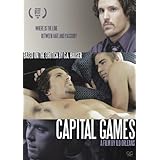
This review of the recent DVD release of the 2013 gay-centric drama "Capital Games" represents another in a surprisingly large number of recent milestones for Unreal TV.

In this case, this offering further expands the scope of reviewed titles from humble beginnings focusing on titles from Shout! Factory to covering gay-themed productions. It is predicted that one such post will run roughly every 10 days.

Of actual importance to the folks at the awesomely independent Breaking Glass Pictures, which also brought us the previously reviewed documentary "Unhung Hero," is that "Games" also is noteworthy for being a refreshing change from the cliche of gay-oriented films featuring overly-emotive 20-something twinks whose eyes are as wide as those of anime characters and whose skin is freshly scrubbed to a degree that likely allows it to glow in the dark.

The following spoiler-laden clip, courtesy of YouTube, of the trailer for "Games" clearly show how this differs from the gay-oriented classic "Latter Days" and its ilk.


"Games" is based on an erotica (rather than erotic) G.A. Hauser novel that has rivalry turn to lust and then to love for 30-something hunky ad executives whose macho natures have them competing for related prestige at their agency and a lucrative account. Despite these elements, neither is willing to bend over backward or forward to get ahead.

Former police officer Steve Miller is a star who has worked his way up the ranks at the agency when newcomer Brit Mark Richfield comes on the scene; Mark aggressively stealing Steve's reserved parking space gets their relationship off to a rough start that the professional threat that this recent hire poses does not help.

The action soon shifts to a team-building retreat in New Mexico during which Steve and Mark both take it like a man on getting trapped in the desert.

Our macho macho boys then learn the hard way both that suppressing strong desires can be difficult and that sharing an intimate experience often bonds you no matter how much you try to deny those feelings.

Steve's twin related challenges involve getting Mark to express the love that he knows is mutual and to get this object of his affection to be more honest about his true nature.

The not-so-great acting among the predominantly male cast adds to the fun of the film; the largely deep voices and monotone delivers are the wonderful stuff of soap operas/hilariously awful buddy cop dramas, and adult-oriented gay fare.

Respective hypothetical examples of lines from the above are "I will crush Mark if it takes every ounce of my soul;" "you're the only partner who ever let me be me;" and "Hey, Buddy; you better take off those wet clothes."

It is hilarious that each line provided above is a perfect fit for "Games."

"Games" additionally retains enough elements of the films starring members of the Class of 2006 to provide the intended campy fun; anyone who is familiar with any of the genres that this review describes can predict both that a fully clad Steve will respond when invited to swim in a private and secluded pool that he does not have a bathing suit him and what reply that answer will prompt. The surprise regarding what subsequently occurs is part of what makes "Games" so good.

The same can be said regarding a scene in which Mark pulls Steve's police uniform, complete with handcuffs, out of the closet.

The dramatic confrontation between our heroes at the end of the film is an element of both gay and straight films of this nature.

In the interest of satisfying the curiosity of folks who are interested in the more salacious elements of "Games," Steve bare his arms enough to indicate that this ex-cop is very fond of gun shows; he is almost as fond of proving that he is not a cruiser and lacks junk in his trunk.

For his part, footage of Mark shows that this man who Steve has selected may also be one of the chosen people.

The biggest (but very understandable) shame is that the portion of the viewing public, who likely stopped reading this review no later than the reference to taking it like a man, whose anxiety regarding homosexuality preclude them from watching "Games" deprives them from enjoying an especially fun guilty pleasure. It is suggested that these folks please consider adopting the attitude that someone's sexuality is no big deal so long as they do not engage in any recruiting for their team.

Anyone with questions or comments regarding "Games" is welcome to email me; you can also connect on Twitter via @tvdvdguy.


Saturday, March 8, 2014

'Minder' OS S1 DVD: 'Must See' Brit TV

Minder - Season 1 DVD

The British dramedy "Minder," which BFS Entertainment makes available on DVD to audiences on this side of the pond,  is a great program if only because it exceeds all positive expectations regarding it.

On the surface, the concept of used car dealer/small-time crook Arthur Daley simultaneously the scam of the week and hiring out his clone of Jim Rockford of the  awesome James Garner  U.S. series "The Rockford Files" the titular minder (a.k.a. bodyguard) former professional boxer/reformed ex-con Terry McCann is an amusing premise.

Just below the surface, the 11 hour-long episodes in the 1979-1980 first series (my people call them seasons) is among the best television to ever arrive at the Unreal TV offices.

The fact that "Minder" lasted 10 seasons before wrapping up in 1994 and warranted a "next generation" style series in 2009 further speaks to its quality. The fact that it did not win any of the awards for which it received nominations is a much larger crime than any caper that Daley perpetrated.

George Cole, whose career seems  as prolific as that of Michael Caine, does a perfect job portraying Arthur as an aging scoundrel who shows affection in his own ways, does an awesome job justifying dodgy deals, and craftily shorts everyone with whom he does business.

It is equally good fun to see Arthur rent out Terry to a friend or colleague for some form of at least dirty and often degrading task and then coercing Terry into accepting that work.

It is always just as certain that Arthur is cheating Terry regarding his wages for the assignment and that said assignment will place Terry in far more peril than he could have anticipated despite a brighter man likely recognizing this pattern after a couple of weeks.

The fact that Arthur and his cronies always have each other's hands in each other's pockets and seemingly would cheat his (no women in this boy's club) own mother wonderfully adds to the fun of the escapades.

"Minder" is additionally a wonderful fit for Dennis Waterman as Terry; he comes to this role straight from playing Jack Regan, who is a police detective who shares characteristics with Terry, in the dramatic British police series "The Sweeney."

The James Garner parallel extends to Terry insisting on limiting his use of weapons to the ones that are attached to his wrists; his philosophy regarding guns is like that of Garner's titular character in the shamefully ignored Western dramedy "Nichols" that using guns just leads to the wrong people being shot.

The following segment, courtesy of YouTube, of a documentary on "Minder" provides a nice sense of both the awesomeness of the show and well-earned enthusiasm of fans. The fact that this review and that clip independently consider this series "must-see TV" also speaks to its awesomeness.


The wonderfully titled "Gunfight at the O.K. Launderette" episode gets "Minder" off to a great start; Terry is freelancing as a bouncer at a strip club, and Arthur soon rents him out for the simple task of accompanying a friend while that person collects his proceeds from the titular laundormat.

A robbery attempt at the not-so-beautiful launderette soon leads to a "Dog Day Afternoon" style hostage situation with the captors and captives holed up in the storage room of that business while a not-so-bright police official attempts to resolve the matter. Predictably, Terry is the brightest and most reasonable member of the entire group.

A mid-season episode titled "Come in T-64, Your Time is Ticking Away" is arguably the most clever one of the lot. This one has Terry driving a dilapidated car for a taxi service in which Arthur is a partner; a series of attacks against other drivers and vehicles prompts putting Terry on the road to both prevent further mayhem and discover the identity of the malfeasors.

The pervasive wanton destruction, goofiness of the hired thugs causing said damage, and Terry's mishaps while on the road are high entertaining. The motive for the campaign against the company is a nice surprise that sets this episode apart from the excellent other 10 episodes in this season.

Other episodes involve clever subterfuge regarding a participant of a robbery in which the loot is still concealed being released from prison, Arthur and Terry having a falling out after Arthur is scammed related to falling for a woman whose physical attractive far out distances her singing ability, and an amusing offering that centers around above-ground and underworld poker games.

The only thing that is left to be said regarding this set of "Minder" is that it is a safe bet for anyone with a taste for good humor and battered heroes.

Anyone with questions regarding "Minder" is welcome to email me; you can also connect on Twitter via @tvdvdguy.


Thursday, March 6, 2014

'The Cheshire Murders' DVD: A Massacre in Connecticut

The Cheshire Murders (HBO)
Warner Archive's recent DVD release of the 2013  film "The Cheshire Murders" from the uber-awesome HBO Documentary Films series, which usually premieres entries at 9:00 p.m. ET, demonstrates that this movie about an "In Cold Blood" style crime in New England remains compelling after multiple viewings.

"Cheshire" focuses on the aftermath of a 2007 event in the titular Connecticut community in which soccer mom Jennifer Petit and her two daughters are killed and subjected to other atrocities following a home invasion and in which her badly beaten pediatrician husband Dr. William Petit barely survives.

Director Kate Davis, who won several awards for directing the 2001 documentary "Southern Comfort" and who helmed the exceptional 2010 documentary "Stonewall Uprising," provides amazingly comprehensive coverage of  numerous topics in "Cheshire." These include the histories of the Petit family and the admitted perpetrators Steven Hayes and Joshua Komisarjevsky, allegations of police negligence, the court proceedings regarding the prosecutions of said malfeasors, and the debate regarding the death penalty generally and proposed changes to the relevant law in Connecticut in the years following the crimes.

As one talking head states eloquently and politely in the film, the nature of this event makes even the most ardent opponent of the death penalty want to shout "Burn, Baby Burn!"

Davis achieves the seemingly impossible feat described above through world-class editing of news footage, interviews with relevant individuals, and archival photos. Each segment is the perfect length, and none are extraneous.  It is even more amazing that Davis achieves all this in roughly two hours.

These compelling stories and the sheer volume of information that "Cheshire" conveys makes it a textbook example of a film that never goes stale.

The following promo, courtesy of YouTube, for "Cheshire" does an equally amazing job conveying the themes of the film in 46 seconds.


The underlying story of a family experiencing what Komisarjevsky fully realizes is a horrific violation of their intimacy and security is adequately fascinating to warrant a documentary; this theme of (often random) horror invading an ordinary existence is a Hitchcock mainstay and a theme in the theatrically released February 2014 documentary "As the Palaces Burn" that Unreal TV reviewed when it premiered.

The fact that the "Cheshire" incident occurs in relatively wealthy low-crime community contributes to the impact of the film.

This is one is series of horrible reminders that spending a premium to live in an upscale city or town does not fully insulate you from the type of violent crime that is more common in less affluent areas; more specifically, it sends a message nearly one year after the Boston Marathon bombings on a street with high-end shops and restaurants that no place in America is safe these days.

The other well-proven lesson from "Cheshire" is that society does not adequately intervene before someone who gives off enough warning signs to trigger scads of sirens and flashing red lights for years commits a horrible crime that has a much worse ripple effect than the flapping of the wings of even the largest butterfly in the world.

A huge gap exists between the thought police and letting asylum inmates run amok. Law enforcement and political leaders simply must move appropriately closer to the latter; retroactive band-aids after the proverbial horse is halfway to Calie do not cut it.

Anyone with questions or comments regarding "Cheshire" or the strong views expressed in the brief trip to Blogland are encouraged to email me; you can also connect on Twitter via @tvdvdguy.


Wednesday, March 5, 2014

'From Other Worlds' DVD: Close Encounters of the Brooklyn Kind

Product Details
BFS Entertainment diverts from providing home video of incredibly British television series and films in issuing the DVD of the 2004 American film 'From Other Worlds,' which amusingly diverts from both sci-fi alien abduction films and less-inspired light comedies.

One spoiler regarding BFS is that Unreal TV readers will learn of the beyond spectacular British dramedy "Minder" this weekend; this humorously gritty series about crafty and deceitful low-level criminals and other unsavory types truly is among the best of the best.

Returning to today's program, writer Barry Strugatz makes "Worlds" special by giving the same wacky off-beat tone that he inserts into "Married to the Mob" and "She-Devil."


"The Sopranos" and "Mad Men" veteran Cara Buono also adds to the wacky fun of "Worlds" in her portrayal of Brooklyn housewife Joanne Schwartzbaum, who is spacey even before experiencing a black-out that she is convinced relates to an alien abduction.

Joanne's obsession with proving the validity of her claim of a close encounter leads her to a meeting of folks who claim to have seen UFOS and/or been abducted. A rivalry that is hilariously depicted at this session is one of the best of several memorable moments in "Worlds."

Joanne attending this encounter (of course, pun intended) group results in her teaming up with Isacch, whose alleged abduction has many of the same characteristics as that of Joanne, faster than you can say nanu nanu. Further, these two are arguably the sanest among their fellow UFO-philes.

The wackiness shifts into higher gear when Joanne and Isacch become convinced that a recently discovered 2,2000 year-old artifact is tied to the visitors from another world whom they believe nabbed and returned them.

These events ultimately result in Joanne and Isacch accepting an assignment to save the world (as well as the rest of life in the Milky Way galaxy.) The amusing manner in which they go about doing accomplishing their goal puts every sci-fi teen comedy to shame.

A great deal of the humor relates to the anxious and effeminate museum curator who enters the orbit (of course, pun intended) of Joanne and Isacch and the (perhaps alien) foe who is out to prevent them from meeting their objective. The latter has wonderful shades of bumbling principal Ed Rooney from the classic '80s teen comedy "Ferris Bueller's Day Off."

A more general theme that makes "Worlds" a fun film is how Strutgatz subtly pokes fun at the '70s Steven Spielberg sci-fi classic "Close Encounters of the Third Kind" in ways that extend well beyond the underlying premise and the community of earthlings who sincerely believe that "something is out there."

Other examples of this amusing Spielberg homage include ordinary objects bizarrely fascinating and/or hypnotizing Joanne and her becoming increasingly alienated (of course, pun intended) from her family prompting her otherwise supportive spouse to believe that she is having an affair. This suspicion leads to another hilarious scene. 

The combination of this great writing, amusing slant on both serious and comedic alien abduction films and series, and perfect casting make "Worlds" a DVD well worth visiting. 

The special features consist of cast profiles, Buono's audition tape, and the trailer for the film.

Anyone with questions or comments regarding either "Worlds" or another sci-fi films or shows is welcome to email me; you can also connect on Twitter via @tvdvdguy.


Tuesday, March 4, 2014

West End Live Staging of 'Great Expectations' DVD: Exceeeds Highest Hopes The Dickens You Say

Product Details
One of numerous thoroughly spectacular aspects of the February 2013 live performance of the Charles Dickens classic "Great Expectations" that East End boys and West End girls present at the Vaudeville Theater in London is that what seems to be an unduly artistic production very quickly gives way to two hours of incredible theater.

It is equally awesome that the recently released DVD, which is exclusively available on Amazon, of "Expectations" provides a chance to enjoy this play in the comfort of your own home or classroom.

Fans of Dickens generally and "Expectations" specifically will get the timeless opening words "my father's family name being Pirrip, and my Christian name Philip, my infant tongue could make of both names nothing longer or more explicit than Pip. So, I called myself Pip, and came to be called Pip" from the novel stuck in his or her head immediately on learning of this DVD.

Substituting this opening with a very haunting tableau that begins the story decades beyond main character Pip's childhood is initially disconcerting. However, theater veterans Jo Clifford and Graham McLaren pull it off extraordinarily well.

The overall feeling that the set and characters are straight out of the Haunted Mansion attraction at the Disney parks is very apt for this dark tale of an orphan boy who suffers abuse at the hands of the wife of the couple who takes him in after the deaths of his family members and later suffers assorted manipulations at the hands of legendary literary character Miss Havisham.

The darkness is equally appropriate regarding the plight of escaped convict Magwitch, who suffers his own unwarranted personal hell.

The following clip, courtesy of YouTube, of the trailer for this DVD superbly shows the wonderful creepiness that gives "Expectations" as much of an air of Shakespearean drama as the 1946 David Lean film version of this tale.

The first act of "Expectations" introduces the characters described above and sets the stage (no pun intended this time) for Pip's life as a gentleman in London thanks to a gift from an anonymous benefactor.

McLaren does particularly well staging Pip the gentleman's interactions with his tutor and servant, as well as with Mr. Jaggers, the attorney who prides himself on merely doing as he is instructed. Pip's well-known dramatic confrontation of Miss Havisham during this stage in his life is also particularly well presented.

The highly dramatic nature of "Expectations" alone make it a great story; the fact that the themes that it presents are highly relevant roughly 150 years after Dickens wrote it shows the validity of the well-deserved classic status that it possesses.

Many children in a modern foster-home type situation in which Pip is living when we meet him suffer the same physical abuse and other mistreatment that that character endures at the hands of his guardian. The same is even more true regarding the deception and manipulation that Pip experiences.

Further, Magwitch's history with the Victorian-era justice system has many parallels with what other people experience today.

Additionally, the "Mommie Dearest" chapter from the life of former movie star Joan Crawford has many parallels with the fictional bitter and resentful existence of jilted bride Miss Havisham; this comparison extends to adopting (and brutally attempting to mold) a waif with a tragic history.

One need not even look back to the mid-20th era of "Dearest" to find examples of people who have experienced a heartbreak or other tragedy that has ruined their lives. Further, the girls of "Grey Gardens" show that isolating yourself in your crumbling once stately home is not only a thing of fiction.


Anyone who would like to finance a life of luxury for a TV on DVD reviewer or who simply has questions regarding "Expectations" is welcome to email me. You can also connect on Twitter via @tvdvdguy.


Monday, March 3, 2014

'Roadblock' DVD: Honest Gumshoe Yields to Temptation

Roadblock (1951)
The unfairly overlooked 1951 noir film "Roadblock," which Warner Archive recently released on DVD, is a great homage to the 1944 Billy Wilder/Raymond Chandler noir classic "Double Indemnity." Both flicks involve an honest insurance company employee who learns the hard way that dames ain't nothin' but trouble.

In the case of "Roadblock, insurance company detective "Honest" Joe Peters begins his descent into corruption when the stranger he meets on a plane is a wise-cracking material girl living in a material world. Joe knowing within minutes that that broad is as crooked as a pre-teen's teeth does not prevent him from falling and falling hard.

Peters sacrifices his virtue by providing inside dope that facilitates a heist even before femme fatale Diane sacrifices what is left of her virtue to him.

Seeing Joe's friends and colleagues continue treating him like the swell guy they know and watching him participate in investigating the crime for which he is responsible makes for great cinema. An interrogation scene complete with a bright overhead light, grilling hot enough to fry an egg, and a Dempsey-quality beat down is one of the best segments in the film.

This film is additionally notable for perhaps being the first movie that touches on the girl the boy meets being out his league. In this case, said girl ignores this by letting said boy go to first base early in their relationship.

The following clip, courtesy of YouTube, of an early scene in "Roadblock" is typical of tone and the theme of the film. It also shows that pining for a girl and/or buying her a fir can pay off.


The only frustrating element of this cleverly scripted, well directed film with an overall good cast is that the leads do not generate enough heat to warm a sinker.

Veteran tough guy Charles McGraw of the Hitchcock classic "The Birds" and leading lady Joan Dixon individually good jobs as Joe and Diane but simply do not sell their allegedly mutual passion. What is supposed to be eternal devotion is as flat as a day-old balloon on a hot summer day. 

The better news is that this lackluster lust does not prevent enjoying everything else that "Roadblock" has to offer; smoldering glances and passionate embraces are only gravy when you begin with a  foundation of prime beef.

Anyone with questions or comments regarding "Roadblock" is welcome to send an email but you may have to beat any dope that you want out of me; you can also connect on Twitter via @tvdvdguy. Whistling is another option if you know how to put your lips together and blow.


Saturday, March 1, 2014

'The Iran Job' DVD: Great Basketball Diary Prelude to March Madness

Product Details
The divine entity of your choosing's gift to lovers of good independent cinema everywhere Film Movement shows its usual perfect instincts both in picking "The Iran Job" for its international Film of the Month Club and in selecting March 4, 2014 to release the DVD of this 2012 documentary. Sports fan and every individual who is not residing in a cave knows that this is two weeks before the 2014 March Madness NCAA basketball tournament commences.

"Job" centers around American basketball player Kevin Sheppard moving to Iran for a year in 2008 to help turn around the last-ranked team in a league of 13 organizations. Although the premise seems like a set-up for a teen comedy, this documentary is a charming and witty study of Sheppard's new community and an informative look at the violent political turmoil that coincides with his adventure. It is much more "Northern Exposure" than "Funny Farm."

The following clip, courtesy of YouTube, of the trailer for "Job" does a great job conveying the charm of Sheppard and the other awesome elements of the film while keeping spoilers to a minimum.


Sheppard is a perfect documentary subject in that he is engaging and funny without coming close to being overbearing; these traits help him quickly develop close friendships with his Siberian roomie/teammate and a trio of young modern Iranian women who (mostly) adhere to the repressive requirements imposed on women in the Islamic republic in which they reside.

Seeing these women scurry into the other room when someone arrives while they are merely visiting Sheppard and watching them resist removing their head scarves is both entertaining and sad. A scene that can be considered "riding in cars with boys" is particularly hilarious.

Sheppard additionally has awesome encounters with ordinary Iranians; a wild and crazy dancing worker at a nearby chicken take-out place is particularly entertaining.

Watching Sheppard interact with his mostly Iranian teammates and seeing those underdogs try to climb out of the basement in the ranking of their league during their own March Madness style tournament also makes for great cinema.

Even non-basketball fans will cheer on this group during their games. We also feel badly when the public scrutiny that is focused on Sheppard turns ugly, especially when it revolves around him literally kicking the bucket.

Director Till Schauder does equally well portraying the turbulent political climate during Sheppard's year abroad; these events include Iran expressing particularly strong animosity against Isreal and Iranians engaged in protests regarding a presidential election.

As successfully as Schauder tells the story of Sheppard, his 1995 German short "City Bomber," which is the monthly "bonus film" on the "Job" DVD, leaves that genuine star effort on the bench.

The highly symbolic 22-minute black-and-white "Bomber" starts out with shades of Fellini with a bizarre hair-raising (this will be funny after you see the film) segment with a little girl enjoying a park; we soon learn that the girl's father is an architect with shades of Howard Roark from the Ayn Rand novel "The Fountainhead" in that having his artistic vision stifled is driving him mad in a manner that leads to a protest straight out of Roark's playbook.

Saying much more about this genuine piece of art would ruin the impact of watching it; suffice it to say that Schauder stages an incredibly tense and twist-filled climax that should prompt the current crop of American action-adventure directors to re-enroll in film school.

Anyone with questions or comments regarding "Job" or "Bomber" is welcome to email me. You can also connect on Twitter via @tvdvdguy.