My incredible disappointment regarding summer blockbuster "Magic Mike" was intense enough to deviate from reviewing classic sitcoms and great old cartoons to provide a public service warning about the completely unmet potential of this film.
I admit that stating that I went to the film because I have been a HUGE Steven Soderbergh fan since he directed "Sex, Lies, and Videotape," because the New York Times gave "Magic Mike" a better-than-expected review, and because the prospect of sitting in an air-conditioned theater watching what I expected would be well-choreographed dance numbers to upbeat music from my youth was appealing can be compared to a man asserting that he reads Playboy for the articles.
Further, I did not need to go to a movie theater if I wanted to see manscaped attractive twinks thrust their moneymakers; the Internet has plenty of videos of guys who fill out g-strings better than Channing Tatum and the rest of the "Mike" cast.
The "Magic Mike" dance routines were true junk male in both senses of that term because their appeal was limited and merely a scam to most of us. Further, the packages did not fill the envelopes particularly well.
I also want to mention that it is sad that it seems that most men who, like myself, go to this film by themselves feel compelled to sit in the back row as if they were at a '70s era Times Square porn theater.
Living in the second decade of the 21st century, men have no reason for any insecurity about even perceptions regarding their sexuality. I sat center row center eating my contraband turkey sandwich and guzzling my gazillion-ounce Diet Coke, which will also soon be contraband in New York City, while stuffing my grocery bag sized of lukewarm popcorn coated with vegetable oil down my pie hole.
On a related note, ogling quarterbacks Tom Brady or the Peyton brothers every weekend, crying into your beer when your "boyfriend" on your baseball team is traded, and missing work to mourn a super bowl loss is far more gay than seeing a movie about 20 and 30-something men who realize that showing off their wares to a crowd of horny sorority girls and desperate housewives is a good way to keep the fridge stocked with Bud.
Getting down to business, Tatum had the looks, body, and charm to play a male stripper. He simply lacked the talent to star in what was intended to be an honest look at the world of men in that "profession."
I never have, and never will, seen a "Twilight" movie but wonder if one of the boys from that series would have done a better job.
First, I did not buy Tatum's 30 year-old character with six years of stripping experience as the Yoda of the group and the mentor of the 19 year-old "kid" played by Alex Pettyfer. He, and Tatum, simply lacked the intelligence and hard knocks to pull it off.
Mike merely seemed like a decent middle-class kid who realized that utilizing his good looks and rockin' bod were the fastest way to raise the money needed to start his furniture design business. His recognition that he did not want to be a pathetic 40 year-old stripper like the sleazy club owner played by the perpetually bare-chested and insufferable Matthew McConaughy was one of the rare real moments in the film.
Additionally, we learn very little about any of the characters. Mike is very one-dimensional, and we never learn why the kid is living with his understanding older sister or really why she feels the need to be strict with him.
Every other character, including the usually much more appealing Matt Bomer of "White Collar," is little more than scenery for our modern-day Butch and Sundance who literally jump into the abyss together.
The shame is that Soderbergh's past work shows that he easily could have made this film much better. The unofficial tagline could have been "Come for the six packs and hot naked butts, stay for the compelling drama."
A bromance version of "A Star is Bared" or a more homoerotic take of "All About Steve" would have been soooo much better. These approaches would have had added substance to the elements of the Kid giving into the easy money, casual sex, and drugs of the world of male stripping while he pushed the older Mike out the spotlight.
Despite the incredible risk to his career, it also would have been great to see the dreamy Justin Bieber show up at the end to remind the Kid that someone younger and cuter is always waiting in the wings. "Baby, baby, baby" indeed.
I imagine that many readers will have their own thoughts regarding my take on "Magic Mike" and the latent homoerotic thoughts of sports fans. Please feel free to email me.
My blanket responses to unduly hostile messages are "I'm rubber and you're glue; what you say bounces off me and sticks to you." and "I know you are, but what am I?"
Wednesday, July 18, 2012

Tuesday, July 10, 2012
'The Jetsons' S2: A '60s Show Set in the 21st Century Updated for the '80s
The many fans of "Jericho," "Family Guy," and "Futurama" who waited up to a few years for new episodes of those shows should consider themselves lucky compared to those of us who liked "The Jetsons." The first season of that early example of a prime time Sunday night animated network show aired in 1962-63. The second season premiered in syndication in 1985.
Before further discussing "The Jetsons," it is worth mentioning that current prime time animation leader Fox may break the record in the lag between seasons of a show. That network's resident perpetual ninth grader Seth MacFarlane is developing a new "The Flintsones" series.
One can only hope that MacFarlane's creation is more of an homage to the original '60s "The Flintsones" than a "Family Guy" clone. I would hate to see MacFarlane mine humor from depicting Fred Flintstone as a raging alcoholic and his best buddy Barney Rubble as a closet homosexual.
As they said back in the era of first season of "The Jetsons," now back to our program.
The DVD set of the second-half of the 1985-86 second season of "The Jetsons" is another example of the terrific Warner Archive series making a cartoon series that enjoyed limited success available to its fans. I never thought that I would have a chance to revisit childhood favorites "The Funky Phantom" and "Goober and the Ghost Chasers."
Warner Brothers has also released the first season and the first-half of the second season of "The Jetsons" on DVD. Each set looks good and has nice special features.
"The Jetsons" tells the tales of computer engineer George Jetson and his nuclear family living a life of relative ease in the latter half of the 21st century from the perspective of writers and animators first living in the early '60s and then the Reagan-era mid-80s.
The '60s version was a little closer to "The Jetsons'" predecessor the stone-age "The Flintsones" in having more time-period puns and being delightfully corny. The '80s version of "The Jetsons" was totally new wave, totally.
Many of the fashions, including bold prints and skinny plastic space-age glasses, from the latter version of "The Jetsons" were very close to what the cool kids were wearing that year. Additionally, the "Hi-Tech Wreck" episode in S2 V2 in which George's boss Mr. Spacely was obsessed with living the lifestyle of the rich and famous was a perfect example of the "Me Generation."
The episode "One Strike, You're Out" also reflected the '80s very well. This one had humans and computers literally arguing about the threat that each posed to the other in the job market.
I was especially pleased to see "A Jetson Christmas Carol" in this set; I Tivo that program every year and had thought that it was only a special, rather than an episode of the series. Aside from being highly entertaining, this version of that story stands out by having the Scrooge character not really change at all.
All of this is not to say that the '80s version of "The Jetsons" was still not cartoon fun for the entire family. There were plenty of very amusing segments in which high-tech gadgets malfunctioned, Astro the talking dog was as cute and loving as ever, and the family continued facing the same entertaining dilemmas as television families have for the past 60 years.
It is worth mentioning that the somewhat outdated 21st century technology adds some unintentional humor to the show. As someone who is still semi-stuck in the "olden days" of the late 20th century and often embraces technology a little late, and only bought a GPS a few months ago, I laughed when I saw George Jetson reading an old-style fold-out map in an S2 V2 episode.
Anyone with thoughts or comments regarding "The Jetsons" is welcome to email me.
Before further discussing "The Jetsons," it is worth mentioning that current prime time animation leader Fox may break the record in the lag between seasons of a show. That network's resident perpetual ninth grader Seth MacFarlane is developing a new "The Flintsones" series.
One can only hope that MacFarlane's creation is more of an homage to the original '60s "The Flintsones" than a "Family Guy" clone. I would hate to see MacFarlane mine humor from depicting Fred Flintstone as a raging alcoholic and his best buddy Barney Rubble as a closet homosexual.
As they said back in the era of first season of "The Jetsons," now back to our program.
The DVD set of the second-half of the 1985-86 second season of "The Jetsons" is another example of the terrific Warner Archive series making a cartoon series that enjoyed limited success available to its fans. I never thought that I would have a chance to revisit childhood favorites "The Funky Phantom" and "Goober and the Ghost Chasers."
Warner Brothers has also released the first season and the first-half of the second season of "The Jetsons" on DVD. Each set looks good and has nice special features.
"The Jetsons" tells the tales of computer engineer George Jetson and his nuclear family living a life of relative ease in the latter half of the 21st century from the perspective of writers and animators first living in the early '60s and then the Reagan-era mid-80s.
The '60s version was a little closer to "The Jetsons'" predecessor the stone-age "The Flintsones" in having more time-period puns and being delightfully corny. The '80s version of "The Jetsons" was totally new wave, totally.
Many of the fashions, including bold prints and skinny plastic space-age glasses, from the latter version of "The Jetsons" were very close to what the cool kids were wearing that year. Additionally, the "Hi-Tech Wreck" episode in S2 V2 in which George's boss Mr. Spacely was obsessed with living the lifestyle of the rich and famous was a perfect example of the "Me Generation."
The episode "One Strike, You're Out" also reflected the '80s very well. This one had humans and computers literally arguing about the threat that each posed to the other in the job market.
I was especially pleased to see "A Jetson Christmas Carol" in this set; I Tivo that program every year and had thought that it was only a special, rather than an episode of the series. Aside from being highly entertaining, this version of that story stands out by having the Scrooge character not really change at all.
All of this is not to say that the '80s version of "The Jetsons" was still not cartoon fun for the entire family. There were plenty of very amusing segments in which high-tech gadgets malfunctioned, Astro the talking dog was as cute and loving as ever, and the family continued facing the same entertaining dilemmas as television families have for the past 60 years.
It is worth mentioning that the somewhat outdated 21st century technology adds some unintentional humor to the show. As someone who is still semi-stuck in the "olden days" of the late 20th century and often embraces technology a little late, and only bought a GPS a few months ago, I laughed when I saw George Jetson reading an old-style fold-out map in an S2 V2 episode.
Anyone with thoughts or comments regarding "The Jetsons" is welcome to email me.
Friday, July 6, 2012
Mystery Science Theater 3000 Volume XXIV: Vampires, Folk Heroes, and Aliens Oh My
The '80s/'90s Comedy Central/SciFi Channel series "Mystery Science Theater 3000" (MST3K) is a brilliant show that prompted many of us to slap our foreheads and say "why didn't I think of that?" It also arguably is a much cooler cult show than the "Star Trek" or "Stargate" franchises.
Shout Factory has given me and my fellow Misties a great treat in the form of releasing DVD sets of MST 3K every few months. Volume XXIV is coming out at the end of July 2012. The theme of this collection is truly horrible foreign language films that have been inexpertly dubbed into English and inflicted on American audiences.
Knowing Shout, I predict that the 25th volume will be even more spectacular than the 20th Anniversary volume that was the first Shout Factory MST 3K release.
MST 3K used the concept of a mad scientist, replaced later in the series by his even more diabolical mother, trapping a human on the Satellite of Love that orbited earth before breaking free mid-series. The purpose of this evilness was to see how many truly horrible films from the 50s through the 80s that Joel, followed by Mike, could choke down before going insane. As I have written before, I would have been foaming at the mouth within a week.
In true Bugs Bunny fashion, the reluctant astronaut (with the help of his robot friends) turned things around. The trio mercilessly, and hilariously, heckled the film of the week with comments that literally referred to everything from Oedipus Rex to the '60s cartoon "The Flintstones." The riffs come so fast and furious and some are so subtle that you really need to pay attention.
The SOLers supplement their constant remarks with equally hilarious skits that often relate to the film. An example from "Fugitive Alien" in Volume XXIV was Joel helping his robot buddies understand the plot of this confusing low-budget Japanese scifi flick that was cobbled together from episodes of a Japanese television program and then very badly dubbed into English.
On a side note, our friends at Shout thoughtfully included the MST3K episode of "Star Force: Fugitive Alien II." I am saving that one as a tasty video dessert for Sunday evening.
Volume XXIV also has the hilariously awful "Samson vs. The Vampire Women," which Crow the robot stated was a landmark U.S. Supreme Court case.
Samson was a silver-masked Mexican wrestler who apparently was the Batman without any cool gadgets of our neighbor to the south. The vampire women were a flock of undead hags who needed to capture their queen's descendant to restore the group's beauty and power.
The painfully bad plot, cheesy effects, and horrible acting provided Mike and the 'bots plenty of material, much of which was directed at the aging and tall and lanky raven-haired Cher.
"Samson" was also special because it was the last episode that had the Igor-like sidekick Frank after a five-year run. All that I will say regarding that storyline is that it seemed that it inspired the writers of "Stargate: SG1" when one of their actors wanted out after five years.
In typical Shout Factory style, a great extra on the "Samson" DVD was an interview with Frank's portrayor Frank Conniff, who discussed his post-MST3K career as a writer and cameo actor and his involvement with the MST3K like "Cinematic Titanic."
It is worth noting as well that the over-acted and horribly low-budget Russian folk tale "The Sword and the Dragon" in Volume XXIV came to the U.S. courtesy of Shout Factory's favorite schlockmaster Roger Corman. Corman is the Orson Welles of movies that failing UHF stations used to show at 3:00 a.m. if they could no longer afford the broadcast rights to "She's the Sheriff."
Recognizing the appeal of Corman's truly horrendous films, Shout Factory created its "Roger Corman's Cult Classics" line; Criterion Collection it ain't.
I knew that I had to get the latest member of the cult classic line "Black Oak Conspiracy" when I saw the cover art of the shirtless redneck covered in blood and wearing ripped jeans while holding a smoking shotgun. The tagline "Leaving Town Was Easy. Coming Home Was Murder!" cinched it for me.
The "plot" of "Black Oak" revolved around stuntman Jingo Johnson finding on returning to his small tow that there is "a hotbed of corruption and land swindlers abetted by a crooked redneck sheriff." There is no indication of a Duke boy anywhere in sight.
I am saving "Conspiracy" for a day that I really feel like an especially good bad film.
Anyone with questions or comments regarding MST 3K or Roger Corman is encouraged to email me.
Shout Factory has given me and my fellow Misties a great treat in the form of releasing DVD sets of MST 3K every few months. Volume XXIV is coming out at the end of July 2012. The theme of this collection is truly horrible foreign language films that have been inexpertly dubbed into English and inflicted on American audiences.
Knowing Shout, I predict that the 25th volume will be even more spectacular than the 20th Anniversary volume that was the first Shout Factory MST 3K release.
MST 3K used the concept of a mad scientist, replaced later in the series by his even more diabolical mother, trapping a human on the Satellite of Love that orbited earth before breaking free mid-series. The purpose of this evilness was to see how many truly horrible films from the 50s through the 80s that Joel, followed by Mike, could choke down before going insane. As I have written before, I would have been foaming at the mouth within a week.
In true Bugs Bunny fashion, the reluctant astronaut (with the help of his robot friends) turned things around. The trio mercilessly, and hilariously, heckled the film of the week with comments that literally referred to everything from Oedipus Rex to the '60s cartoon "The Flintstones." The riffs come so fast and furious and some are so subtle that you really need to pay attention.
The SOLers supplement their constant remarks with equally hilarious skits that often relate to the film. An example from "Fugitive Alien" in Volume XXIV was Joel helping his robot buddies understand the plot of this confusing low-budget Japanese scifi flick that was cobbled together from episodes of a Japanese television program and then very badly dubbed into English.
On a side note, our friends at Shout thoughtfully included the MST3K episode of "Star Force: Fugitive Alien II." I am saving that one as a tasty video dessert for Sunday evening.
Volume XXIV also has the hilariously awful "Samson vs. The Vampire Women," which Crow the robot stated was a landmark U.S. Supreme Court case.
Samson was a silver-masked Mexican wrestler who apparently was the Batman without any cool gadgets of our neighbor to the south. The vampire women were a flock of undead hags who needed to capture their queen's descendant to restore the group's beauty and power.
The painfully bad plot, cheesy effects, and horrible acting provided Mike and the 'bots plenty of material, much of which was directed at the aging and tall and lanky raven-haired Cher.
"Samson" was also special because it was the last episode that had the Igor-like sidekick Frank after a five-year run. All that I will say regarding that storyline is that it seemed that it inspired the writers of "Stargate: SG1" when one of their actors wanted out after five years.
In typical Shout Factory style, a great extra on the "Samson" DVD was an interview with Frank's portrayor Frank Conniff, who discussed his post-MST3K career as a writer and cameo actor and his involvement with the MST3K like "Cinematic Titanic."
It is worth noting as well that the over-acted and horribly low-budget Russian folk tale "The Sword and the Dragon" in Volume XXIV came to the U.S. courtesy of Shout Factory's favorite schlockmaster Roger Corman. Corman is the Orson Welles of movies that failing UHF stations used to show at 3:00 a.m. if they could no longer afford the broadcast rights to "She's the Sheriff."
Recognizing the appeal of Corman's truly horrendous films, Shout Factory created its "Roger Corman's Cult Classics" line; Criterion Collection it ain't.
I knew that I had to get the latest member of the cult classic line "Black Oak Conspiracy" when I saw the cover art of the shirtless redneck covered in blood and wearing ripped jeans while holding a smoking shotgun. The tagline "Leaving Town Was Easy. Coming Home Was Murder!" cinched it for me.
The "plot" of "Black Oak" revolved around stuntman Jingo Johnson finding on returning to his small tow that there is "a hotbed of corruption and land swindlers abetted by a crooked redneck sheriff." There is no indication of a Duke boy anywhere in sight.
I am saving "Conspiracy" for a day that I really feel like an especially good bad film.
Anyone with questions or comments regarding MST 3K or Roger Corman is encouraged to email me.
Monday, July 2, 2012
'The Amazing Chan and the Chan Clan:' 'Eight is Enough' Meets 'Scooby Doo'
The early '70s Hanna-Barbera Saturday morning series "The Amazing Chan and the Chan Clan" falls in the Rodney Dangerfield of good cartoon programs that don't get no respect. Hopefully the recent DVD release of "Chan" as part of Warner Brothers Archive Collection will help rectify that injustice.
On the surface, "The Amazing Chan and the Chan Clan" is simply a Hanna-Barbera clone of the highly popular "Scooby-Doo." One significant difference is that the villains in "Chan" are run-of-the-mill, albeit relatively clever, criminals whose ambitions are generally limited to one big heist.
Most of the rubber masks in "Chan" belong to "Number 2" teen son self-proclaimed master of disguise Stanley. Stanley is also well known for being the voice of the series' catch-phrase "wham-bam - we're in a jam."
Stanley is joined by his nine siblings and their father, fictional detective Charlie Chan. Charlie Chan was created in 1919 and was the main character in a long series of light-hearted Depression-era mystery films.
Digging just below the surface shows that "Chan" is more than an example of what Warner Brothers describes as "Hanna-Barbera's winning formula" of "[meddling] kids, mysteries, [very cute] canine, van." It is the first depiction of Charlie Chan by an Asian-American. Keye Luke, who played "Number One Son" in earlier live-action "Chan" films.
Other great actors who provided voices included Jodie Foster and future "Quincy" star Roberto Ito.
Further, the Chan kids were typical American kids and lacked any of the horrible Asian stereotypes that survived even into '60s animation. They, and Charlie, dressed like everyone else. Everyone also had good teeth, and any accents were realistic.
The kids, who had a "Josie and the Pussycats" style bubblegum rock band, even loved to rock-and-roll and hot dogs made them lose control. What crazy groups of pairs.
The episodes themselves were good as well; a typical offering had a theft occurring within the first few minutes and the kids splitting up to engage in hi-jinks to capture the bad guys.
Almost inevitably, each group of Chan kids would separately pursue different suspects and ultimately foul up the efforts of their siblings. Charlie showed up to solve the mystery and apologize for the mayhem that his offspring caused.
The spoiler alert is that the meddling kids, and their little dog too, who were always willin' did help catch that villain.
The show's fatal flaw seemed to be its common characteristic with the much more successful live-action '70s show "Eight is Enough." There just were too many kids in both series.
Despite being a colossal sofa spud, I could only think of the names of three of the six Bradford girls from "Eight." I can also picture most of them but have no clue which one wanted to a doctor, which one wanted to be an actress, and who was the tomboy.
Even having just watched eight "Chan" episodes, I do not know every kids' name or which girl was Susie and which one was Nancy. I could not even begin to guess which boy was Flip and who was Alan. I do know that Diegoesque spunky six-year-old Scooter rocks.
Further, having ten "Chan" kids did not add much to the show. Six would have been fine.
It is even sadder that the folks at Hanna-Barbera did not develop a "Josie and the Pussycats in Outer Space" style spinoff for Stanley and his slightly older brother Henry.
Stanley and Henry were the primary focus of "Chan" anyway and were enough of a Laurel and Hardy team that Henry should have been named Ollie. They were simply nice-looking typical suburban teen boys of the '70s minus the drug use.
Seeing Henry and Stanley go off to college and get involved in mystery and drama ala "Veronica Mars" and "Buffy the Vampire Slayer" would have kept me glued to my parents' ginormous two-ton 25" color console every Saturday morning.
Anyone with thoughts or questions regarding "Chan" is welcome to email me.
On the surface, "The Amazing Chan and the Chan Clan" is simply a Hanna-Barbera clone of the highly popular "Scooby-Doo." One significant difference is that the villains in "Chan" are run-of-the-mill, albeit relatively clever, criminals whose ambitions are generally limited to one big heist.
Most of the rubber masks in "Chan" belong to "Number 2" teen son self-proclaimed master of disguise Stanley. Stanley is also well known for being the voice of the series' catch-phrase "wham-bam - we're in a jam."
Stanley is joined by his nine siblings and their father, fictional detective Charlie Chan. Charlie Chan was created in 1919 and was the main character in a long series of light-hearted Depression-era mystery films.
Digging just below the surface shows that "Chan" is more than an example of what Warner Brothers describes as "Hanna-Barbera's winning formula" of "[meddling] kids, mysteries, [very cute] canine, van." It is the first depiction of Charlie Chan by an Asian-American. Keye Luke, who played "Number One Son" in earlier live-action "Chan" films.
Other great actors who provided voices included Jodie Foster and future "Quincy" star Roberto Ito.
Further, the Chan kids were typical American kids and lacked any of the horrible Asian stereotypes that survived even into '60s animation. They, and Charlie, dressed like everyone else. Everyone also had good teeth, and any accents were realistic.
The kids, who had a "Josie and the Pussycats" style bubblegum rock band, even loved to rock-and-roll and hot dogs made them lose control. What crazy groups of pairs.
The episodes themselves were good as well; a typical offering had a theft occurring within the first few minutes and the kids splitting up to engage in hi-jinks to capture the bad guys.
Almost inevitably, each group of Chan kids would separately pursue different suspects and ultimately foul up the efforts of their siblings. Charlie showed up to solve the mystery and apologize for the mayhem that his offspring caused.
The spoiler alert is that the meddling kids, and their little dog too, who were always willin' did help catch that villain.
The show's fatal flaw seemed to be its common characteristic with the much more successful live-action '70s show "Eight is Enough." There just were too many kids in both series.
Despite being a colossal sofa spud, I could only think of the names of three of the six Bradford girls from "Eight." I can also picture most of them but have no clue which one wanted to a doctor, which one wanted to be an actress, and who was the tomboy.
Even having just watched eight "Chan" episodes, I do not know every kids' name or which girl was Susie and which one was Nancy. I could not even begin to guess which boy was Flip and who was Alan. I do know that Diegoesque spunky six-year-old Scooter rocks.
Further, having ten "Chan" kids did not add much to the show. Six would have been fine.
It is even sadder that the folks at Hanna-Barbera did not develop a "Josie and the Pussycats in Outer Space" style spinoff for Stanley and his slightly older brother Henry.
Stanley and Henry were the primary focus of "Chan" anyway and were enough of a Laurel and Hardy team that Henry should have been named Ollie. They were simply nice-looking typical suburban teen boys of the '70s minus the drug use.
Seeing Henry and Stanley go off to college and get involved in mystery and drama ala "Veronica Mars" and "Buffy the Vampire Slayer" would have kept me glued to my parents' ginormous two-ton 25" color console every Saturday morning.
Anyone with thoughts or questions regarding "Chan" is welcome to email me.
Wednesday, June 27, 2012
Law and Order: Criminal Intent S7: Where the Elite Meet Their Defeat
Quirky Robert Goren's Holmesian technique of using close observation and obscure knowledge to make deductions sets "Law & Order: Criminal Intent" apart from both the other exceptional "Law and Order" series and run-of-the-mill police procedurals. Goren's angst and general alienation that are the price for seeing the world more clearly and for being smarter than the average detective is just icing on this very tasty cake.
Alicia Witt's Nola Falacci comes in a close second for favorite "Criminal Intent" character. That detective's dark sensibility and bulldog style remind me a great deal of Witt's wonderful character, the brilliant and Addams Family level dark late teen Zoey Woodbine in the unfairly maligned '90s CBS sitcom "Cybill."
Seeing Falacci interrogate Zoey for murdering Zoey's preppy upbeat brother-in-law Kevin, played by Peter Krause, would have been a dream come true.
Shout Factory's recent release of the seventh season of "Criminal Intent" was a dream come true; thank you Shout for once again releasing seasons of one of television's best shows after a studio stopped doing so.
The seventh season is the year that "Criminal Intent" moved from NBC to the USA network and experienced budget cuts that reflected the difference between a broadcast television show and one that aired on basic cable.
The good news is that "Criminal Intent's" quality survived the transition and that the show received impressive ratings on USA.
Aside from having great actors portraying wonderfully damaged characters, "Criminal Intent" offered the terrific twist of having its major case squad devote its resources to solving crimes that involved New York City's elite.
The brutality of the often rich-on-rich violence and the pride that goeth before the fall of the arrogant malfeasors who thought that their position justified their crime and/or that the police were too inferior to catch them made for good television. This well-written and directed series was definitely geared to the 99-percent with a taste for intelligent programs.
Two particularly noteworthy episodes come early in season. The season premiere had Goren both recovering from a tragedy that occurred at the end of the sixth season and furhter alienating himself from his brothers in blue by using his exceptional detection skills to discredit another police officer's credibility. Seeing Goren literally left out on the street was tough.
A second "must-see" episode involved a respcted couples therapist, who was married to a divorce court judge, getting killed. Falacci's particularly dark humor and Hitchcock caliber twists made this presentation feature-film quality.
One of the better seventh-season "ripped from the headlines" episodes for which "Law and Order" series are well known revolved around charging college jocks with raping strippers who the athletes hired for a party. Having '80s preppy Andrew McCarthy play a prosecutor out to get the privileged athletes was a nice touch.
Given Shout's consistent history of releasing seasons of a show within a few months of each other, I will chanel my inner-Goren in eagerly anticipating watching eighth season episodes of "Criminal Intent" this October.
Anyone with questions or comments regarding "Criminal Intent" is encouraged to email me.
Alicia Witt's Nola Falacci comes in a close second for favorite "Criminal Intent" character. That detective's dark sensibility and bulldog style remind me a great deal of Witt's wonderful character, the brilliant and Addams Family level dark late teen Zoey Woodbine in the unfairly maligned '90s CBS sitcom "Cybill."
Seeing Falacci interrogate Zoey for murdering Zoey's preppy upbeat brother-in-law Kevin, played by Peter Krause, would have been a dream come true.
Shout Factory's recent release of the seventh season of "Criminal Intent" was a dream come true; thank you Shout for once again releasing seasons of one of television's best shows after a studio stopped doing so.
The seventh season is the year that "Criminal Intent" moved from NBC to the USA network and experienced budget cuts that reflected the difference between a broadcast television show and one that aired on basic cable.
The good news is that "Criminal Intent's" quality survived the transition and that the show received impressive ratings on USA.
Aside from having great actors portraying wonderfully damaged characters, "Criminal Intent" offered the terrific twist of having its major case squad devote its resources to solving crimes that involved New York City's elite.
The brutality of the often rich-on-rich violence and the pride that goeth before the fall of the arrogant malfeasors who thought that their position justified their crime and/or that the police were too inferior to catch them made for good television. This well-written and directed series was definitely geared to the 99-percent with a taste for intelligent programs.
Two particularly noteworthy episodes come early in season. The season premiere had Goren both recovering from a tragedy that occurred at the end of the sixth season and furhter alienating himself from his brothers in blue by using his exceptional detection skills to discredit another police officer's credibility. Seeing Goren literally left out on the street was tough.
A second "must-see" episode involved a respcted couples therapist, who was married to a divorce court judge, getting killed. Falacci's particularly dark humor and Hitchcock caliber twists made this presentation feature-film quality.
One of the better seventh-season "ripped from the headlines" episodes for which "Law and Order" series are well known revolved around charging college jocks with raping strippers who the athletes hired for a party. Having '80s preppy Andrew McCarthy play a prosecutor out to get the privileged athletes was a nice touch.
Given Shout's consistent history of releasing seasons of a show within a few months of each other, I will chanel my inner-Goren in eagerly anticipating watching eighth season episodes of "Criminal Intent" this October.
Anyone with questions or comments regarding "Criminal Intent" is encouraged to email me.
Monday, June 25, 2012
Speed Buggy: Mel Blanc's Car Talk
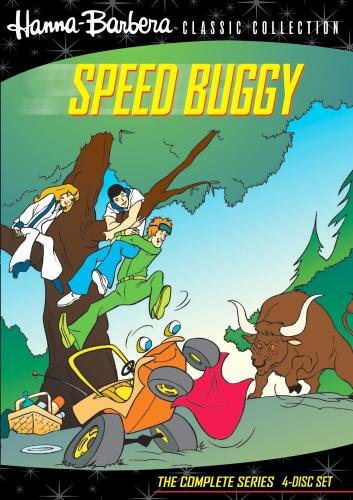
My chance to watch the awesome Warner Archive Collection's DVD set of the complete '70s Hanna-Barbera cartoon series "Speed Buggy" is the second time that getting an "Archive" set coincided with a current reminder of the awesomeness of the archived show.
Seeing Linda Lavin, who starred in the '70s CBS sitcom "Alice," in the audience of the 2012 Tony Awards got me wishing for a DVD release of that series. Archive announcing the next day that it was releasing the first season of "Alice" was a dream come true. My review of "Alice" is in the archive section of my site.
My "Speed Buggy" moment occurred this weekend; I came across the wonderful 2008 documentary "Mel Blanc: The Man of a Thousand Voices." Aside from voicing Bugs Bunny and numerous other Looney Tune characters, this cartoon voice god brought the lovable talking crime-fighting dune buggy/race car Speed Buggy to life.
The documentary was a wonderful tribute to this genuine American idol, and did not have a negative syllable to say about this man with whom I would have loved to meet for a carrot juice. The only sad moment for me was that the documentary did not include a clip of Speedy Buggy in the portion on Blanc's career with Hanna Barbera in the '60s and '70s.
I knew before watching the documentary that Blanc was a legend and that he had voiced Speed Buggy. I did not fully understand why I felt such a connection to a Saturday morning cartoon car until the documentary helped me realize that that character's voice and appearance reflected the sweet yet fiercely loyal nature of Blanc.
For the benefit of those of you who missed out on spending your Saturday mornings eating Quisp cereal and watching cartoons on your parents' massive console television that seemed to take forever to warm up, "Speed Buggy" essentially was "Scooby Doo" for the NASCAR set.
In addition to having an anthropomorphic star, the supporting characters in "Speed Buggy" greatly resembled the Mystery Inc. gang of meddling kids.
"Speed Buggy" team leader Mark was a handsome stud with a toned bod and limited intellect; cowardly odd looking and lanky mechanic/driver Tinker was Speedy's best bud; the extraneous tomboy Debbie always reminded me of "Mork and Mindy's" Pam Dawber in appearance and spunky personality.
Each "Speed Buggy" episode began with Speedy and his crew traveling to the site of the race or exhibition du jour. Within a few minutes, the gang would encounter the stereotypical big bad du jour and spend the next 20 minutes foiling that evil scientist's or run-of-the-mill criminal mastermind's plot to pull off a major heist or rule the world.
Each episode was highly entertaining and just darn cute. My favorite involved a plot to use the technology that created Speedy Buggy to build a fleet of robotic cars.
I also enjoyed an incredibly blatant rip-off of a plot from fellow '70s cartoon series "Josie and the Pussycats" that involved a mad scientist's acquiring an invisibility formula. I played wonderfully campy bubblegum music in my head during that episode's chase scenes.
Incidentally, that "Josie" episode is my favorite behind one involving an aging formula in which the truly brave and bold cat Sebastian really saved the day.
I expect my Archive Collection set of the other terrific '70s cartoon variation of "Scooby Doo" "The Amazing Chan and the Chan Clan" today.
Anyone with memories of questions regarding "Speed Buggy" is encouraged to email me. I am especially interested in learning if I am the only one who is adorkable enough to use Speed Buggy's catchphrase "va room a zoom zoom" in reference to rushing someplace. I do regret that my horrible imitation of Blanc most likely has that exceptional and badly missed man turning over in his grave.
Friday, June 22, 2012
'Alice' S1: Fans Not Being Shy Provides Reason to not be Sad
If asked a month ago when I thought that Warner Brothers (WB) would release the first season of the classic CBS '70s sitcom "Alice" on DVD, I would have channeled sassy break-out character Flo and replied "when donkeys fly."
If asked in a nasty tone, my response would have been Flo's better known catchphrase "kiss mah grits." This is despite my still not being sure more than 35 years after "Alice" premiered if boys have grits.
I am thrilled to be proven wrong regarding the DVD release; one day after watching "Alice" star Linda Lavin on the broadcast of the 2012 Tony Awards and once again hoping that the show would come out on DVD, I learned that the first season had been released as part of WB's stupendous Archive Collection.
I truly appreciate the good folks at WB responding positively to my unbridled, if not youthful, exuberance on learning of the release.
WB also tolerated my enthusiastic praise for my "Funky Phantom" DVDs and other sets from the Archive Collection's release of '70s Hanna-Barbera cartoons that did not achieve Scooby Doo's and other classic characters' success. An upcoming review of "The Amazing Chan and the Chan Clan" will discuss that aspect of the Archive Collection. The spoiler alert is that the "Chan" set's cover art would make a great poster.
Returning to "Alice," this a rare case in which a childhood favorite is even better than remembered. For the sake of those of you who do not predate mood rings and earth shoes, "Alice" is like its fellow '70s CBS sitcom the Norman Lear classic "One Day at a Time."
Both series revolve around newly single moms in an era in which that was just starting to become common. Alice Hyatt and Ann Romano both struggled with keeping a roof over their kids' heads and dealing with discrimination and unwanted sexual advances in the workplace.
The similarities in the show also included both women focusing more on their careers than on finding a man; Alice was a waitress in the greasy spoon "Mel's Diner" but dreamed of a singing career, and Ann had a more pink collar career in public relations.
Both shows additionally owe a great deal to their fellow CBS sitcom "All in the Family," which truly was groundbreaking. I cannot imagine "Alice" addressing the issues of prostitution, sex education, and not being as enlightened about homosexuality as you would have liked if "Family" had not already addressed "taboo" topics.
Lighter episodes in "Alice's" first season include one of my all-time favorites in which a restaurant critic visits Mel's Diner.
"Alice" also stands alone as a great typical workplace comedy. The aforementioned Flo is a sassy waitress who earned her own short-lived sitcom "Flo" I am hopeful that the Archive Collection releases that series before hybrid equines sprout wings.
Alice's other co-waitress was nervous quiet Vera, who provided one of the funniest moments of the show in the rarely seen pilot that the first season DVD set includes. This classic moment of spilling straws all over the diner's counter was added to later seasons' opening credits.
Diner owner Mel rounded out the crew. Like "Day's" Schneider, Mel was a gruff self-proclaimed ladies' man with a very good heart.
I encourage anyone with questions or comments regarding "Alice" to email me. Any sent in bad faith will prompt an invitation to kiss mah grits.
If asked in a nasty tone, my response would have been Flo's better known catchphrase "kiss mah grits." This is despite my still not being sure more than 35 years after "Alice" premiered if boys have grits.
I am thrilled to be proven wrong regarding the DVD release; one day after watching "Alice" star Linda Lavin on the broadcast of the 2012 Tony Awards and once again hoping that the show would come out on DVD, I learned that the first season had been released as part of WB's stupendous Archive Collection.
I truly appreciate the good folks at WB responding positively to my unbridled, if not youthful, exuberance on learning of the release.
WB also tolerated my enthusiastic praise for my "Funky Phantom" DVDs and other sets from the Archive Collection's release of '70s Hanna-Barbera cartoons that did not achieve Scooby Doo's and other classic characters' success. An upcoming review of "The Amazing Chan and the Chan Clan" will discuss that aspect of the Archive Collection. The spoiler alert is that the "Chan" set's cover art would make a great poster.
Returning to "Alice," this a rare case in which a childhood favorite is even better than remembered. For the sake of those of you who do not predate mood rings and earth shoes, "Alice" is like its fellow '70s CBS sitcom the Norman Lear classic "One Day at a Time."
Both series revolve around newly single moms in an era in which that was just starting to become common. Alice Hyatt and Ann Romano both struggled with keeping a roof over their kids' heads and dealing with discrimination and unwanted sexual advances in the workplace.
The similarities in the show also included both women focusing more on their careers than on finding a man; Alice was a waitress in the greasy spoon "Mel's Diner" but dreamed of a singing career, and Ann had a more pink collar career in public relations.
Both shows additionally owe a great deal to their fellow CBS sitcom "All in the Family," which truly was groundbreaking. I cannot imagine "Alice" addressing the issues of prostitution, sex education, and not being as enlightened about homosexuality as you would have liked if "Family" had not already addressed "taboo" topics.
Lighter episodes in "Alice's" first season include one of my all-time favorites in which a restaurant critic visits Mel's Diner.
"Alice" also stands alone as a great typical workplace comedy. The aforementioned Flo is a sassy waitress who earned her own short-lived sitcom "Flo" I am hopeful that the Archive Collection releases that series before hybrid equines sprout wings.
Alice's other co-waitress was nervous quiet Vera, who provided one of the funniest moments of the show in the rarely seen pilot that the first season DVD set includes. This classic moment of spilling straws all over the diner's counter was added to later seasons' opening credits.
Diner owner Mel rounded out the crew. Like "Day's" Schneider, Mel was a gruff self-proclaimed ladies' man with a very good heart.
I encourage anyone with questions or comments regarding "Alice" to email me. Any sent in bad faith will prompt an invitation to kiss mah grits.
Monday, June 4, 2012
'Desinging Women' S6: Transition 'Sarah Palin' Year
Like an exceptional restaurant that has an occasional off night, the early '90s sitcom "Designing Women" deserves a mulligan for its very well-intentioned but somewhat ill-conceived sixth season. The good news is that watching episodes from Shout Factory's April 2012 release of that season showed those presentations are much better than I remembered.
The better news is that Shout Factory is releasing the improved seventh season of "Designing Women" in July 2012. Adding the great actress Judith Ivey as a well-written character equal to Dixie Carter's designing diva Julia Sugarbaker allowed the series to end on a good note.
In many ways, "Designing Women" was a hybrid between "Sex in the City" and "The Golden Girls" in that the four women who owned an Atlanta design firm represented four standard types of women.
Julia, the leader, was a well-educated sophisticated woman who did not suffer fools glad. Suzanne, replaced by Julia Duffy's Alison in the sixth season, was an aging beauty queen with an active dating life.
Single mother Mary Jo reveled in adolescent hi-jinks and struggled with child rearing decisions. Moderately bright country gal Charlene, replaced in the sixth season by her less intelligent and sophisticated sister Carlene in the sixth season, was the most naive and trusting of the group.
Aside from generally good writing, "Designing Women" was notably for insightful candid analyses of current and evergreen issues. These included a classically hilarious episode about newsstands' right to display pornographic magazines and other episodes on domestic violence, religions barring women from serving as clergy, racism, and dead-beat dads.
The series' strongly feminist viewpoint further did not hold any punches regarding stereotypical bad male behavior. One of Julia Sugarbaker's best trademark rants commented on men who barge in on a quiet girls' night out was a highlight of the series. Having this outburst haunt Julia in a later episode made a hilarious storyline fall on the floor funny.
In other words, "Designing Women" hit the trifecta of taboo topics; sex, religion, and politics.
As my review of the fifth season of "Designing Women" stated, that series became more of a standard sitcom that year but still was quite funny and included "issues" episodes. It was also the year that presented challenges in the form of series stars' Delta Burke and Jean Smart leaving the show.
Returning to the topic of "Designing Women" deserving a mulligan for its sixth season, replacing Delta Burke's Suzanne with Julia Duffy's similar Alison Sugarbaker was akin to the McCain campaign choosing Sarah Palin. The idea looked good on paper but was a bad move in reality.
Duffy had just finished a long well-regarded run playing pampered insensitive Stephanie van der Kellen on "Newhart," which shared the CBS Monday night lineup with "Designing Women." Alison Sugarbaker is the character that Stephanie would have become if karma had caught up with her.
One difference, and flaw, was that Stephanie not-so-deep down had a better heart than Alison. "Newhart's" writers also humanized Stephanie by giving her a particularly soft-spot for the very caring and not-so-bright handyman George Utley. Additionally, all of "Newhart's" characters shared an affection for each other that was lacking between Alison and the other "Designing Women" characters.
Taking one more break from my review of "Designing Women's" sixth season, I want to get on my knees and ask Shout Factory to please, please 1,000 times please add "Newhart" to the list of "rescued" shows that it released.
On a larger level, "Designing Women's" sixth season suffered from the senioritis, or premature seven-year itch, that strikes many shows around their sixth season.
The Thomasons, who created the series, were not very actively involved; the veteran cast members seemed to be losing steam, and the departures of two original cast members did not help.
I consider this analogous to what occurred when Ron Howard and Don Most left "Happy Days;" I hate to think what would have happened if Henry Winkler had quit as well.
At the same time, the viewing public would have missed great moments in "Designing Women" if it had taken the common modern approach of deciding that having enough episodes for syndication justified calling it quits after five seasons.
The opening episodes of "Designing Women's" sixth season had hilarious moments; favorites included the veteran cast literally cutting Alison down to size and Julia cleverly turning Alison's "bird on your head" phrase against her.
Other good sixth season "situations" included episodes about a community theater production of "Mame" and Carlene moving into a seedy apartment in a dangerous neighborhood. An episode in which the cast traveled to Hollywood and invaded Charles Nelson Reilly's home is one of my favorite of the entire series.
"Issues" episodes from the sixth season included the Clarence Thomas/Anita Hill controversy, racial profiling, and artificial insemination.
Anyone who wants to share thoughts or questions regarding "Designing Women's sixth season is encouraged to email me.
The better news is that Shout Factory is releasing the improved seventh season of "Designing Women" in July 2012. Adding the great actress Judith Ivey as a well-written character equal to Dixie Carter's designing diva Julia Sugarbaker allowed the series to end on a good note.
In many ways, "Designing Women" was a hybrid between "Sex in the City" and "The Golden Girls" in that the four women who owned an Atlanta design firm represented four standard types of women.
Julia, the leader, was a well-educated sophisticated woman who did not suffer fools glad. Suzanne, replaced by Julia Duffy's Alison in the sixth season, was an aging beauty queen with an active dating life.
Single mother Mary Jo reveled in adolescent hi-jinks and struggled with child rearing decisions. Moderately bright country gal Charlene, replaced in the sixth season by her less intelligent and sophisticated sister Carlene in the sixth season, was the most naive and trusting of the group.
Aside from generally good writing, "Designing Women" was notably for insightful candid analyses of current and evergreen issues. These included a classically hilarious episode about newsstands' right to display pornographic magazines and other episodes on domestic violence, religions barring women from serving as clergy, racism, and dead-beat dads.
The series' strongly feminist viewpoint further did not hold any punches regarding stereotypical bad male behavior. One of Julia Sugarbaker's best trademark rants commented on men who barge in on a quiet girls' night out was a highlight of the series. Having this outburst haunt Julia in a later episode made a hilarious storyline fall on the floor funny.
In other words, "Designing Women" hit the trifecta of taboo topics; sex, religion, and politics.
As my review of the fifth season of "Designing Women" stated, that series became more of a standard sitcom that year but still was quite funny and included "issues" episodes. It was also the year that presented challenges in the form of series stars' Delta Burke and Jean Smart leaving the show.
Returning to the topic of "Designing Women" deserving a mulligan for its sixth season, replacing Delta Burke's Suzanne with Julia Duffy's similar Alison Sugarbaker was akin to the McCain campaign choosing Sarah Palin. The idea looked good on paper but was a bad move in reality.
Duffy had just finished a long well-regarded run playing pampered insensitive Stephanie van der Kellen on "Newhart," which shared the CBS Monday night lineup with "Designing Women." Alison Sugarbaker is the character that Stephanie would have become if karma had caught up with her.
One difference, and flaw, was that Stephanie not-so-deep down had a better heart than Alison. "Newhart's" writers also humanized Stephanie by giving her a particularly soft-spot for the very caring and not-so-bright handyman George Utley. Additionally, all of "Newhart's" characters shared an affection for each other that was lacking between Alison and the other "Designing Women" characters.
Taking one more break from my review of "Designing Women's" sixth season, I want to get on my knees and ask Shout Factory to please, please 1,000 times please add "Newhart" to the list of "rescued" shows that it released.
On a larger level, "Designing Women's" sixth season suffered from the senioritis, or premature seven-year itch, that strikes many shows around their sixth season.
The Thomasons, who created the series, were not very actively involved; the veteran cast members seemed to be losing steam, and the departures of two original cast members did not help.
I consider this analogous to what occurred when Ron Howard and Don Most left "Happy Days;" I hate to think what would have happened if Henry Winkler had quit as well.
At the same time, the viewing public would have missed great moments in "Designing Women" if it had taken the common modern approach of deciding that having enough episodes for syndication justified calling it quits after five seasons.
The opening episodes of "Designing Women's" sixth season had hilarious moments; favorites included the veteran cast literally cutting Alison down to size and Julia cleverly turning Alison's "bird on your head" phrase against her.
Other good sixth season "situations" included episodes about a community theater production of "Mame" and Carlene moving into a seedy apartment in a dangerous neighborhood. An episode in which the cast traveled to Hollywood and invaded Charles Nelson Reilly's home is one of my favorite of the entire series.
"Issues" episodes from the sixth season included the Clarence Thomas/Anita Hill controversy, racial profiling, and artificial insemination.
Anyone who wants to share thoughts or questions regarding "Designing Women's sixth season is encouraged to email me.
Thursday, May 24, 2012
'Designing Women' S5
Many fans of the early '90s sitcom "Designing Women" remember it as the season in which the series star Delta Burke was fired. Burke asserted that her significant weight gain prompted the termination; series creators and FOBs the Thomasons cited Burke's bad attitude as the reason.
As is usually the case, the truth likely lies somewhere in between.
The fifth season, which Shout Factory released on DVD, is also memorable for having some of the series best episodes and being part of one of CBS's best Monday night comedy line-ups. Shows from that era from that lineup included "Murphy Brown" and "Newhart."
"Designing Women" is an exceptional workplace comedy about four women and a man who own an interior design firm in Atlanta. Episodes typically begin with an event in a character's personal or professional life that ties into an issue to which all of us can relate.
Before discussing the many merits of "Designing Women's" fifth season, I would like to devote this week's shout out to Shout Factory's very fan-oriented practice of releasing DVD sets of a show's season every few months.
Shout released the fifth season of "Designing Women" in December 2011; it released the sixth season, which I will review soon, in April 2012. The seventh, and final season is coming out in July 2012. Thanks, Guys!
The clever issue-driven and/or topical dialogue started with the opening scene of the fifth season's first episode and continued to the final moments. I confess that I had remembered this season as not being particularly good; I was very pleased to discover that I was wrong.
As I have written in reviews of prior seasons, it is very nice that each episode of "Designing Women" offers a solid 22 minutes of humor without resorting to explicit language or direct references to sexual behavior. I think that a line about finally taking the lid of the "cookie jar" after a long period of sexual abstinence was the raciest dialogue.
The duty of full disclosure requires sharing that "Designing Women" resorted to numerous sitcom cliches during its fifth season, but it still maintained its quality. It also achieved the difficult feat of making what could be hackneyed plots topical and issue driven.
For example, a fifth season episode about country girl Charlene buying a haunted house was more about her anxiety regarding taking on the enormous debt associated with such a purchase than unexplained happenings. Another episode that had Burke's Suzanne inadvertently placing a winning bid at an auction also depicted the more common cliche of two sitcom characters going on a date but still kept things fresh and relevant.
Other well-depicted fifth season plots include women serving in far-off combat zones, warping historical facts for entertainment purposes, the effects of working mothers on their children, and the lighter topic of the inadequacy of women's rooms in sports stadiums.
The bottom line is the behind-the-scenes drama only affected the fifth season of "Designing Women" by reducing Burke's presence in that season's episodes. The writing was still top notch and the remaining cast did a very good job in Burke's absence.
Anyone with questions or thoughts regarding "Designing Women" is encouraged to email me.
As is usually the case, the truth likely lies somewhere in between.
The fifth season, which Shout Factory released on DVD, is also memorable for having some of the series best episodes and being part of one of CBS's best Monday night comedy line-ups. Shows from that era from that lineup included "Murphy Brown" and "Newhart."
"Designing Women" is an exceptional workplace comedy about four women and a man who own an interior design firm in Atlanta. Episodes typically begin with an event in a character's personal or professional life that ties into an issue to which all of us can relate.
Before discussing the many merits of "Designing Women's" fifth season, I would like to devote this week's shout out to Shout Factory's very fan-oriented practice of releasing DVD sets of a show's season every few months.
Shout released the fifth season of "Designing Women" in December 2011; it released the sixth season, which I will review soon, in April 2012. The seventh, and final season is coming out in July 2012. Thanks, Guys!
The clever issue-driven and/or topical dialogue started with the opening scene of the fifth season's first episode and continued to the final moments. I confess that I had remembered this season as not being particularly good; I was very pleased to discover that I was wrong.
As I have written in reviews of prior seasons, it is very nice that each episode of "Designing Women" offers a solid 22 minutes of humor without resorting to explicit language or direct references to sexual behavior. I think that a line about finally taking the lid of the "cookie jar" after a long period of sexual abstinence was the raciest dialogue.
The duty of full disclosure requires sharing that "Designing Women" resorted to numerous sitcom cliches during its fifth season, but it still maintained its quality. It also achieved the difficult feat of making what could be hackneyed plots topical and issue driven.
For example, a fifth season episode about country girl Charlene buying a haunted house was more about her anxiety regarding taking on the enormous debt associated with such a purchase than unexplained happenings. Another episode that had Burke's Suzanne inadvertently placing a winning bid at an auction also depicted the more common cliche of two sitcom characters going on a date but still kept things fresh and relevant.
Other well-depicted fifth season plots include women serving in far-off combat zones, warping historical facts for entertainment purposes, the effects of working mothers on their children, and the lighter topic of the inadequacy of women's rooms in sports stadiums.
The bottom line is the behind-the-scenes drama only affected the fifth season of "Designing Women" by reducing Burke's presence in that season's episodes. The writing was still top notch and the remaining cast did a very good job in Burke's absence.
Anyone with questions or thoughts regarding "Designing Women" is encouraged to email me.
Thursday, May 17, 2012
'The River' S1: Amazon.SOS
ABC's supernatural thriller "The River," the first season of which is being released on DVD on May 22, 2012, is a decent show that likely would have succeeded better if the network had learned from the past. (More on this later.)
My personal spoiler alert is that the series provides adequate entertainment, including inadvertent humor, to warrant shelling out a Jackson.
The show's "pilot error" is perhaps its largest handicap; the primary reasons that I did not watch the show when it aired were that my Tivo was already bursting at the seams and I figured that I could buy the DVD set.
The bad news is that I probably would have stopped watching the show after its first episode if I had watched it when it aired; the good news is that later episodes improved to the point that I liked the series well enough to watch all eight episodes over a 24-hour period and predict that it would have done better if ABC had presented it more effectively.
"The River" is a modern-day "Stanley and Livingstone" story in which a reality television producer recruits the wife and 30-something son of Steve "The Crocodile Hunter" Irwinesque explorer and beloved nature show host Dr. Emmett Cole's to launch a filmed search for Cole six months after Cole's mysterious disappearance in the eerie Bouina region of the Amazon.
Series co-creator Oren Peli uses the hand-held camera and night-vision time-lapse filming that he utilized in his mega-hit film "Paranormal Activity."
Each episode had the cast following the last clue regarding Cole's whereabouts. Their tramping around angers a protective or vengeful spirit, a warrior tribe, or the "Others" who have many characteristics of the Black Pearl's crew.
Elements of the show "Lost" beyond including the "Others" include an isolated research center, a wonderfully loyal dog, and an underlying mysterious lore.
The problem is that pilot of "The River" was surprising uncompelling for an episode that was filmed to get people to want to watch the series; the characters were simply not very interesting, and did not improve much over the series, and the special effects were not especially creepy or shocking.
Additionally, the plot holes were large enough to accommodate a sedan and the characters did not respond to the perils realistically. Most notably, the cast immediately calmly went about their business after being terrorized and discovering a gruesome supernatural murder.
This sub-par pilot reminds me of Fox's well-publicized fatal error regarding the failed Fox witty Joss Whedon sci-fi show "Firefly." Rather than premiere with the pilot, which explained how the show's ragtag band of lovable outlaws came to live on a creaky spaceship, Fox aired a faster-paced episode that was hard to follow without knowing more about the characters.
Like "The River," "Firefly" likely would have lasted at least a full season if the network had done a better job introducing it to the public.
I am certain that ABC would have combined the hour-long pilot with the improved second episode and presented it at a TV Movie of the Week and added the series to its weekly lineup a few months later if this was 20 years ago. A similar strategy worked more recently when Fox aired the pilot of "Glee" several months before showing the second episode.
I believe as well that involving the wrong Steve hurt "The River." The positive influence of Executive Producer Steven Spielberg includes entertaining focus on a young Lincoln Cole in vintage footage of Emmett's "Undiscovered Country" show-within-a-show and current "Jurassic Park-like" scenes of the Amazon.
Although Spielberg's role almost definitely helped the ratings, another lesson from ABC's rich history would have been more beneficial. That network aired, mostly very good, Stephen King mini-series in the '90s.
If I were in the big chair at ABC, I would have seriously considered bringing King in and editing "The River's" eight-episodes into a three-hour six-hour mini-series. I then would have considered making that event into a weekly series if the critics and audience showed it adequate love.
Anyone with thoughts or questions regarding "The River" is encouraged to email me. I cannot help regarding how a boat can seemingly run for more than one month on one tank of gas.
My personal spoiler alert is that the series provides adequate entertainment, including inadvertent humor, to warrant shelling out a Jackson.
The show's "pilot error" is perhaps its largest handicap; the primary reasons that I did not watch the show when it aired were that my Tivo was already bursting at the seams and I figured that I could buy the DVD set.
The bad news is that I probably would have stopped watching the show after its first episode if I had watched it when it aired; the good news is that later episodes improved to the point that I liked the series well enough to watch all eight episodes over a 24-hour period and predict that it would have done better if ABC had presented it more effectively.
"The River" is a modern-day "Stanley and Livingstone" story in which a reality television producer recruits the wife and 30-something son of Steve "The Crocodile Hunter" Irwinesque explorer and beloved nature show host Dr. Emmett Cole's to launch a filmed search for Cole six months after Cole's mysterious disappearance in the eerie Bouina region of the Amazon.
Series co-creator Oren Peli uses the hand-held camera and night-vision time-lapse filming that he utilized in his mega-hit film "Paranormal Activity."
Each episode had the cast following the last clue regarding Cole's whereabouts. Their tramping around angers a protective or vengeful spirit, a warrior tribe, or the "Others" who have many characteristics of the Black Pearl's crew.
Elements of the show "Lost" beyond including the "Others" include an isolated research center, a wonderfully loyal dog, and an underlying mysterious lore.
The problem is that pilot of "The River" was surprising uncompelling for an episode that was filmed to get people to want to watch the series; the characters were simply not very interesting, and did not improve much over the series, and the special effects were not especially creepy or shocking.
Additionally, the plot holes were large enough to accommodate a sedan and the characters did not respond to the perils realistically. Most notably, the cast immediately calmly went about their business after being terrorized and discovering a gruesome supernatural murder.
This sub-par pilot reminds me of Fox's well-publicized fatal error regarding the failed Fox witty Joss Whedon sci-fi show "Firefly." Rather than premiere with the pilot, which explained how the show's ragtag band of lovable outlaws came to live on a creaky spaceship, Fox aired a faster-paced episode that was hard to follow without knowing more about the characters.
Like "The River," "Firefly" likely would have lasted at least a full season if the network had done a better job introducing it to the public.
I am certain that ABC would have combined the hour-long pilot with the improved second episode and presented it at a TV Movie of the Week and added the series to its weekly lineup a few months later if this was 20 years ago. A similar strategy worked more recently when Fox aired the pilot of "Glee" several months before showing the second episode.
I believe as well that involving the wrong Steve hurt "The River." The positive influence of Executive Producer Steven Spielberg includes entertaining focus on a young Lincoln Cole in vintage footage of Emmett's "Undiscovered Country" show-within-a-show and current "Jurassic Park-like" scenes of the Amazon.
Although Spielberg's role almost definitely helped the ratings, another lesson from ABC's rich history would have been more beneficial. That network aired, mostly very good, Stephen King mini-series in the '90s.
If I were in the big chair at ABC, I would have seriously considered bringing King in and editing "The River's" eight-episodes into a three-hour six-hour mini-series. I then would have considered making that event into a weekly series if the critics and audience showed it adequate love.
Anyone with thoughts or questions regarding "The River" is encouraged to email me. I cannot help regarding how a boat can seemingly run for more than one month on one tank of gas.
Monday, May 14, 2012
Amazon Spotlights Awesome Apatow
Member of the online universe's lords and masters Amazon.com is providing a great chance to buy two of the best shows on television. Its "TV Deal of the Week" for the week of May 14, 2012, is separate DVD sets of comic genius Judd Apatow's "Freaks and Geeks" and "Undeclared." (Of course, my link is to my Shout Factory buddies who saved these hilarious shows from oblivion.)
Shout Factory did its usual great job with these sets, and I am glad that they are available for such a good price. My limited DVD budget required simply drooling over these sets until I found them for a bargain.
The lack of recognition that Apatow, for whom I would do virtually anything for the privilege of meeting, received for these unfairly short-lived series should make Rodney Dangerfield turn over in his grave for claiming that he does not get any respect. I remember the 18-episode "Freaks and Geeks" making me feel alright about being a geek for staying home to watch this show on Saturday nights and "Undeclared" showing me that I was not alone in not having a stellar college experience.
"Freaks and Geeks" was an indescribably incredible hour-long 1999-2000 NBC dramedy that was set in 1980 and focused on the frequent downs and rare ups of geek Sam Weir, played by "Bones'" John Francis Daley, and his older freak sister Lindsay, played by "ER's" Linda Cardellini.
"Freaks and Geeks" also launched the careers of James Franco, Jason Segel, and Seth Rogen in their roles as Lindsay's fellow geeks. Segel walking around in bikini underwear long before showing off his Dirk Diggler quality attributes in "Forgetting Sarah Marshall" was one of the numerous unforgettable hilarious moments in "Freaks and Geeks."
Aside from movie-quality writing and acting, "Freaks and Geeks" is incredible because it is does such a great job depicting the torment of high school.
Like Lindsay, I was an intelligent and good kid who got tired during my senior year of high school of being told what to do. Unlike her, I did not not start hanging out with a group of kids who were outwardly teenage dirt bags. I did engage in symbolic rebellion that occurred before 4:20 on the day of my high school graduation.
My geek moments were more numerous. Unlike Sam, I never bought a pale blue leisure suit thinking that it made me look cool. However, I am sure that some items in my wardrobe ensured that I would never get a spread in GQ. I was also never thrown naked out of a locker room but witnessed a few of my cross country teammates, one of whom reveled in it, sustain that fate.
My "geek" confessions are that I enjoyed the same lame geeky humor as Sam and his friends and experienced a lesser form of the obsession that one such geek felt toward prime time soap "Dallas."
Judd Apatow went on to the equally hilarious and unfortunately short-lived Fox failedcom "Undeclared," which depicted the frequent ups and downs of college freshmen who shared a dorm suite. For the record, I am also a HUGE fan of the truly terrific fellow Fox failedcoms "Action" and "Kitchen Confidential" from the same general era.
The geeks definitely take center stage in "Undeclared," which also featured Seth Rogen and Jason Segel. Steven Karp and his three buddies suffer the same humiliations and stress as the rest of us did during college.
The excitement about big parties and celebrity visits brought back memories of my own college days. In my case, the freshman party was a fix your roommate up soiree which was an enormous disaster that had me retreat to my dorm room to watch "Dallas." Sex expert Dr. Ruth was the big celebrity guest that year.
I can also relate to Steven's British cutie roommate regularly kicking him out their room so that the roommate could enjoy the company of his girlfriend du jour. Steven joining a group of similarly displaced students, ultimately getting wonderful revenge, and Sir Cutie experiencing his own setbacks in later episodes was extraordinary television.
Seth Rogen's character realizing that he and his roommate pleasured themselves at the same time after the lights went out was another classic Judd Apatow moment. This reminded me of a college dorm mate whose private moment was very publicly interrupted when someone opened his door without knocking to tell him that he had a telephone call. Virtually everyone who lived on that floor witnessed that event and the rest of us knew about it within minutes.
Any man who could not understand the concept that something is comic when it happens to someone else and tragic when the same thing happens to you should be able to grasp that idea now.
Anyone who wants to share their high school or college memories or can help me explain why "Freaks and Geeks" and "Undeclared" failed is encouraged to email me.
Shout Factory did its usual great job with these sets, and I am glad that they are available for such a good price. My limited DVD budget required simply drooling over these sets until I found them for a bargain.
The lack of recognition that Apatow, for whom I would do virtually anything for the privilege of meeting, received for these unfairly short-lived series should make Rodney Dangerfield turn over in his grave for claiming that he does not get any respect. I remember the 18-episode "Freaks and Geeks" making me feel alright about being a geek for staying home to watch this show on Saturday nights and "Undeclared" showing me that I was not alone in not having a stellar college experience.
"Freaks and Geeks" was an indescribably incredible hour-long 1999-2000 NBC dramedy that was set in 1980 and focused on the frequent downs and rare ups of geek Sam Weir, played by "Bones'" John Francis Daley, and his older freak sister Lindsay, played by "ER's" Linda Cardellini.
"Freaks and Geeks" also launched the careers of James Franco, Jason Segel, and Seth Rogen in their roles as Lindsay's fellow geeks. Segel walking around in bikini underwear long before showing off his Dirk Diggler quality attributes in "Forgetting Sarah Marshall" was one of the numerous unforgettable hilarious moments in "Freaks and Geeks."
Aside from movie-quality writing and acting, "Freaks and Geeks" is incredible because it is does such a great job depicting the torment of high school.
Like Lindsay, I was an intelligent and good kid who got tired during my senior year of high school of being told what to do. Unlike her, I did not not start hanging out with a group of kids who were outwardly teenage dirt bags. I did engage in symbolic rebellion that occurred before 4:20 on the day of my high school graduation.
My geek moments were more numerous. Unlike Sam, I never bought a pale blue leisure suit thinking that it made me look cool. However, I am sure that some items in my wardrobe ensured that I would never get a spread in GQ. I was also never thrown naked out of a locker room but witnessed a few of my cross country teammates, one of whom reveled in it, sustain that fate.
My "geek" confessions are that I enjoyed the same lame geeky humor as Sam and his friends and experienced a lesser form of the obsession that one such geek felt toward prime time soap "Dallas."
Judd Apatow went on to the equally hilarious and unfortunately short-lived Fox failedcom "Undeclared," which depicted the frequent ups and downs of college freshmen who shared a dorm suite. For the record, I am also a HUGE fan of the truly terrific fellow Fox failedcoms "Action" and "Kitchen Confidential" from the same general era.
The geeks definitely take center stage in "Undeclared," which also featured Seth Rogen and Jason Segel. Steven Karp and his three buddies suffer the same humiliations and stress as the rest of us did during college.
The excitement about big parties and celebrity visits brought back memories of my own college days. In my case, the freshman party was a fix your roommate up soiree which was an enormous disaster that had me retreat to my dorm room to watch "Dallas." Sex expert Dr. Ruth was the big celebrity guest that year.
I can also relate to Steven's British cutie roommate regularly kicking him out their room so that the roommate could enjoy the company of his girlfriend du jour. Steven joining a group of similarly displaced students, ultimately getting wonderful revenge, and Sir Cutie experiencing his own setbacks in later episodes was extraordinary television.
Seth Rogen's character realizing that he and his roommate pleasured themselves at the same time after the lights went out was another classic Judd Apatow moment. This reminded me of a college dorm mate whose private moment was very publicly interrupted when someone opened his door without knocking to tell him that he had a telephone call. Virtually everyone who lived on that floor witnessed that event and the rest of us knew about it within minutes.
Any man who could not understand the concept that something is comic when it happens to someone else and tragic when the same thing happens to you should be able to grasp that idea now.
Anyone who wants to share their high school or college memories or can help me explain why "Freaks and Geeks" and "Undeclared" failed is encouraged to email me.
Thursday, May 10, 2012
'All in the Family' S9: A Terrific End to a Wonderful Series
The '70s sitcom "All in the Family" has scores of remarkable attributes, several of which I discuss below, but the series' awesomeness really hit home last night.
I had been watching Tivoed episodes of current shows but wanted to watch something on DVD. I confess to pulling out my set of the first season of the '80s sitcom "Bosom Buddies" but really craved something with a good mix of well-written comedy and a not too intense drama. While mentally reviewing the list of the plethora of series in my collection, I decided on the ninth season of "All in the Family" and am very glad that I did.
Before continuing with my praise for this season, I would like to give Shout Factory my standard shout out for releasing seasons of this show after another distributor apparently abandoned it. Shout adopted this series beginning with its seventh season.
Most of the recognition that "All in the Family" receives revolves around being one of the first shows that marked the shift from the '60s' rural and otherwise absurd comedies to more realistic and gritty ones.
On a very basic level, "All in the Family" was the first show to include the sound of a toilet flushing. Another bit of trivia is that Danny "Danny Partridge" Bonaduce's father wrote for "All in the Family."
Adequately discussing the countless controversial and still relevant issues, which ranged from draft dodging to euthansia, that the series addressed would require writing a book. A Norman Lear hosted retrospective of the show in the ninth season DVD set is a good start.
However, CBS's good ratings for episodes of "All in the Family" that ran in prime time during a late '80s television writers' strike is evidence that the vast majority of the episodes would be relevant today.
"All in the Family" is also known for making producer Norman Lear a true household name.
Aside from the seven shows, including the failedcoms "Checking In" and "704 Hauser Street," that I counted that spun off directly or indirectly from "All in the Family," Lear's '70s classics include "Sanford and Son" and "One Day at a Time." My second confession for the day is that Valerie Bertinelli-Van Halen was my first crush.
On a larger level, "All in the Family" was part of an unparalleled decade of great CBS sitcoms that extended beyond the Lear classics. Other great intelligent CBS shows from the era include "M*A*S*H," "The Mary Tyler Moore Show," and "The Bob Newhart Show." Even the not always great filler shows in CBS's Monday night 8:30 slot were above average.
I would additionally like to remind you whippersnappers out there who are tired of hearing grandpa prattle on about ancient history that the opening credits of "Family Guy" are a homage to the opening credits, which did not change for nine seasons, of "All in the Family."
I feel compelled to mention as well that a college friend had close to a zero interest in any television from any era but regularly called a mutual friend Meathead and told the rest of us to stifle. Another friend barely has any DVDs but owns "All in the Family."
The theatrical nature of "All in the Family" episodes additionally made the show special. The sets, staging, and acting all have a nice element of live theater. Jean Stapleton's, who played devoted wife Edith, stage business with a telephone cord in the first episode of the ninth season was hilarious.
The ninth season of "All in the Family" was also special because it maintained the show's quality well despite already running more than 150 episodes and adding a "Cousin Oliver" element to the show in the form of the abandoned young daughter of Edith's cousin. Little Stephanie was neither too saccharine or too sassy; she was simply a typical blue collar kid.
The ninth season also made for good television despite leaning more toward feuding married neighbors and other typical sitcom plots than issue-related stories. This was likely due both to Sally "Little Girl" Struthers' and Rob "Meathead" Reiner's absences depriving Archie of verbal sparring partners and the fact that the series had already covered the weighty issues of the day and the centuries.
This is contrasts with the cartoonish nature that many excellent shows, including "M*A*S*H" and "The Jeffersons" developed in later seasons. Seeing formerly intelligent characters act buffonishly and often sustain serious harm to their person and property with absolutely no lasting ill effect always distressed me.
I lost track of how many times Mel's Diner on "Alice" got wrecked only to look exactly the same as it did before the accident the following week. I also gave up on "Married With Children" once Al Bundy become a real-life Wile E. Coyote.
The final episode of "All in the Family" deserves a special note because it did not resort to any special gimmicks or big surprises. The even longer running "Cheers" was praised for having a similar element in its final episode.
Those of you who have enough interest in "All in the Family" to still be reading this "epic" review are encouraged to email me thoughts and/or questions.
I had been watching Tivoed episodes of current shows but wanted to watch something on DVD. I confess to pulling out my set of the first season of the '80s sitcom "Bosom Buddies" but really craved something with a good mix of well-written comedy and a not too intense drama. While mentally reviewing the list of the plethora of series in my collection, I decided on the ninth season of "All in the Family" and am very glad that I did.
Before continuing with my praise for this season, I would like to give Shout Factory my standard shout out for releasing seasons of this show after another distributor apparently abandoned it. Shout adopted this series beginning with its seventh season.
Most of the recognition that "All in the Family" receives revolves around being one of the first shows that marked the shift from the '60s' rural and otherwise absurd comedies to more realistic and gritty ones.
On a very basic level, "All in the Family" was the first show to include the sound of a toilet flushing. Another bit of trivia is that Danny "Danny Partridge" Bonaduce's father wrote for "All in the Family."
Adequately discussing the countless controversial and still relevant issues, which ranged from draft dodging to euthansia, that the series addressed would require writing a book. A Norman Lear hosted retrospective of the show in the ninth season DVD set is a good start.
However, CBS's good ratings for episodes of "All in the Family" that ran in prime time during a late '80s television writers' strike is evidence that the vast majority of the episodes would be relevant today.
"All in the Family" is also known for making producer Norman Lear a true household name.
Aside from the seven shows, including the failedcoms "Checking In" and "704 Hauser Street," that I counted that spun off directly or indirectly from "All in the Family," Lear's '70s classics include "Sanford and Son" and "One Day at a Time." My second confession for the day is that Valerie Bertinelli-Van Halen was my first crush.
On a larger level, "All in the Family" was part of an unparalleled decade of great CBS sitcoms that extended beyond the Lear classics. Other great intelligent CBS shows from the era include "M*A*S*H," "The Mary Tyler Moore Show," and "The Bob Newhart Show." Even the not always great filler shows in CBS's Monday night 8:30 slot were above average.
I would additionally like to remind you whippersnappers out there who are tired of hearing grandpa prattle on about ancient history that the opening credits of "Family Guy" are a homage to the opening credits, which did not change for nine seasons, of "All in the Family."
I feel compelled to mention as well that a college friend had close to a zero interest in any television from any era but regularly called a mutual friend Meathead and told the rest of us to stifle. Another friend barely has any DVDs but owns "All in the Family."
The theatrical nature of "All in the Family" episodes additionally made the show special. The sets, staging, and acting all have a nice element of live theater. Jean Stapleton's, who played devoted wife Edith, stage business with a telephone cord in the first episode of the ninth season was hilarious.
The ninth season of "All in the Family" was also special because it maintained the show's quality well despite already running more than 150 episodes and adding a "Cousin Oliver" element to the show in the form of the abandoned young daughter of Edith's cousin. Little Stephanie was neither too saccharine or too sassy; she was simply a typical blue collar kid.
The ninth season also made for good television despite leaning more toward feuding married neighbors and other typical sitcom plots than issue-related stories. This was likely due both to Sally "Little Girl" Struthers' and Rob "Meathead" Reiner's absences depriving Archie of verbal sparring partners and the fact that the series had already covered the weighty issues of the day and the centuries.
This is contrasts with the cartoonish nature that many excellent shows, including "M*A*S*H" and "The Jeffersons" developed in later seasons. Seeing formerly intelligent characters act buffonishly and often sustain serious harm to their person and property with absolutely no lasting ill effect always distressed me.
I lost track of how many times Mel's Diner on "Alice" got wrecked only to look exactly the same as it did before the accident the following week. I also gave up on "Married With Children" once Al Bundy become a real-life Wile E. Coyote.
The final episode of "All in the Family" deserves a special note because it did not resort to any special gimmicks or big surprises. The even longer running "Cheers" was praised for having a similar element in its final episode.
Those of you who have enough interest in "All in the Family" to still be reading this "epic" review are encouraged to email me thoughts and/or questions.
Tuesday, May 8, 2012
'Hazel' S3: The Mother of All Maids
Shout Factory's May 15, 2012, DVD release of the 32-episode third season of the classic '60s sitcom "Hazel" continues that distributor's practice of adopting beloved shows years after another company released one or two seasons. Shout's "Hazel" releases notably follow the packing style of the pre-Shout release of season one.
Although Shout is releasing "Hazel" S3 a few days after Mother's Day, a pre-order for that special day would make a great gift. I imagine that many moms remember the series fondly and can relate to the equal parts love and frustration that that program depicts.
Title character Hazel Burke is the live-in maid/cook for the suburban upper-middle class Baxter family. Much of the humor stems from Hazel interfering in every aspect of head-of-household "Mr. B's" life from his diet to his handling of his legal client's affairs.
Like a true mother, Hazel's highly frustrating nagging and meddling comes from a place of love. She reminds me of my grandmother, who literally chased me around her house with plates of food when I visited and never hesitated to telephone in the middle of the night when some aspect of my life bothered her.
Like the previous two and subsequent seasons, season three's humor is kinder and gentler than even many other shows of that season. Everything proceeds at a nice pace, and the jokes evoke a smile rather than a laugh.
An episode in which a badly damaged antique desk might have significant historic value was one of the more amusing of the season and had an above-average number of twists. It also had similar elements to one of my favorite "The Dick Van Dyke Show" episodes that revolved around an antique photograph.
Anyone with memories of "Hazel" or questions regarding this show is encouraged to email me.
Although Shout is releasing "Hazel" S3 a few days after Mother's Day, a pre-order for that special day would make a great gift. I imagine that many moms remember the series fondly and can relate to the equal parts love and frustration that that program depicts.
Title character Hazel Burke is the live-in maid/cook for the suburban upper-middle class Baxter family. Much of the humor stems from Hazel interfering in every aspect of head-of-household "Mr. B's" life from his diet to his handling of his legal client's affairs.
Like a true mother, Hazel's highly frustrating nagging and meddling comes from a place of love. She reminds me of my grandmother, who literally chased me around her house with plates of food when I visited and never hesitated to telephone in the middle of the night when some aspect of my life bothered her.
Like the previous two and subsequent seasons, season three's humor is kinder and gentler than even many other shows of that season. Everything proceeds at a nice pace, and the jokes evoke a smile rather than a laugh.
An episode in which a badly damaged antique desk might have significant historic value was one of the more amusing of the season and had an above-average number of twists. It also had similar elements to one of my favorite "The Dick Van Dyke Show" episodes that revolved around an antique photograph.
Anyone with memories of "Hazel" or questions regarding this show is encouraged to email me.
Wednesday, May 2, 2012
'Fantasy Island' S2: Tasty Video Comfort Food
Shout Factory's May 8, 2012 DVD release of the second season of "Fantasy Island" fulfills a fantasy of many fans of this mid-70s show that Tori Spelling's father Aaron created. This release adds "Fantasy Island" to the long and growing list of classic shows that Shout rescued after another studio seemingly abandoned them after releasing one or two seasons.
Shout Factory adding "Fantasy Island's" companion show "The Love Boat" to its catalog would be a true fantasy come true.
Like most Aaron Spelling shows, "Fantasy Island" followed a trite but successful formula. Each episode had two or three independent story lines involving someone coming to the tropical island to live out a fantasy.
The second season fantasies are typical of those of the series in that they either involve enjoying the glamorous life of a dynamic figure or the more personal wish of improving an aspect of someone's personal life.
Examples of second season "glamorous life" fantasies include living the lives of a pirate and a jewel thief. More personal ones include an MIA Vietnam vet wishing to reunite with his wife and child and a handful of guests seeking a "The Love Boat" style romance with a current or former significant other.
Also like many Aaron Spelling shows, much of "Fantasy Island's" appeal comes from casting minor league faded and upcoming stars. Season two guests range from '50s bad girl Mamie Van Doren to rising teen star Scott Baio.
I would like to warn viewers that a couple of episodes include "The Love Boat's" highly annoying moppet Jill "Vicki" Whelan. Breathing deeply and saying that it is almost over will get you through those segments.
Seeing Jonathon Frakes, who went on to play Commander William T. (Thomas not Tiberius) Riker in "Star Trek: The Next Generation" appear with "Fantasy Island" star Ricardo Montalban, who notably played "Star Trek" villain Khan was particularly fun. Only seeing Frakes roar "ROARKE!" would have improved the episode.
Revisiting "Fantasy Island" 35 years after being allowed to stay up late enough to watch it on Saturday nights made me realize how the show was an interesting study in contrasts. Having the suave and tall lanky Montalban play against the far less sophisticated short and stout Herve Villechaize, who came up to Montalban's waist, is an obvious example. These contrasts are also elements that makes many many classic comedy teams so great.
On a deeper level, "Fantasy Island's" depicting the contrast between the idea of a fantasy and its reality made moderately compelling television. This definitely proves the proverb of being careful what you wish for.
Many of us get to realize small personal fantasies that do not turn out as planned. Major Nelson learned that living with a beautiful devoted genie is not all that it cracked up to be and many of us start dream relationships and ideal jobs that transform into nightmares within a year.
Unlike real life, the "realistic" outcomes on "Fantasy Island" are still pretty darn good and leave the viewer with a warm fuzzy feeling.
"Fantasy Island" also had a strong cultural impact than is usually recognized. Just as "The Love Boat" helped revitalize the cruise industry, "Fantasy Island" almost surely helped spark a demand for fantasy baseball camps and rock band weekends. Like "Fantasy Island," these experiences provide a chance to revisit childhood idols.
Anyone with questions or comments regarding "Fantasy Island" is encouraged to email me.
Shout Factory adding "Fantasy Island's" companion show "The Love Boat" to its catalog would be a true fantasy come true.
Like most Aaron Spelling shows, "Fantasy Island" followed a trite but successful formula. Each episode had two or three independent story lines involving someone coming to the tropical island to live out a fantasy.
The second season fantasies are typical of those of the series in that they either involve enjoying the glamorous life of a dynamic figure or the more personal wish of improving an aspect of someone's personal life.
Examples of second season "glamorous life" fantasies include living the lives of a pirate and a jewel thief. More personal ones include an MIA Vietnam vet wishing to reunite with his wife and child and a handful of guests seeking a "The Love Boat" style romance with a current or former significant other.
Also like many Aaron Spelling shows, much of "Fantasy Island's" appeal comes from casting minor league faded and upcoming stars. Season two guests range from '50s bad girl Mamie Van Doren to rising teen star Scott Baio.
I would like to warn viewers that a couple of episodes include "The Love Boat's" highly annoying moppet Jill "Vicki" Whelan. Breathing deeply and saying that it is almost over will get you through those segments.
Seeing Jonathon Frakes, who went on to play Commander William T. (Thomas not Tiberius) Riker in "Star Trek: The Next Generation" appear with "Fantasy Island" star Ricardo Montalban, who notably played "Star Trek" villain Khan was particularly fun. Only seeing Frakes roar "ROARKE!" would have improved the episode.
Revisiting "Fantasy Island" 35 years after being allowed to stay up late enough to watch it on Saturday nights made me realize how the show was an interesting study in contrasts. Having the suave and tall lanky Montalban play against the far less sophisticated short and stout Herve Villechaize, who came up to Montalban's waist, is an obvious example. These contrasts are also elements that makes many many classic comedy teams so great.
On a deeper level, "Fantasy Island's" depicting the contrast between the idea of a fantasy and its reality made moderately compelling television. This definitely proves the proverb of being careful what you wish for.
Many of us get to realize small personal fantasies that do not turn out as planned. Major Nelson learned that living with a beautiful devoted genie is not all that it cracked up to be and many of us start dream relationships and ideal jobs that transform into nightmares within a year.
Unlike real life, the "realistic" outcomes on "Fantasy Island" are still pretty darn good and leave the viewer with a warm fuzzy feeling.
"Fantasy Island" also had a strong cultural impact than is usually recognized. Just as "The Love Boat" helped revitalize the cruise industry, "Fantasy Island" almost surely helped spark a demand for fantasy baseball camps and rock band weekends. Like "Fantasy Island," these experiences provide a chance to revisit childhood idols.
Anyone with questions or comments regarding "Fantasy Island" is encouraged to email me.
Wednesday, April 25, 2012
'Route 66' Complete Series Set: Good Marriage Between Steinbeck and 'Quantum Leap'
Shout Factory's upcoming release of a 24-disc complete series DVD set of the awesome four season 116 episode '60s drama "Route 66" reinforces Shout's role as classic television's savior. This release also shows that the range of Shout's catalog extends well beyond some of the best sitcoms ever and childhood favorite cartoon series.
Shout deserves a further shout out for its clever promotion of offering 66 cent shipping on the "Route 66" set.
Before discussing the "Route 66" series, I would like to share a memory of that historic highway. A friend who I visited in St. Louis insisted that I try a Ted Drewes concrete at that small chain's Route 66 location.
Ted Drewes frozen custard stand is very typical of the Americana mom-and-pop businesses for which Route 66 is known. A concrete, which is a mix of the best frozen custard that I have ever eaten and one of numerous mix-ins, ekes out ooey gooey butter cookies as my favorite St. Louis treat.
"Route 66" the series would be memorable enough if its noteworthy (no pun intended) elements only consisted of its jazzy Nelson Riddle-composed theme song and of centering around two young men on a Kerouacesque adventure to simultaneously discover America and themselves.
The show goes beyond being a great piece of art to present highly literate and compelling stories that depict the plight of the oppressed and disenfranchised. This includes veterans who were injured in combat, wage slaves, and women who lacked the options and legal protections that they later earned.
"Route 66" additionally helped sell scads o' Corvettes by prominently featuring that car 20 years before Kitt bossed The Hoff around.
The wonderful extras in the "Route 66" DVD set includes a special feature that reflects the car's role by celebrating Corvettes. An included 1990 Paley Fest panel is also worth a look.
"Route 66" is particularly special to me because it shares many characteristics with the early 90s scifi classic "Quantum Leap." On the surface, both series had highly addictive instrumental theme songs (and the "Quantum Leap" theme just got stuck in my head) and two well-cast male leads who play characters who share wonderful bromances despite vastly different backgrounds and outlooks on life.
"Route 66's" Tod and Buzz generally stumbled into a bad situation or witnessed an injustice that they felt needed correction; "Leap" took things a bit further by having Sam face being trapped in the past if he did not meet the deadline for putting "right what once went wrong." (Yes, remembering that phrase triggered the theme song anew.)
"Leap," like "Route 66" also tackled social issues, but in a more lighthearted manner. Racial prejudice and the challenges that divorced women face are two of numerous examples.
A friend's comment illustrates another similarity between these exceptional series. He told me that he liked "Quantum Leap" because it did not just have its characters sitting around the Regal Beagle week after week.
That comment relates to the terrific semi-anthology method of storytelling that was common in '60s dramas and that continues today in a modified format in the horror series "Supernatural," which has a larger number of regular characters than a traditional semi-anthology.
This format has one or two primary characters travel about and interact with characters who they meet. This one-shot-deal also facilitates bringing in talented and highly-regarded actors without a cheesy "special guest star" element.
The almost endless list of luminaries who appeared on "Route 66" includes Buster Keaton, Robert Redford, Boris Karloff, Peter Lorre, and even Ronny "Opie" Howard.
In the interest of full disclosure, I confess that cheesy "Quantum Leap" episode that had both the "evil leaper" and "special guest star" Neil Patrick Harris as a despicable frat boy is one of my favorites.
The bottom line is that they truly do not make them like "Route 66" any more and very few shows share that series' cultural impact.
I encourage anyone with thoughts or questions regarding "Route 66" to email me.
Shout deserves a further shout out for its clever promotion of offering 66 cent shipping on the "Route 66" set.
Before discussing the "Route 66" series, I would like to share a memory of that historic highway. A friend who I visited in St. Louis insisted that I try a Ted Drewes concrete at that small chain's Route 66 location.
Ted Drewes frozen custard stand is very typical of the Americana mom-and-pop businesses for which Route 66 is known. A concrete, which is a mix of the best frozen custard that I have ever eaten and one of numerous mix-ins, ekes out ooey gooey butter cookies as my favorite St. Louis treat.
"Route 66" the series would be memorable enough if its noteworthy (no pun intended) elements only consisted of its jazzy Nelson Riddle-composed theme song and of centering around two young men on a Kerouacesque adventure to simultaneously discover America and themselves.
The show goes beyond being a great piece of art to present highly literate and compelling stories that depict the plight of the oppressed and disenfranchised. This includes veterans who were injured in combat, wage slaves, and women who lacked the options and legal protections that they later earned.
"Route 66" additionally helped sell scads o' Corvettes by prominently featuring that car 20 years before Kitt bossed The Hoff around.
The wonderful extras in the "Route 66" DVD set includes a special feature that reflects the car's role by celebrating Corvettes. An included 1990 Paley Fest panel is also worth a look.
"Route 66" is particularly special to me because it shares many characteristics with the early 90s scifi classic "Quantum Leap." On the surface, both series had highly addictive instrumental theme songs (and the "Quantum Leap" theme just got stuck in my head) and two well-cast male leads who play characters who share wonderful bromances despite vastly different backgrounds and outlooks on life.
"Route 66's" Tod and Buzz generally stumbled into a bad situation or witnessed an injustice that they felt needed correction; "Leap" took things a bit further by having Sam face being trapped in the past if he did not meet the deadline for putting "right what once went wrong." (Yes, remembering that phrase triggered the theme song anew.)
"Leap," like "Route 66" also tackled social issues, but in a more lighthearted manner. Racial prejudice and the challenges that divorced women face are two of numerous examples.
A friend's comment illustrates another similarity between these exceptional series. He told me that he liked "Quantum Leap" because it did not just have its characters sitting around the Regal Beagle week after week.
That comment relates to the terrific semi-anthology method of storytelling that was common in '60s dramas and that continues today in a modified format in the horror series "Supernatural," which has a larger number of regular characters than a traditional semi-anthology.
This format has one or two primary characters travel about and interact with characters who they meet. This one-shot-deal also facilitates bringing in talented and highly-regarded actors without a cheesy "special guest star" element.
The almost endless list of luminaries who appeared on "Route 66" includes Buster Keaton, Robert Redford, Boris Karloff, Peter Lorre, and even Ronny "Opie" Howard.
In the interest of full disclosure, I confess that cheesy "Quantum Leap" episode that had both the "evil leaper" and "special guest star" Neil Patrick Harris as a despicable frat boy is one of my favorites.
The bottom line is that they truly do not make them like "Route 66" any more and very few shows share that series' cultural impact.
I encourage anyone with thoughts or questions regarding "Route 66" to email me.
Wednesday, April 18, 2012
'MIssion: Impossible Ghost Protocol' Give Away Prompts Thoughts of 46 Year-old Franchise
Receiving notice on Tuesday that ubiquitous movie rental kiosk company Redbox was promoting the DVD release of "Mission: Impossible Ghost Protocol" was the latest event that made me wonder if the Impossible Missions Force (IMF) had conspired to get me to write about the two "Mission: Impossible" television series and four films. I will refrain from jokes about "Ghost Protocol" star Tom Cruise utilizing beards.
One nice thing about today's quasi-sponsor Redbox is that it provides a good option for my fellow DVDophiles who want quick access to DVDs that they do not want to add to their collection. Being able to look up, and reserve DVDs, online before getting them at the closest Redbox kiosk is much more convenient than browsing one of the few remaining video stores.
Before addressing the subject at hand, I would like to offer the Redbox give-away DVD release poster and DVD of "Mission: Impossible Ghost Protocol" to the person who best completes the assignment of emailing me brief memories of the two television series and the film series. Do not worry, this posting will not self destruct.
Debating a few weeks ago whether to pay a sawbuck for the DVD set of the first season of the original "Mission: Impossible" series or simply stream the episodes got me thinking about that franchise's largely unrecognized longevity and cultural impact. This also prompted thoughts of how the television habits of myself and my fellow sofa spuds have evolved.
I started my television watching career looking at the 25-inch black-and-white console in my house's family room, am now embarrassed that our first color set with a very basic remote was exciting, and have gone from first recording programs on a VCR in the late 80s to burning DVDs in the early 2000s and becoming a Tivo guy around 2005.
As a true TV on DVD guy, I ended up buying the "Mission Impossible" S1 set. I have plenty of options regarding streaming video on my television but still prefer DVDs for the simple reason that they provide much more flexibility and reliability than streaming.
Two weeks after I bought the "Mission: Impossible" S1 set, Amazon ran a good sale on the complete DVD set of the original "Mission: Impossible" television series. I resisted the temptation to add that to my collection.
I was also thinking about "Mission: Impossible" earlier this week when I watched my DVD of the "Bewitched" movie. The film versions of both shows provided a good chance to revisit beloved series.
The "Bewitched" film also brought to mind a remark by Jon Stewart that does not apply to the "Mission: Impossible" films. Stewart stated, I believe regarding the "The Dukes of Hazard" movie, essentially that concepts that were originally made television shows were not made films because they were not good enough to justify making a movie.
Having said that, the original seven-season "Mission: Impossible" series provided movie-quality scripts, production values, and acting. It also added the concept of self-destructing messages and other clever spy gimmicks that once dominated pop culture.
The two season mid-80s "Mission: Impossible" series is a successful example of the broadcast networks reproducing the scripts of older shows in response to a prolonged writers' strike. I vaguely recall a horrible"The Odd Couple" remake from the same era.
The earlier "Mission Impossible" films came out in a period in which films based on "The Brady Bunch," "The Addams Family," "The Wild Wild West," and other '60s shows largely enjoyed good reviews and commercial success. Those that succeeded followed the formula of staying true to the original, i.e., no mechanical spiders in the old west.
All of this shows that "Mission: Impossible" may be the Rodney Dangerfield of classic television series in that it has not received the respect that it deserves.
One nice thing about today's quasi-sponsor Redbox is that it provides a good option for my fellow DVDophiles who want quick access to DVDs that they do not want to add to their collection. Being able to look up, and reserve DVDs, online before getting them at the closest Redbox kiosk is much more convenient than browsing one of the few remaining video stores.
Before addressing the subject at hand, I would like to offer the Redbox give-away DVD release poster and DVD of "Mission: Impossible Ghost Protocol" to the person who best completes the assignment of emailing me brief memories of the two television series and the film series. Do not worry, this posting will not self destruct.
Debating a few weeks ago whether to pay a sawbuck for the DVD set of the first season of the original "Mission: Impossible" series or simply stream the episodes got me thinking about that franchise's largely unrecognized longevity and cultural impact. This also prompted thoughts of how the television habits of myself and my fellow sofa spuds have evolved.
I started my television watching career looking at the 25-inch black-and-white console in my house's family room, am now embarrassed that our first color set with a very basic remote was exciting, and have gone from first recording programs on a VCR in the late 80s to burning DVDs in the early 2000s and becoming a Tivo guy around 2005.
As a true TV on DVD guy, I ended up buying the "Mission Impossible" S1 set. I have plenty of options regarding streaming video on my television but still prefer DVDs for the simple reason that they provide much more flexibility and reliability than streaming.
Two weeks after I bought the "Mission: Impossible" S1 set, Amazon ran a good sale on the complete DVD set of the original "Mission: Impossible" television series. I resisted the temptation to add that to my collection.
I was also thinking about "Mission: Impossible" earlier this week when I watched my DVD of the "Bewitched" movie. The film versions of both shows provided a good chance to revisit beloved series.
The "Bewitched" film also brought to mind a remark by Jon Stewart that does not apply to the "Mission: Impossible" films. Stewart stated, I believe regarding the "The Dukes of Hazard" movie, essentially that concepts that were originally made television shows were not made films because they were not good enough to justify making a movie.
Having said that, the original seven-season "Mission: Impossible" series provided movie-quality scripts, production values, and acting. It also added the concept of self-destructing messages and other clever spy gimmicks that once dominated pop culture.
The two season mid-80s "Mission: Impossible" series is a successful example of the broadcast networks reproducing the scripts of older shows in response to a prolonged writers' strike. I vaguely recall a horrible"The Odd Couple" remake from the same era.
The earlier "Mission Impossible" films came out in a period in which films based on "The Brady Bunch," "The Addams Family," "The Wild Wild West," and other '60s shows largely enjoyed good reviews and commercial success. Those that succeeded followed the formula of staying true to the original, i.e., no mechanical spiders in the old west.
All of this shows that "Mission: Impossible" may be the Rodney Dangerfield of classic television series in that it has not received the respect that it deserves.
Monday, April 9, 2012
'Dennis the Menace' S1: No Good Deed Goes Unlaughed At
The 1959 - 1963 classic kidcom is another literal Nick at Nite show that Shout Factory rescued from obscurity. This discussion will focus on the DVD release of the first season.
Future postings will comment on the show's second, third, and fourth seasons.
Before discussing "Menace," I would like to share my excitement on learning this morning that Shout Factory is releasing the entire series of the hilariously crude "The Sarah Silverman Program" in June. Silverman's gleefully childlike but raunchy character is what I could imagine Dennis growing up to be if he did not receive proper adult guidance during his formative years.
"Menace" was based closely (and successfully) on the popular comic strip of the same name. The show and the strip depicted the amusing antics of young all-American suburban boy Dennis Mitchell and the effects of his well-meaning antics on his middle-aged parents and retiree neighbor Mr. Wilson. A discussion of a more adult-oriented depiction of these characters, with a late teens Dennis, is unsuitable for this forum.
The after-school lineup of kidcoms in the Boston market did not include "Menace," and I confess that I was not a fan during its Nick at Nite phase but really loved watching the shows on DVDs.
My first impression was that I did not understand why this show was not as popular as the equally terrific "Leave it to Beaver," which Shout Factory has also granted great love. Shout has released individual season sets of "Beaver," but the complete series set is one of my favorites.
Returning to "Menace," Dennis portrayer Jay North is wonderfully bright-eyed and hyperactive without being overwhelming. I was also surprised that the eight-year old North memorized the large amount of dialogue that he had in each episode. He had a major role in virtually every scene.
The show was also very appealing because it offered roughly 25 minutes of entertaining silliness and nostalgia during a time that a large number of us are experiencing a great deal of stress.
The pilot episode was particularly amusing and set a good tone for the show. An early scene had Dennis "helping" his mother by "fixing" the kitchen table with typically disastrous results. The main plot had Dennis developing a clever scheme to sneak out to a movie.
The other episodes were similar, with much less scheming by Dennis, and had plenty of scenes in which Dennis obliviously and innocently created chaos. The consequences of Dennis accidentally replacing a fallen street sign in the wrong position were particularly hilarious and catastrophic.
The best bit of nostalgia was watching Ron Howard playing an Opie-like character the year before "The Andy Griffith Show" premiered. I also enjoyed seeing movie popcorn costing ten cents, a Cold War era depiction of civil defense activity, people having shared "party line" telephone service, and a nice house in a good suburban neighborhood selling for $20,000.
The bottom-line is that "Menace" is a great "feel-good" escapist series for an era in which many of us need this type of video therapy.
Anyone with questions or comments regarding "Menace" is welcome to email me.
Future postings will comment on the show's second, third, and fourth seasons.
Before discussing "Menace," I would like to share my excitement on learning this morning that Shout Factory is releasing the entire series of the hilariously crude "The Sarah Silverman Program" in June. Silverman's gleefully childlike but raunchy character is what I could imagine Dennis growing up to be if he did not receive proper adult guidance during his formative years.
"Menace" was based closely (and successfully) on the popular comic strip of the same name. The show and the strip depicted the amusing antics of young all-American suburban boy Dennis Mitchell and the effects of his well-meaning antics on his middle-aged parents and retiree neighbor Mr. Wilson. A discussion of a more adult-oriented depiction of these characters, with a late teens Dennis, is unsuitable for this forum.
The after-school lineup of kidcoms in the Boston market did not include "Menace," and I confess that I was not a fan during its Nick at Nite phase but really loved watching the shows on DVDs.
My first impression was that I did not understand why this show was not as popular as the equally terrific "Leave it to Beaver," which Shout Factory has also granted great love. Shout has released individual season sets of "Beaver," but the complete series set is one of my favorites.
Returning to "Menace," Dennis portrayer Jay North is wonderfully bright-eyed and hyperactive without being overwhelming. I was also surprised that the eight-year old North memorized the large amount of dialogue that he had in each episode. He had a major role in virtually every scene.
The show was also very appealing because it offered roughly 25 minutes of entertaining silliness and nostalgia during a time that a large number of us are experiencing a great deal of stress.
The pilot episode was particularly amusing and set a good tone for the show. An early scene had Dennis "helping" his mother by "fixing" the kitchen table with typically disastrous results. The main plot had Dennis developing a clever scheme to sneak out to a movie.
The other episodes were similar, with much less scheming by Dennis, and had plenty of scenes in which Dennis obliviously and innocently created chaos. The consequences of Dennis accidentally replacing a fallen street sign in the wrong position were particularly hilarious and catastrophic.
The best bit of nostalgia was watching Ron Howard playing an Opie-like character the year before "The Andy Griffith Show" premiered. I also enjoyed seeing movie popcorn costing ten cents, a Cold War era depiction of civil defense activity, people having shared "party line" telephone service, and a nice house in a good suburban neighborhood selling for $20,000.
The bottom-line is that "Menace" is a great "feel-good" escapist series for an era in which many of us need this type of video therapy.
Anyone with questions or comments regarding "Menace" is welcome to email me.
Tuesday, April 3, 2012
"I'm Dickens ... He's Fenster:" They're Awesome
The upcoming DVD release of the first 16 of 32 episodes of the 1962-63 sitcom "I'm Dickens ... He's Fenster" has so many elements of one of Shout Factory's terrific releases that it warrants a rare departure from only reviewing DVD sets from that company.
I would have guessed that Shout had released this set if I had not known better. This set also seems out of place as the only sitcom set in Lightyear's catalog of obscure seemingly guilty pleasure films, such as "Jailbait."
As Jerry Seinfeld would say "not that there's anything wrong with that," but Lightyear releasing "Dickens" seems akin to Shout Factory releasing a DVD set of a Kardashian sisters special. I am just excited beyond words to have discovered this "lost" show.
"Dickens" has all the elements of a hit show and likely would have succeeded if Tivo had been around then or its leads had not made it in their "before they were stars" era. I recall hearing about "Dickens" from time-to-time but had never watched it.
My curiosity was strong enough to start watching episodes the day that my review copy arrived, and the show was strong enough to watch several episodes in one sitting. Discovering it has been a real treat.
The future Gomez Addams John Astin was devoted husband Harry Dickens and well known character actor Marty Ingels played Dickens' best friend and construction crew co-worker/blue collar playboy Arch Fenster.
As a huge "I Dream of Jeannie" fan, I was thrilled to see Emmaline "Mrs. Bellows" Henry as Harry's wife Gloria.
The series had the simple but traditionally successful sitcom premise of Dickens and Fenster working and socializing together. They were also competent enough at their jobs to believable and not stooge-like but accident-prone enough to be amusing. I would not be surprised to learn that they were part of the inspiration for Tim Allen's "Home Improvement" character.
As one of the terrific Shout Factory quality essays stated, much of the "Dickens" quality is attributable to its creator Leonard Stern. Stern is perhaps best known for being part of the creative team of classic sitcom "Get Smart."
In fact, "Dickens" seemed to be the love child of "The Dick Van Dyke Show" and "Get Smart." Harry and Gloria have a very Petriesque modern marriage, and sight gags that largely revolve around construction gag mishaps are very reminiscent of Maxwell Smart's bumbling.
Stern helped create a great deal of the good blend of physical and spoken humor that made '50s and '60s sitcoms so special. One particularly great scene from "Dickens'" pilot revolved around Dickens attaching a comically strong magnet to a kitchen cabinet door.
A hilarious sight gag regarding the magnet had pots and other metal kitchen utensils flying up to attach to it. A spoken gag had Fenster making a remark to the effect that he hoped that the magnet did not pull a jet out of the sky.
The DVD set also took a page from the Shout Factory book by including hours of features that included interviews with the stars and series commercials.
I would love to have folks who experience the same thrill that I did on discovering "Dickens" to email me their thoughts.
I would have guessed that Shout had released this set if I had not known better. This set also seems out of place as the only sitcom set in Lightyear's catalog of obscure seemingly guilty pleasure films, such as "Jailbait."
As Jerry Seinfeld would say "not that there's anything wrong with that," but Lightyear releasing "Dickens" seems akin to Shout Factory releasing a DVD set of a Kardashian sisters special. I am just excited beyond words to have discovered this "lost" show.
"Dickens" has all the elements of a hit show and likely would have succeeded if Tivo had been around then or its leads had not made it in their "before they were stars" era. I recall hearing about "Dickens" from time-to-time but had never watched it.
My curiosity was strong enough to start watching episodes the day that my review copy arrived, and the show was strong enough to watch several episodes in one sitting. Discovering it has been a real treat.
The future Gomez Addams John Astin was devoted husband Harry Dickens and well known character actor Marty Ingels played Dickens' best friend and construction crew co-worker/blue collar playboy Arch Fenster.
As a huge "I Dream of Jeannie" fan, I was thrilled to see Emmaline "Mrs. Bellows" Henry as Harry's wife Gloria.
The series had the simple but traditionally successful sitcom premise of Dickens and Fenster working and socializing together. They were also competent enough at their jobs to believable and not stooge-like but accident-prone enough to be amusing. I would not be surprised to learn that they were part of the inspiration for Tim Allen's "Home Improvement" character.
As one of the terrific Shout Factory quality essays stated, much of the "Dickens" quality is attributable to its creator Leonard Stern. Stern is perhaps best known for being part of the creative team of classic sitcom "Get Smart."
In fact, "Dickens" seemed to be the love child of "The Dick Van Dyke Show" and "Get Smart." Harry and Gloria have a very Petriesque modern marriage, and sight gags that largely revolve around construction gag mishaps are very reminiscent of Maxwell Smart's bumbling.
Stern helped create a great deal of the good blend of physical and spoken humor that made '50s and '60s sitcoms so special. One particularly great scene from "Dickens'" pilot revolved around Dickens attaching a comically strong magnet to a kitchen cabinet door.
A hilarious sight gag regarding the magnet had pots and other metal kitchen utensils flying up to attach to it. A spoken gag had Fenster making a remark to the effect that he hoped that the magnet did not pull a jet out of the sky.
The DVD set also took a page from the Shout Factory book by including hours of features that included interviews with the stars and series commercials.
I would love to have folks who experience the same thrill that I did on discovering "Dickens" to email me their thoughts.
Mr Magoo Complete Collection: Entitled to Blind Loyalty
To paraphrase cartoon legend Mr. Magoo's catchphrase "Oh, Shout Factory, You've Done It Again." That haven for classic television fans did an almost perfect job with "Mr. Magoo: The Television Collection 1960 - 1977." The absence of the typical valued "making of" or "history of" special feature was slightly disappointing but likely due to an effort to keep the price of the set low.
Another very excusable minor flaw is that Shout did not include the classic television special "Mr. Magoo's Christmas Carol," which was the first animated television Christmas special, separately. The reason for this is that another DVD company owns the rights to this classic.
Shout did show exceptional Christmas spirit by both promoting "Carol" in the wonderful booklet that accompanies Shout's collection and by including a flyer for that DVD in its set.
I do not blame Shout Factory at all for not including the theatrical shorts that launched Magoo's career in this set. Those cartoons are in another Shout Factory set that I look forward to obtaining.
The early television-era cartoons are the adventures of the near-sighted Magoo that baby boomers watched on Saturday mornings and Gen Xers like yours truly watched after school in the early '70s. I watched them as part of "The Uncle Gus Show," which aired on WMUR in Manchester, NH.
Like the creators of "Tom and Jerry," which has gotten more than 50 years of entertainment out of the simple concept of a cat chasing a mouse, Magoo's creators have kept the concept of a nearly blind middle-aged man literally stumbling through obstacles ala silent film star Harold Lloyd fresh.
The DVD collection includes the 1960 - 1961 "The Mr. Magoo Show," the 1964 - 1965 "The Famous Adventures of Mr. Magoo," the 1970 television special "Uncle Sam Magoo," and the 1977 reboot "What's New Mr. Magoo."
The original Magoo show is chock full of clever near-sight gags in which Magoo confounds those around him and/or narrowly avoids serious harm. Examples include stumbling into an armed forces recruiting center thinking that it is a men's clothing store and mistaking a working gravel pit full of dangerous construction equipment for a beach.
Shout Factory deserves special credit for not making any apologies for preserving an aspect of this series.
I was pleasantly surprised that Shout did not either dub the voice of or otherwise alter the appearance of Magoo's horribly stereotypical Chinese houseboy Charlie, who hit every highly offensive point down to the buck teeth, racist accent, and straw hat. Shout deserves special credit as well for not including any form of warning or disclaimer regarding the depiction of Charlie.
I do not condone the racism that was rampant in cartoons through the '60s, and am glad that we live in more enlightened times, but that was part of that era's culture. I believe that not altering those images on the DVDs that help preserve that culture is important and that people should be mature enough to understand the context.
Magoo's follow-up series "Famous Adventures" placed Magoo in the role of classic literary figures, such as William Tell and Robin Hood's Friar Tuck, in 30-minute episodes that often ran several parts. I only watched the Tell episode and enjoyed seeing Magoo in a more heroic role than typical. I additionally found Buttley the goat very cute and highly entertaining.
This series is particularly noteworthy for encouraging children to read; I confess that I would like to read "William Tell" after Magoo showing me that there is much more to the story that I had remembered.
"Uncle Sam Magoo" is a very condensed version of 200 years of American history with a Magoo slant. I am saving this one for a Saturday morning when I can enjoy it over a bowl of Apple Jacks. Alas, Quisp cereal has gone the way of the dinosaurs.
I also have not watched any DVDs of "What's New Mr. Magoo" but remember the show fondly and recall that it captured the spirit of the original very well.
Anyone with comments or questions regarding "Magoo" is encouraged to email me.
Another very excusable minor flaw is that Shout did not include the classic television special "Mr. Magoo's Christmas Carol," which was the first animated television Christmas special, separately. The reason for this is that another DVD company owns the rights to this classic.
Shout did show exceptional Christmas spirit by both promoting "Carol" in the wonderful booklet that accompanies Shout's collection and by including a flyer for that DVD in its set.
I do not blame Shout Factory at all for not including the theatrical shorts that launched Magoo's career in this set. Those cartoons are in another Shout Factory set that I look forward to obtaining.
The early television-era cartoons are the adventures of the near-sighted Magoo that baby boomers watched on Saturday mornings and Gen Xers like yours truly watched after school in the early '70s. I watched them as part of "The Uncle Gus Show," which aired on WMUR in Manchester, NH.
Like the creators of "Tom and Jerry," which has gotten more than 50 years of entertainment out of the simple concept of a cat chasing a mouse, Magoo's creators have kept the concept of a nearly blind middle-aged man literally stumbling through obstacles ala silent film star Harold Lloyd fresh.
The DVD collection includes the 1960 - 1961 "The Mr. Magoo Show," the 1964 - 1965 "The Famous Adventures of Mr. Magoo," the 1970 television special "Uncle Sam Magoo," and the 1977 reboot "What's New Mr. Magoo."
The original Magoo show is chock full of clever near-sight gags in which Magoo confounds those around him and/or narrowly avoids serious harm. Examples include stumbling into an armed forces recruiting center thinking that it is a men's clothing store and mistaking a working gravel pit full of dangerous construction equipment for a beach.
Shout Factory deserves special credit for not making any apologies for preserving an aspect of this series.
I was pleasantly surprised that Shout did not either dub the voice of or otherwise alter the appearance of Magoo's horribly stereotypical Chinese houseboy Charlie, who hit every highly offensive point down to the buck teeth, racist accent, and straw hat. Shout deserves special credit as well for not including any form of warning or disclaimer regarding the depiction of Charlie.
I do not condone the racism that was rampant in cartoons through the '60s, and am glad that we live in more enlightened times, but that was part of that era's culture. I believe that not altering those images on the DVDs that help preserve that culture is important and that people should be mature enough to understand the context.
Magoo's follow-up series "Famous Adventures" placed Magoo in the role of classic literary figures, such as William Tell and Robin Hood's Friar Tuck, in 30-minute episodes that often ran several parts. I only watched the Tell episode and enjoyed seeing Magoo in a more heroic role than typical. I additionally found Buttley the goat very cute and highly entertaining.
This series is particularly noteworthy for encouraging children to read; I confess that I would like to read "William Tell" after Magoo showing me that there is much more to the story that I had remembered.
"Uncle Sam Magoo" is a very condensed version of 200 years of American history with a Magoo slant. I am saving this one for a Saturday morning when I can enjoy it over a bowl of Apple Jacks. Alas, Quisp cereal has gone the way of the dinosaurs.
I also have not watched any DVDs of "What's New Mr. Magoo" but remember the show fondly and recall that it captured the spirit of the original very well.
Anyone with comments or questions regarding "Magoo" is encouraged to email me.
Subscribe to:
Posts (Atom)