Search This Blog

Friday, October 18, 2013

'The Bowery Boys' V3: A Dozen Films; A Million Laughs

The Bowery Boys: Volume Three
The 12 films in Warner Archive's 4-Disc DVD release of "The Bowery Boys Volume Three" includes some of the best of the 48 films in that series. This release comes roughly six months after the 4-Disc 12-Film DVD release of "The Bowery Boys Volume Two," which Unreal TV reviewed in April 2013.

As the cover art on the back of "Volume Three" indicates, even dim-witted Boy Horace Debussy 'Satch' Jones (played by Huntz Hall) can deduce that Volume Four will be a 4-Disc 12-film release and will likely hit store shelves and the cyber-marketplace in early 2014.

The Boys are rough and uneducated but very loyal streetwise "toughs" who start out in the '30s as the Dead End Kids before becoming The Bowery Boys in 1946. "In the Money," which was the Boys' final film, came out in 1958.

The following clip, courtesy of YouTube, of a 1999 TCM advertisement for a "Boys" film festival conveys the great spirit of these films that are tailor-made for the longer nights and cooler weather that are settling in across most of the country.
As the back cover art for the "Volume Three"  DVD set also shares, two films in this collection are noteworthy for being the last one for featured players. Bernard Gorcey, who played the owner of the soda fountain where the boys hung out, passed away soon after filming "Dig That Uranium."

This passing led to the action shifting from "Louie's Sweet Shoppe" to "Clancy's Cafe." Like Louie, Mike Clancy was a tough-talking father-figure to the Boys but was more hard-nosed than his predecessor.

Bernard's death also contributed to his son Leo Gorcey leaving the series after filming "Crashing Las Vegas."

Most folks with even limited familiarity with the Boys remember Leo as lead Boy Terence Aloysius 'Slip' Mahoney. Said Boy's nickname relates to his (sometimes continuous) malapropisms. His younger brother David, who is simply called "Chuck" in the Boys' film stays on for the demise of what Slip may have referred to as a family gorcey business.


A typical Boys film involves either a get-rich-quick scheme gone awry or an effort to get a chum out of tough spot. In either case, the project resulted in hilarity.

The 1957 film "Up in Smoke, " which is one of the few Boys films that feature Stanley Clements as Stanislaus 'Duke' Covelskie in the post-Leo period, in "Volume Three" combines the classic elements described above. Satch predictably being conned out of money that the Boys had raised for a friend with polio leads to a deal with the devil to recover the funds.

The devilish mishaps that hinder Satch's efforts to obtain the desired benefits of his bargain and the general mayhem that ensues makes for good comic entertainment.

"Jinx Money" from 1948 is a good hybrid of the purely comedic "Boys" movies and the darker ones that are more reminiscent of their "Kids" in the pool hall days. Satch finding $50,000 with a connection to local gangsters leads to a series of hi-jinks and some more serious murders. Much of the humor relates to the concealment and distribution of the windfall.

The two "Angels" titles in "Volume Three" are even closer to the "Kids" roots. "Angels' Alley" from 1948 has Slip battling his bad apple cousin who is recently released from jail and seems to be on a course that leads to another unfortunate incarceration. A parallel storyline has Slip seeking to protect younger neighborhood kids who are involved in the same car-theft ring as said cousin. The great noir dialog includes a practical joke loving gangster telling a crusading priest that he talks pretty forward for a guy who wears his collar backward.

"Angels in Disguise" is even closer to pure noir. The injuring of a cop who is a friend to the Boys leads to Slip going rogue to bust a gang of payroll thieves. The violence is ramped up pretty strong in this one.

Slip transforming the Boys and Louie into gangsters is great comedy, and seeing the small-framed, baby-faced, fair-haired Whitey (played by Billy Benedict) trying to pull off a tough guy act is adorable. Whitey also enjoys the spotlight while engaging in self-promotion later in the film.

Unintentional humor comes in the form of a nurse cheerfully aiding and abetting the injured cop smoking away like a chimney in his hospital bed. Another scene in which Slip is vigorously moving his hands around in his trouser pockets while Satch suggests that they play pocket pool is an example of Leo's well-known subversive nature. 

"Disguise" additionally includes one of the more clever plot points in the "Boys" series in the form of how someone with inside information communicates with the gang. This form of "comic relief" helps make "Disguise" one of the best in the 48-film series.

The final woid regards the Bois is that watching these no-brainers is a no-brainer when youse feels like some good classic escapist fun.

Anyone with questions regarding the "Boys," the "Kids," or even "Da Bears (of the Yogi and BooBoo) variety is welcome to email me. You can also find me on Twitter via @tvdvdguy.


Thursday, October 17, 2013

'Kavanagh Q.C.:' 'The End of Law (and an Awesome British Courtroomn Drama Series)'

Kavanagh Q.C. Complete Collection DVD
Although the aptly titled series finale episode "The End of the Law" of the exceptional British courtroom drama "Kavanagh Q.C." is "super-sized," this review is not. The "super-size" regarding Unreal TV's analysis of "Kavanagh" relates to this post being the final installment of a three-part review of the complete series set of this perfect show.

As part two of this series (no pun intended) of reviews requests, readers are asked to please refer to part one of these reviews for background information on "Kavanagh." One spoiler is that that review describes why the complete series set is at the top of the list of best ever sets of that type.

Like the title of many "Kavanagh" episodes, "The End of the Law" has multiple meanings. The most obvious relates to it being the final episode of this program; it also refers to the noble objectives that practicing law is supposed to achieve, to the criminal appeal around which the episode revolves, and to the probability that titular character James Kavanagh is going to move on from practicing law to being a judge.

The potential judgeship is one more progression in a long and distinguished legal career that has led to Kavanagh being the head of chambers in the law offices from which he operates. Rather than being equivalent to senior partner in an American firm, a head of chambers is more of a Yoda who advises and otherwise guides his or her fellow legal practitioners.

Also ala a typically awesome "Kavanagh" episode, "Law" centers around a case in which the evidence is purely circumstantial. In this instance, a man who is occupying a hotel room in which a brutally murdered woman (who may be a prostitute) is discovered in his absence is either a poor dupe whose personal circumstances make him look guilty or a killer who those circumstances led him to take a life.

Said circumstances include said man making a large cash withdrawal and watching adult-oriented pay-per-view fare on the hotel's television system on the evening of said murder.

Kavanagh granting the attorney who is representing said man requested assistance with a criminal appeal following said man's conviction for the murder coincides with a government official approaching Kavanagh regarding his interest in a judgeship. As is usually the case when a government official pops up in a "Kavanagh" episode, the hands of this representative of her Majesty's government are not so clean.

A series of events lead to Kavanagh taking an active role in presenting the appeal; this causes him to face off against buffonish Jeremy Aldermarten, who practices from the same legal chambers as Kavanagh.

Having Albermarten salivate at the prospect of assuming the role of head of chambers if Kavanagh becomes a judge is a nice homage to an earlier story line in which Aldermarten is his own worst enemy regarding his application to join a prestigious social club.

The outcome of the legal case is somewhat predictable and partially satisfying. The truly awesome aspect of it is that it both reflects the themes of the pilot episode, which part one of this review discusses in depth, and expresses how a long career practicing law has affected Kavanagh.

Additionally, "Law" is like many great series finales in that it leaves the door open for more stories. One sad aspect of the passing of "Kavanagh" star John Thaw soon after that program ended its six series (my people call them seasons) run is that it precluded those tales from coming.

The verdict in this final appeal to check out this terrific show affirms the verdicts in the prior two reviews of "Kavanagh." Thaw is perfectly cast in the role; the stories are great drama that very rarely veer into the realm of melodrama, and every additional (mostly) understated element of the show makes it far superior to any courtroom drama on this side of the pond.

Anyone with questions or comments regarding "Kavanagh" is STRONGLY encouraged to email me. You can also find me on Twitter via @tvdvdguy. This court of DVD sets is now adjourned until tomorrow morning.

Wednesday, October 16, 2013

'The Mentalist' S1 BD: Simon Baker's Patrick Jane Will Psych You Out in the End

 The Mentalist: The Complete First Season (BD)
The most striking thing about Warner  Archive's Blu-ray release of the 2008-2009 first season of the CBS procedural "The Mentalist" is that that series excellently exploits the same high-definition technology that makes a typical local news team look like a parent-child pairing.


The settings of most "Mentalist" episodes are gorgeous natural areas in bright daylight or well-lit lavish mansions. Also, the wavy dirty blonde hair and dreamy blue eyes of hunky "Mentalist" star Simon Baker are as tailor-made for Blu-ray as the attractive but not-so-bright youngsters that occupy anchor chairs across the country.

As an aside, as the recent direct-to-video musical extravaganza film "Scooby-Doo Stage Fright" in Blu-ray illustrates (pun intended), this format is also especially well-suited to animation.

Relaying the concept of "Mentalist" helps understand one obvious comparison (and a few that are not so obvious) between this show and other television series.

The underlying theme is that Baker's Patrick Jane is a mentalist, which can be thought of in some circles as having Spencer's gifts, with a history of using his unusual ability to observe and analyze the world around him and use various techniques to manipulate people to earn a large income as a fake spiritualist who claims to have the ability to communicate with the spirits of dead people.

An easy way to do this at home for more fun and less profit is to fiddle with a napkin ring midway through a dinner party; everyone will follow suit within 10 minutes. Creating a run on animal crackers on a Jet Blue flight requires more skill.

Jane's addiction to fame takes him down a darker path by leading to taunting a serial killer known as Red John; Red John kills Jane's wife and daughter in response. This prompts Jane to join the California Bureau of Investigation as a consultant for the altruistic purpose of catching killers as atonement for his sins and the less-than-altruistic goal of using CBI resources to help him track down Red John.

The similarity of this premise to the much-lighter USA network procedural "Psych," which stars James Roday as fake psychic Shawn Spencer, has created an informal rivalry between the programs that  is stronger on the side of the older series "Psych."

This playful competition is expressed in terms of dialog that digs at the other series; Spencer regularly refers to "the other show," and Jane likely states that there are no real psychics 10 times in the 22 first-season episodes. A special feature titled "Mentalist vs. Psychic" in the "Mentalist" Blu-ray set also helps distinguish the two series.

Spencer's gifts are virtually the same as Jane's in that he has a highly honed talent for observing and analyzing even small details. Also somewhat similar to Jane,  Spencer's career as a police consultant begins when his altruistic habit of tipping off the Santa Barbara police puts him in a tight spot that requires maintaining the deception that being psychic is behind his extraordinary crime-solving abilities despite his knowing that some of his police colleagues know that he's not telling the truth.


Both "Psych" and "Mentalist" ultimately can trace their roots to the great-granddaddy of all modern detectives, the Baker Street dwelling original Sherlock Holmes. Like Spencer and Jane, Holmes makes brilliant deductions based on observations and often does not play well with others.

The Holmes-Jane connection creates hope for a (hopefully excellent) cross-over episode between "Mentalist" and fellow CBS procedural "Elementary."

"Mentalist" also strongly resembles the highly entertaining 1975-1976 murder-mystery series "Ellery Queen," based on the novels by the author of the same nom-de-plume. Jim Hutton, who is the father of actor Timothy Hutton, plays the titular character and even helps the audience solve the case in a short segment near the end of each episodes.

Queen's short speech, which breaks down the fourth-wall between the performers and the audience, highlights the clues from the episode and kindly and gently asks the audience if they figured out whodunit.

The common thread of "Mentalist," "Psych," "Elementary," and "Queen" is that all three detectives who are such a delight to watch (but who very rarely shoot) use their keen observational skills to save the day.

Examples of some clues being very obvious (but still entertaining) in "Mentalist" include carrions circling over a spot leading Jane's team to a dead body, a copy of the novel "Moby Dick" indicating subterfuge, and a picture on a wall providing the combination to a lock. It is equally obvious why Jane grabs the wrist of a no-nonsense law-enforcement officer.

The final connection between "Mentalist" and another classic show relates much more to Baker's awesomeness than the show's premise. Seeing CBI team leader Teresa Lisbon, played by "Prison Break's" Robin Tunney, try to keep from laughing when Baker ramps his wackiness into high gear is reminiscent of watching Pam Dawber's Mindy of "Mork and Mindy" try to keep a straight face when Robin Williams goes off on a riff. Baker's scarecrow imitation is not to be missed.

Watching the "Mentalist" pilot episode illustrates how CBS executives deduced that that show was worth giving a shot.

Having the first case revolve around an apparent Red John killing and using flashbacks in that episode tell Jane's origin story solves what can be considered the "Firefly" dilemma regarding having a pilot (of course, pun intended) tell an adequately compelling tale to attract a large audience while providing enough background to let said viewers understand what is going on.

The following clip, courtesy of YouTube, of this episode does a great job conveying the spirit (even non-mentalists know that this pun is intended) of "Mentalist" in 60 seconds or less. Seeing the quirky investigator mentioned below requires refraining from blinking.

The only disappointment regarding the pilot is that it seems to be the only time that the aforementioned adorkably quirky investigator, whose name is so quickly dropped that it is soon forgotten, appears before being inexplicably "Chucked" out (very subtle pun intended). This is akin to the regrettable decision of the producers of CBS procedural "CSI: Crime Scene Investigation" to transform highly entertaining lab rat Greg Sanders into a boring field investigator early in the series.

Similarly, moderate tension between the free-wheeling Jane and the more uptight Wayne Rigsby in the pilot leads to expecting a Spencer-Carlton "Lassie" Lassiter relationship; however, Jane and Rigsby inexplicably are good pals in the next episode and the rest of the series. (A gift of serious bling in one episode does not hurt.)

Much of the appeal of "Mentalist" that overcomes these questionable omissions relates to Lisbon and her agents essentially allowing Jane to lead the team. They literally jump at his commands, and watching them regularly release suspects based merely on his offhandedly instructing them to set said person of interest free is amusing.

A mid-season "Red John" episode is one of the best in that it has wonderfully creepy moments, offers a few truly surprising twists and involves a classic "locked door" murder. It is also nice to see both how co-workers at every level of the CBI hierarchy responds to the roguish Jane truly going rogue and how Jane's team reacts to losing their most effective investigative tool next to Jane himself.

Anyone with moderate deductive abilities can predict both that the season finale revisits the Red John storyline and EXACTLY why someone who knows said maniac does not meet expectations. The better news is that variations on the prior Red John themes, addition to the lore, and Jane showing a moderated dedication combine to make this episode a strong end to a good first season.

"Mentalist" is worth adding to your Blu-ray or DVD collection; Baker does an awesome job and is easy on the eyes; there is good humor, which is often at the expense of the local police forces with which the CBI team works; and the circumstances of each killing and the reveals that lead to solving those cases are worth watching. Additionally, watching the CBI team at work and play is entertaining.


These observations regarding "Mentalist" lead to further concluding that the producers, directors, writers, and actors put on a good show that makes those of us who figure whodunit feel smart and allow the rest of us to marvel at the wonder of it all.

Anyone with questions or comments about "Mentalist" or any of the other mentioned shows is welcome to email me. Finding me on Twitter via @tvdvdguy does not require the powers of a Jane, Spencer, Holmes, or even Mork.


Tuesday, October 15, 2013

'No time for comedy:' Answers 'Will Success Spoil Jimmy Stewart?'

No Time for Comedy
Warner Archive concurrently releasing the 1940 Jimmy Stewart/Rosalind Russell film "No time for comedy" and the 1938 Jimmy Stewart/Ginger Rogers film "Vivacious Lady," which Unreal TV recently reviewed, on DVD partially illustrates Stewart's range that shows that he "can play anything." It also gives cinephiles another reason to get on our knees in front of Archive and chant "we are not worthy."

One reason that 'comedy' has an above-average live theatrical vibe even for films of that era is because it is based on a stage play of the same name. Laurence Olivier stars in that version.

The opening scenes in "comedy" are typical of the great Stewart comedies that many of us grew up watching on UHF channels and later gleefully rediscovered on TCM. Small-town Minnesota boy Gaylord Esterbrook has just arrived in New York to polish up the comedic play that he written that is a few days from opening on Broadway.

The first bout of hilarity ensues when the clearly unsophisticated Esterbrook cleverly and amusingly proves that he is the author of the play. This leads to an even more amusing chance encounter with leading lady Linda Paige, played by Rosalind Russell. Esterbrook going along with Paige's mistaken impression is genuinely adorable.

Esterbrook then expressing his adorkable awe regarding his first trip to Manhattan and the other "comedy" cast members responding perfectly in character to that amazement keeps the awesomeness coming. Among other things, Esterbrook is an even bigger booster of the New York YMCA than the Village People albeit for vastly different reasons despite Esterbrook's first name.
 
The show-within-a-show then goes on despite a serious obstacle; this leads to Paige and Esterbrook marrying. This marriage leads to Esterbrook becoming both a successful comedic playwright and the type of high society person about which he first wrote in Minnesota despite never having met that type of individual.

The following clip, courtesy of YouTube, is a great example of the wonderful on-screen chemistry between Russell and Stewart.


This transition leads to a series of strains; things come to a head at a society party in which Mr. and Mrs. Esterbrook meet Mr. and Mrs. Swift. Amanda Swift is the final (and perfect) role for character actress Genevieve Tobin.

Amanda herself is small-town girl who barely allows landing Philo Swift, a successful Wall Street banker, to slow down her dating life. Philo, played by the incredibly prolific Charles Ruggles, is very accepting of his wife's extra-marital activities.

The scenes between one or both Esterbrook and one or both Swift are particularly well written and acted. Reasons for this include the simple fact that they are funny because they are true. One of the best of this lot has Philo and Linda discussing the relative value of checks and spouses as forms of currency in the manner that many of us compare the merits of children and pets as offspring.

The meeting between Gay and Amanda leads to a collaboration of which a director with a couple of ulterior motives maliciously informs Linda. Her confrontation of the couple leads to a typical (but amusing) threat to the Esterbrook marriage.

The final scene is a little predictable in its execution but is charming in that it shows that you can take the boy out of the country, but you cannot fully take the country out of the boy.

The bottom line is that yous should make time for "comedy." It wonderfully utilizes Stewart's talents while showing a particularly deep dark side that his more classic roles do not demonstrate. "comedy" also explores several interesting themes related to marriage, success, and personal happiness that will provide hours of discussion over martinis and caviar.

Anyone with questions or comments regarding "comedy" is welcome to email me. You can also find me on Twitter via @tvdvdguy.


Sunday, October 13, 2013

'Call Me Kuchu:' Homosexuals in Uganda Fight Literally Deadly Prejudice

Product Details
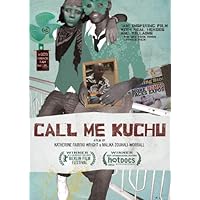
The critical recognition of the strong impact of the documentary "Call Me Kuchu," which was released on DVD in late September 2013," includes the prize for the best documentary in the Berlin Film Festival and selection as a New York Times Critics' Pick. It also has an almost unprecedented 97 percent rating on Rotten Tomatoes, which gave "Gone With the Wind" a 96 percent rating.

The following clip, courtesy of YouTube, of the trailer for "Kuchu" provides a sense of the quality behind the well-deserved praise.

The definition of "kuchu," which is a highly derogatory slang term for homosexual in Uganda, alone shows the defiance and courage of the openly gay, bisexual, lesbian, and transgender activists and ordinary folks around whom "Kuchu" centers regarding adopting that term as their own. This is even bolder than early activists in the United States using the pink triangle that the Nazi regime used to identify homosexuals in death camps as a symbol of pride.

The film and the Uganda campaign, which truly is a human rights efforts, primarily focuses on the incredibly righteous (but not self-righteous) openly gay dude David Kato. Kato grew up in Uganda, got out, and returned to fight for the right of him and every other homosexual and bisexual person in Uganda to love and build a life with the person of his or her choosing. He likely is not exaggerating in describing himself as the first openly gay man in Uganda.

Kato's accomplishments include establishing a village that is safe haven for homosexuals, who face intense hatred and physical harm merely based on their sexual orientation. A very festive drag queen contest in that community provides a twist on the title of the Kirstie Alley sitcom "Veronica's Closet."

The intense and scarily extreme anti-homosexual campaign in Uganda that "Kuchu" depicts is a highly disturbing wake-up call to those of us in the U.S. in an era in which "Don't Ask Don't Tell" is a thing of the past and the U.S. Supreme Court has greatly expanded the rights related to same-sex marriage. Another thought that "Kuchu" evokes is that Uganda has more than enough more serious problems to address than who men and women are doing in the privacy of their own homes.

The lesser of two evils that the LGBT community in Uganda is facing in the period that the documentary covers is a story in a newspaper titled Rolling Stone, which has ABSOLUTELY nothing in common with the music magazine, that publishes the pictures and addresses of known homosexuals while advocating the hanging of them and every other homosexual. Needless to say, no one would want his or her picture on the cover of that Rolling Stone (Rolling Stone).

This newspaper article leads to a court case in which Kato and other activists seek to hold the publisher of the newspaper liable for the harm from that story. The fall-out from the publication includes physical attacks and several people having to go into hiding to avoid become a victim of that hatred.

The greater evil is an actual proposed bill before the Uganda parliament that sounds either like a joke or a plot device in a television or film drama. It calls for imprisoning homosexuals and people who fail to turn in homosexuals and death for "aggravated homosexuality." The definition of the capital offense includes repeated homosexual activity, which likely would cover two acts within one session between the sheets.

The scary anti-homosexual climate in Uganda and the broad wording of the law seriously make it seem that it encompasses a teenage boy who is perceived to look at his male classmates in the shower or a woman who has not married by the age of 25.

Another horrible aspect of this is that this law aggressively promotes sex purely for procreation in an area of the world that already has far too many people. An indirectly related funny scene has Kato commenting that condoms that he has received for distribution are too small, but the strawberry-flavored ones amuse him.

The propaganda that fuels the fire related to the proposed legislation includes (seemingly unsubstantiated) reports of widespread homosexual attacks on underage children. Even if those reports are accurate, the stupidity of that argument relates to an obvious course of action being either more strictly enforcing existing laws that protect children from any form of illegal sexual contact or devoting even a fraction of the energy and hatred directed at homosexuality toward a strict law that provides the protection described above.

On a more personal note, this hatred evoked  thoughts of an incident that occurred in the late '80s while walking back to the hotel from a Texas Rangers game while attending corporate training in Arlington, Texas. A colleague had placed his arm over my shoulder in a PURELY platonic manner, and I returned the gesture. Within seconds, someone in a passing pickup truck yelled "faggots." My response was to yell "it takes one to know one."

The mood got much darker when the truck immediately slammed on its brakes, and the lights indicating that the vehicle was in reverse came on. It was equally fortunate that there was a field for my group to run across and that the pickup driver chose to not pursue us.

I later learned that one man can place his arm over the shoulder of another man but that that man cannot return the gesture. My friend and I surely would have been jailed in Uganda under the proposed law.

Folks who are familiar with Kato's story already know that it does not end well. This outcome is always sad when someone is putting himself or herself out there for a just cause. In fairness to the Uganda government, it does not advocate the vigilante justice and seems to act responsibly regarding the matter despite the very hateful rhetoric related to the aftermath.

The final word regarding "Kuchu" is that it meets the criteria of a good documentary in that it informs, educates, provokes thought, and seem overall balanced. Worldwide critics are right in giving it positive reviews.

Anyone with questions regarding "Kuchu" is welcome to email me. I can also be reached on Twitter via @tvdvdguy. I will remind folks who do not keep a civil tongue both of the "rubber-glue" rule and that I will keep my eyes open for brake lights on pickup trucks.

Saturday, October 12, 2013

'Lost and Found:' Adorable Mega-Award Winning Animated British Film About a Boy and His Penguin

Product Details


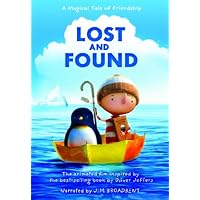
The DVD, which is being released on October 15, 2013, of the beyond-delightful animated short film "Lost and Found" further solidifies the theory that the Brits outshine Americans in all things television and film. British animation production house Studio AKA winning 61 international awards, including the 2009 BAFTA (a.k.a. British Oscar) for Best Children's Animation for the wonderful storybook style of "Lost and Found" further speaks to its awesomeness.

The perfect combination of elements partially described above make "Lost and Found" one of the few films about which it truly can be said that everyone from 2 to 102 will love.

Aside from the perfect animation with its ideal score and an incredibly cute and amusing story based on the children's book of the same name by this generation's Mother Goose Oliver Jeffers, "Lost and Found" has really good narration by English actor Jim Broadbent. Broadbent's numerous live-action credits include a role that supports a friend's theory that every British actor appears in at least one "Harry Potter" film.

Directly lifting the following description of "Lost and Found" from the website of North American distributor Entertainment One is not entirely attributable to laziness; the synopsis provided below simply captures the film very well.

"Once there was a boy, and one day he found a penguin at his door. The boy decides to take the penguin home himself, and they set out in his rowing boat on a journey to the South Pole. When they arrived, the boy discovered that maybe home wasn't what the penguin was looking for after all!"

Although Jeffers deserves due credit for writing a good read, he openly acknowledges that his tale is a "ripped from the headlines" story. In this case, a boy in Belfast Ireland took a penguin from a zoo and moved said waterfowl to his bathtub before this scheme was discovered. It is amusing that this incident led to an Opus. (Pun intended, and Google it millenials.)

Admitting to laughing out loud at the penguin's antics or to saying "aaawww" during a cute scene involving a flock of rubber duckies is not embarrassing; admitting to gasps and an "oh no" during some perilous scenes during our hero's sea voyage is a little embarrassing but divulged in the interest of expressing the captivating nature of the film.

This confession is from someone who the death scene in "Terms of Endearment" does not affect, and who typically responds with "gimme  a break" during "very special" television episodes. 

The following short clip, courtesy of YouTube, demonstrates why "Lost and Found" elicits such a strong response.

The facts that "Lost and Found" is only 24 minutes and can still be followed well with the DVD player on mute help make the inevitable marathon viewings by children bearable by their adult caregivers. Additionally, this intense enjoyment makes shelling out the Hamilton for the DVD well worth it.

The equally long special feature on the making of the film provides great insights into the technical and more creative aspects of this future classic that will give Wallace and Gromit strong competition for the hearts of children of all ages across the globe.

Anyone with questions or comments regarding "Lost and Found" is STRONGLY encouraged to email me. You can also find me on Twitter via @tvdvdguy.


Friday, October 11, 2013

'Psycho II' BD: Great Hybrid of Classics 'Psycho' and 'Gaslight'


Shout Factory's recent DVD and Blu-ray releases of 1983's "Psycho II" and 1986's "Psycho III" appropriately roughly coincided with the HBO premiere of last year's "Hitchcock," which provided a candid behind-the-scenes look at 1960's "Psycho." On a similar note, the big-screen premiere of "Psycho II" followed big-screen releases of remastered versions of other Hitchcock classics that included "Rear Window" and "Vertigo."

Housekeeping note number one is that Shout's October "The Price is Fright" sale that consists of a series of one-day markdowns of horror titles in its extensive and eclectic catalog MAY get around to these "Psycho" titles. Housekeeping note number two is that Unreal TV is going to review the Blu-ray release of "Psycho III" within two weeks.

Before discussing the many fine qualities of "Psycho II," it is worthy noting that the Blu-ray technology enhances this film, which pre-dates the era of high-definition, surprisingly well. It easily passes the "no glasses" test.

The following standard-definition clip, courtesy of YouTube, of the trailer for "Psycho II" also illustrates the intense enhancements in the Blu-ray version. This trailer also does a great job of providing a sense of the film without including any spoilers.

"Psycho II" provides cinephiles a very special treat by opening with the uber-classic shower scene from "Psycho." This is particularly awesome after obtaining additional insight regarding this segment from "Hitchcock." One note that "Hitchcock" omits is that the blood going down the drain is really chocolate syrup.

The story soon advances 22 years to a court proceeding that leads to releasing textbook "momma's boy" Norman Bates from the mental institution where he has been held since the incidents around which "Psycho" is centered. Getting our first glimpses of Anthony Perkins in that role and Vera Miles as murder victim Marion Crane's sister Lila Loomis, nee Crane, in her "Psycho" role is very exciting.

Lila's ongoing campaign to get Norman recommitted, a sleazy motel manager, expertly played by "NYPD Blue's" Dennis Franz, and various very creepy incidents that indicate that the past is repeating itself all hinder Norman's efforts to lead a normal life and maintain his mental health.

Unlike the hosts of "Mystery Science Theater 3000," Norman does not have "robot friends" to help him maintain his sanity. He does have Mary, played by Meg Tilly, a waitress whom he befriends and offers shelter soon after moving back into his famous house on the hill. In true horror film style, Mary is not what she appears to be on a few levels.

Like Hitchcock does in "Psycho," "Psycho II" director Richard Franklin largely relies on the unseen and unheard to create suspense. Even after some highly significant reveals, Franklin does an excellent job keeping the audience guessing.

One particularly memorable scene comes very close to literally dredging up the past. Further, the last few minutes of the film can be considered either the mother of all endings or the ending of all mothers.

The very special special features include great interviews with Perkins, Miles, and Franklin, and the film's trailer.

Anyone with questions or comments regarding any "Psycho" films is welcome to email me; you can also connect on Twitter via @tvdvdguy. Please be advised that my mother carefully monitors my communications with readers and gets upset when she considers them inappropriate. I now must go make her some tea.


Thursday, October 10, 2013

'Kavanagh Q.C.' Complete Collection: Part Two of Three Part Homage to a Great British Courtroom Drama

Kavanagh Q.C. Complete Collection DVD
As part one of this three-part review of  the complete collection DVD set of the spectacularly awesome British courtroom drama"Kavanagh Q.C." promises, this review focuses on episodes from middle sets in this incredible release.

Please refer to the earlier review to acquaint yourself with the exceptional aspects of the presentation of the set and more specifics regarding this appropriately understated program about a well-skilled London barrister, his typical upper-middle-class family, and his very human professional colleagues. One spoiler is that this set makes the PERFECT holiday gift for anyone who likes any form of U.S. or U.K. drama.

This series of reviews will wrap up with a look at the final episode of "Kavanagh."

Although watching 7 of "Kavanagh's" 27 roughly 90-minute episodes provided a good sense of this program, watching another seven for this segment greatly enhanced understanding what makes this series and its titular character click. It is unsurprising that fully understanding this character study requires knowing its subject better; a nice part of this is that this further increases both an appreciation and enjoyment of the program.

The range of Kavanagh's legal knowledge, courtroom skill, and willingness to literally go well beyond the extra mile for a client validates a belief of wanting him in your corner if you ever require a barrister.

The viewer also becomes increasingly aware that "Kavanagh" very sparingly uses the technique of playing background music to set a mood and has a perfect instinct regarding the appropriate length of a scene.

As part one of this review mentions, each of the nine DVD sets in the "Kavanagh" set collection cleverly focuses on a theme as opposed to a series (my people call them seasons) from the show. In true British style, these theme titles often possess multiple meanings.

The DVD set titled "Bearing Witness" may well be the best of a truly desert island quality group of sets.

The first episode in the "Witness" set has Kavanagh, who has recently undergone a major life transition, establishing a not inappropriately close relationship with his client. Said client is a Jehovah's Witness who faces a legal challenge to her decision to not allow a hospital to administer her 13 year-old son  a life-saving blood transfusion when we first meet her. Said witness then faces another courtroom proceeding related to the initial dispute. Kavanagh's involvement in the case leads to him ending up in a figurative hot seat.

Like every other Kavanagh episode and most good dramas, this episode educates viewers and makes them think without sacrificing any of the entertainment value of the show.

The second "Witness" episode pulls off the neat trick of presenting a plot that would be appropriate for a Lifetime Channel movie starring Valerie Bertinelli in a manner that meets "Kavanagh's" high standards. It also provides an interesting look at an alternate form of court.

Similar to the first episode in "Witness," this one begins with Kavanagh agreeing to appear in an Anglican ecclesiastical court to defend a priest who is facing being ousted from the church based on evidence of an affair with a married woman. This aspect of the story ends in a surprising manner only to have the woman face charges. In true "Kavanagh" style, the evidence regarding both intertwined legal matters is very circumstantial and ambiguous.

The third episode in this set evokes thoughts of a similar episode in the equally awesome but much more lighthearted British dramedy "Kingdom," which Unreal TV reviewed a few months ago. Both episodes revolve around suspicions related to the sinking of a commercial fishing boat that is based in a small coastal English community.

The Kavanagh story centers around a claim against the owner of a semi-dilapidated trawler on which all but one hands are lost when it sinks. The twists include the entire town  (including the relatives of the drowned fishermen) standing behind the boat owner and openly showing their contempt of the visiting Kavanagh, who is prosecuting the claim. For his part, Kavanagh is following his unwavering commitment to discovering the truth.

An attempted government coverup, which is a theme in many "Kavanagh" episodes, adds to the drama.

"Hannibal's" Hugh Dancy guest-stars in the best episode in "Kavanagh's" "Previous Convictions" set. Dancy's perfect performance as a very scruffy but sincere and caring 20 year-old provides a sense of the star that he becomes.

In the case of Dancy's character, his previous conviction for arson is one indication of his guilt regarding a second fire a few years later in which his long-term girlfriend perishes. In true "Kavanagh" style, the evidence is circumstantial and the ultimate truths illustrate the harm related to reaching conclusions without knowing all the facts.

Another especially strong episode from "Previous Convictions" centers around reasonable doubt regarding the guilt of a now-government minister, played by Penelope Wilton of many productions that include "Downton Abbey" and "Doctor Who," for coercing a vulnerable 15 year-old boy to whom she owes a fiduciary duty to have sex roughly 15 years earlier. The dual convictions relate to the boy's criminal history and the minister's ideals.

The alleged victim regularly changing significant aspects of his story, the strong possibility that the police are using the evidence of the crime as a means to ruin the minister's career in retaliation for her prior investigations of improper police activity, and the impact of all the related courtroom activity make for a very strong story.

The best way to convey the superb quality of "Kavanagh" is to share that the intense glee on the arrival of the sturdy pinewood box containing that set has only intensified on watching the majority of that program's episodes. It truly is a "can't miss" collection.

Anyone with questions or comments regarding "Kavanagh" is highly encouraged to email me. You can also find me on Twitter via @tvdvdguy.


Wednesday, October 9, 2013

'Vivacious Lady:' Glamorous Ginger Rogers and Adorkable Jimmy Stewart Make Movie Magic

Vivacious Lady
The lesser-known film by George Stevens, who also directed the uber-classic "Woman of the Year" and many other TCM staples, "Vivacious Lady" deserves at least as much regard as those other movies. The back cover of Warner Archive's recent DVD release of "Lady" indicates that truly leading lady (and definitely not a tramp) Ginger Rogers deserves thanks for that film's quality for insisting on casting Jimmy Stewart as her co-star.

"Lady" opens with Stewart's incredibly adorkable small-town boy/botany college professor/everyman Peter arriving at the New York City nightclub where Rogers' Francey Brent performs. Peter's descent into decadent city life relates to a mission from his uber-conservative father/boss, played by Charles Coburn of too many classic films to try to choose one or two to mention, to find his bon vivant cousin Keith and return him to their small Bedford Fallsesque college town.

On finding Keith in said den of iniquity, Peter almost literally falls heads-over-heels in love with Francey. A truly whirlwind romance and rushed nuptials ensue. Certain fans of a VERY vaguely similar modern (but vastly inferior) film series would state that things get focked up when it comes time to meet the parents.

Peter and Francey enlist Keith in their subterfuge regarding postponing telling Peter's parents that they have not lost a son but have gained a showgirl. Circumstances that lead to Francey enrolling in Peter's botany class add to the ensuing hilarity.

The most memorable scene is definitely a cat fight that makes the once-a-year brawls between Linda Evans and real-life Charlotte Rae nemesis Joan Collins on the '80s prime time soap "Dynasty" look like a minor spat. The ultimate involvement of Morgan Senior greatly adds to the fun.

The following clip, courtesy of YouTube, depicts said feline fracas. It show as well that both kitties have claws.
The bonding (no pun intended this time) between Francey and her new mother-in-law is another great element of "Lady." Beulah Bondi, whose long career includes roles in the Stewart classics "Mr. Smith Goes to Washington" and "Its A Wonderful Life," does a perfect job portraying Mrs. Morgan and makes every audience member wish that she was his or her mom. Keith sums up that character's incredible kindness and suppressed independent spirit by stating "she used to be my favorite aunt until she married my uncle."

All of these elements combine in a way that making Stewart a chemistry, rather than botany, professor would have been very appropriate. Peter has a wonderful older brother/younger brother style relationship with Keith; the audience truly can understand how Rogers immediately captivates Stewart and how his overall sweet innocence and his incredible love for her wins her over. Further,the playful and loving nature of the Francey/Keith relationship is the model for any brother-in-law/sister-in-law bond.

This awesomeness extends to the anticipated but surprisingly executed happy ending.

The final academic evaluation of "Vivacious Lady" is that the excellent casting and above-average performances demonstrate this it deserves its long tenure. It does not fully illustrate Stewart's potential but is well worth 90 minutes of a viewer's time.

Anyone with questions about "Lady" is welcome to email me. You can also follow me on Twitter via @tvdvdguy.


Tuesday, October 8, 2013

'After Earth:' Where There's a Will, There's a Way


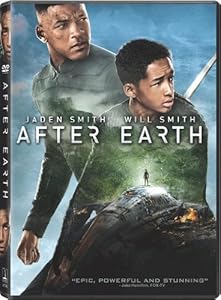
Rapper turned sitcom star turned blockbuster scifi action-adventure hunk turned dramatic actor turned proud papa of a thespian son Will "Fresh Prince" Smith formally announcing general plans to stop making big-budget scifi flicks and specific plans to pass on a sequel to his mega-hit "Independence Day" appropriately roughly coincides with the October 8, 2013 DVD  and Blu-ray release of the Smith and Son scifi film "After Earth."

One major theme of "Earth" is literally and figuratively handing over the futuristic style of the cutlass from Will's General Cypher Raige to Jaden's essentially washed-out space cadet Kitai Raige.


"Earth" is a joint "joint" between the Smith clan and "The Sixth Sense" auteur M. Night Shyamalan. Will wrote the story, wife Jada Pinkett Smith and her brother Caleb are producers, and Will may have also catered craft services and raided his closet for the costumes. Shyamalan directs, but this is not your father's Shyamalan film.

The following clip, courtesy of YouTube, is of "Earth's" trailer; it provides a good sense of the film but is unusually full of spoilers.


The plot and themes of "Earth" are nice homages to classic films and shows of the past. The overall pro-environment message proves what fools these  mortals be by not properly caring for our planet to the extent that it becomes uninhabitable. This development and some dialogue evokes strong thoughts of Greg "Johnny Bravo" Brady's mid-70s hit "We Can Make the World a Whole Lot Brighter." A specific reference to "God made the land" in "Earth" gets the same lyric sung by Marcia Brady stuck in your head.

Of course, the Brady kids and Al Gore are hardly the only ones to warn of us of the likely catastrophic consequences of not being environmentally responsible. Several films over the past few years have shown us the consequences of overpopulation and wasting natural resources.

The "After Earth" solution to making our planet toxic is to create a Starfleet-like ranger corps that evacuates the entire population to a planet in a galaxy far far away. The scenes in which said populace board spaceships will prompt cries of "I said lunch, not launch" among fans of '70s-era Saturday morning kids' show. Later scenes will bring "The Land of the Lost" starring dreamy Wesley Eure to mind.

On an equally juvenile note, it is assumed that the rangers first probed Uranus and discovered that that was uninhabitable.

This relocation element evokes thoughts of the scifi film "Starship Troopers," in which Neil Patrick Harris co-stars, in that the new planet is swarming with vicious huge vaguely spider-like creatures who find human flesh very tasty. Will's Cypher is a (presumably planet-wide) hero who is a master at exploiting the one weakness of the creatures, which are known as Ursas.

Cypher announcing near the beginning of "Earth" that he is retiring after one more mission evokes a flood of memories of television shows in which the veteran cop/soldier/drug dealer/hit person/star plans to give it one more go before calling it quits only to have things go horribly awry. It is also possible that Smith, whose career began in his teens and has lasted roughly 30 years, has decided that he is too old for this stuff.

The inevitable crisis occurs while the stingray-appearing spaceship on which Cypher and Kitai are traveling crash lands on the now-quarantined earth in a scene that is very reminiscent of the highly lauded first scene of the television series "Lost."

The focus of the film then more fully shifts to Kitai as a badly injured Cypher essentially must take a desk job and do his best to support Kitai's field work. This evokes thoughts of a few plots of "Star Trek" series in which an intrepid character must rely on a less-heroic colleague to complete a tough trek up a mountainside or other arduous task to save both of them.

In the case of Kitai, his journey is very reminiscent of a traditional rite of passage. This includes regular flashbacks of a traumatic event from earlier in his childhood that he is struggling to overcome. One especially interesting aspect of all this is that he uses a real classic novel for inspiration.

The overlapping elements of reality and fiction in "Earth" and its ambitious agenda make it a tough one to evaluate.

Trying to make a blockbuster scifi summer movie without giving it too much of a blockbuster film and adding in attempts at an environmental film and a coming-of-age drama is tough. This is somewhat comparable to if the creators of "Ghostbusters" had decided to deeply explore the reasons for Peter Venkman's Peter Pan syndrome and made his interesting job as an exterminator of supernatural beings a relatively comic minor subplot.

Will clearly is toning down his usual charm and wit to shift the focus on his son, and Jaden just as clearly is trying to prove that he is ready to take over the family business. Two obstacles are that the audience likes funny/goofy/guns blazing Will and that Jaden honestly may have had his stardom handed to him a little too early and easily.

It seems that Jaden's dad has engaged in nepotism without doing more to mentor him. We simply have not seen that Jaden is ready to move into the corner office, and he does not seem to have gotten that memo.

Having stated that, and everything else in this review, this movie may resonate more with the demographic of adolescent males of which Jaden is a member and to which the "Earth" is directed.

Moving onto the DVD special features, "A Father's Legacy" explores the themes discussed above, another special feature discusses the great scenery of the earth scenes, and a third has Jaden announcing the winner of a contest to design a rover that can explore Nova Prime's surface. This review will not ruin the official announcement, which is coming later today. It will send the winners sincere congrats and a heartfelt "you go!"

Anyone with questions or comments about "Earth" is welcome to email me. You can also find me on Twitter via @tvdvdguy.


Monday, October 7, 2013

'The Working Man;" Awesome 80 Year-Old Film That Could Timely Be Virtually Recreated Today

The Working Man
Warner Archive's DVD release of the 1933 George Arliss/Bette Davis comedy "The Working Man" is the most recent example of Archive making a "where have you been all my life" film available to cinephiles. More amazingly, at least 95 percent of the dialog and scenes could be recreated and released on the big screen today. Only a few Prohibition-related references would need to hit the editing room floor.

The underlying plot is that Arliss plays shoe mogul John Reeves, who has had a long-standing civilized competition with a rival shoe company owned by the man who married the love of Reeves' life. The middle-aged Reeves is still sharp but is not well respected by his nephew who Reeves has brought into the business.

The events early in the film include Reeves learning of the death of his rival, whose wife had previously passed away, and Reeves having a chance encounter with said rival's bon vivant "adult" offspring while on vacation. Davis does an awesome job playing the hubba hubba quasi level-headed daughter Jenny; less well-known actor Theodore Newton does just as well as the more immature and reckless son Tommy.

The following preview clip, courtesy of YouTube, depicts the truly life-changing meeting described above. It also shows why Davis became such a star and makes one wonder why Newton's career never really took off.
In true screwball comedy fashion, Reeves ingratiates himself into the kids' personal and professional lives and even moves into their home without revealing his true identity. His altruistic purposes are to ensure that the young ones become more productive members of society and do not ruin the business that their father worked so hard to build.

Reeves becoming more involved in the rival business takes many amusing twists, many of which involve a sense of attending his own funeral in that he is present when people at that company refer to aspect of Reeves' business.

The live theater aspect of this film that is typical of movies of the day add to the enjoyment of the well-written tale and excellent portrayal of that story. The literally last-second developments following a perfectly satisfactory ending also adds to the theatrical feel of this movie.

"Man" is also terrific because each scene is well staged, and the director uses clever techniques. A slow flipping of business ledger sheets, rather than ripping calendar pages off the wall or a clock rapidly advancing, marks the passing of time. Further, having two doors to offices and other rooms is well utilized.

In this age in which looks or general personas often trump skill regarding casting decisions, it is additionally nice to see performers actually act. After a while, one forgets that he or she is watching Bette Davis until a scene evokes thoughts of the lyric "all the boys think she's a spy" from the song "Bette Davis Eyes."

Additionally, both academic studies and less-academic reality shows demonstrate that the  story of  "Man" is still incredibly relevant by teaching us that family businesses often do not last beyond the third generation because the children and/or grandchildren of a company's founder typically are not adequately hungry and/or ambitious to make the effort that running a successful enterprise requires.

The bottom line regarding "Man" is that it shows how to succeed in the film business by really trying. It is a good choice for satisfying a craving for a classic film, and one can only hope for a long overdue remake.

Anyone with questions regarding "Man" is welcome to email me; I can also be found on Twitter via @tvdvdguy.


Saturday, October 5, 2013

'Tarzan' S2: Lord of the Jungle with Elyan

Tarzan: The Complete Second Season
A well-respected and liked TV expert sums up the two-season 1966-1968 action-adventure series Tarzan, the second season of which Warner Archive recently released on DVD, perfectly by stating that it is both serious and campy. This makes this series starring Ron Ely appealing to those of us whose inner child likes pure action-adventure and to the more juvenile among us who prefer our escapist shows with a slice of cheese.

The overall "Tarzan" lore is that he is a well-educated aristocrat who rejects civilization to live in the jungle to fight for truth, justice, and the African way. His "super-powers" consist of above-average strength, extraordinary endurance, an ability to swing from vines and otherwise travel through treetops, and a command of brawling skills that would have made Ely a strong contender for the lead in the Patrick Swayze film "Roadhouse" if Ely had been younger when that movie was made.

Tarzan also possesses his legendary yell, which legendary comic Carol Burnett also mastered, but uses it sparingly in the series.

Each hour-long episode typically begins ala "Gilligan's Island" of the same era with the guest star or stars of the week showing up in the jungle and causing trouble. These include tomb raiders who do not possess an iota of Angelina Jolie's attractiveness, poachers out to capture or kill jungle animals, and run-of-the-mill thieves who pilfer provisions that are donated to the native villagers.

The following clip, courtesy of YouTube, is from the episode with the stolen supplies. This segment provides an excellent sense of the mix of action-adventure and camp that make "Tarzan" a classic.
 
Tarzan's constant companions are Cheetah the chimpanzee and orphaned native boy Jai. Like the older but still similar Jimmy Olsen of the '50s "The Adventures of Superman," "Tarzan" episodes often feature the bad guys capturing Jai.

Jai is also featured in an episode in which his pet baby elephant is granted a trial related to a charge that the elephant killed a man. This is reminiscent of a similar trial of Ben the bear on the '70s action-adventure series "The Life and Times of Grizzly Adams."

The second season premiere titled "Tiger, Tiger" is a another perfect example of the mix of action-adventure and camp in "Tarzan." The oft-repeated (and accurate) observation that "there are no [wild] tigers in Africa" is amusing and provides a reference for occasions on which something impossible is asserted. This will come in handy if someone states that an Adam Sandler movie won an Oscar.

There is in fact a tiger in Africa in this "Tarzan" episode. His presence is scaring the native villagers with whom a visiting engineer, played by James Whitmore, is trying to negotiate regarding a planned irrigation system. However, the tiger is the true guest star.

A now apparently removed YouTube video shows Ely recently describing the famous scene in which he and the tiger wrestle. Ely does have the eye of the tiger and enjoys the thrill of the fight but does not assert either that he is a warlock or that he drinks the tiger's blood ala Carlos Estevez. One warning is that the slightly prolonged telling of the tale evokes mild thoughts of "Mom, Grandpa's doing it again!"

Another amusing moment comes during the truly awesome two-part episode "The Blue Stone of Heaven." This one has Tarzan help a team of archaeologists, lead by a character played by "Ben Casey's" Sam Jaffe, locate said stone in a sacred burial city. A group of thieves who are seeking to loot the site of artifacts and valuable natural resources is a known threat from the start. A more unexpected foe is revealed at the end of part one and will have every viewer rushing to pop in the next disc to see the conclusion.

Said conclusion could be titled "African Idol." It depicts the intense power of superstition in less sophisticated cultures, shows how more "sophisticated" people can exploit that fear, and threatens Tarzan with a fate that indirectly comments on his sexual history or lack thereof.

The screaming voice of the inner 12 year-old demands referring to the aforementioned amusing moment in the "Stone" episode that indirectly would make "Romancing the Stone" an apt title. It quite clear that filming one scene is especially exciting to the loin-cloth clad Ely. That same adolescent voice will not accept refraining from sharing that the cast of that episode aptly includes an actor named Chuck Wood.

The "Rendezvous for Revenge" episode is one that explores the common "Tarzan" theme of seeking arch-nemesis style vengeance against the titular character for his role in that person's downfall. This one is particularly campy fun and includes over-the-top chases and a genuine cliffhanger.

Another two-part episode titled "The Four O'Clock Army" is one of the more serious offerings. It depicts government officials facilitating modern-day slavers raiding villages and burning them after capturing their human cargo. The government's failure to act and the horrendously despicable slavers targeting the village in which teacher Charity Jones, played by the truly great and very recently deceased Julie Harris, is educating Jai prompts Tarzan to action.

The impending threat creates a conflict between Jones and retired British officer Basil Bertram, played by "Bewitched's" Maurice Evans. Jones advocates cutting and running, and Bertram wants to stand and fight.

The first part ends with the slavers arriving, and the second part deals with the efforts to shut them down. Despite the above-average level of seriousness in this episode, a scene in which a para-sailing Tarzan is smoking a cigar and lobbing dynamite sticks rivals the tiger wrestling scene as one of the best of the season if not the series.

Other great moments of "Tarzan's" second season include the singing group "The Supremes" playing nuns and real-life mother and son Helen Hayes and James "Danno" MacArthur playing a mother and son.

The inner-child screaming demands to "wrap it up Grandpa" require summarizing "Tarzan" by stating that its appeal includes decent narratives of the conflicts between the Western world and African culture in much the same way that the recently reviewed thoroughly awesome "Nichols" takes an enlightened view of native American/Caucasian conflicts in the period in which the wild west is fading. It is also nostalgic fun for fans of the Tarzan character.

Anyone with questions or comments regarding "Tarzan" is welcome to email me. I am also reachable via Twitter through @tvdvdguy.


Friday, October 4, 2013

Savannah: Its Interesting Because Its True

Savannah (Widescreen)
On the surface (pun intended), the biopic "Savannah" about a southern gentleman attorney turned rogue duck hunter is an above-average Hallmark Channel style film. Scratching the surface of this movie that depicts river life in Savannah, Georgia reveals considerably more depth.

Folks who relish a copy of the recently released DVD/vudu digital version of this film from ketchup entertainment can only acquire it from their cyber or neighborhood Wal-Mart.

The interesting stories, the awesome scenery, and the talented cast all contribute to a quality film that is consistent with Wal-Mart's stated emphasis on traditional family values.

The following clip, courtesy of YouTube, that ketchup uploaded conveys much of what makes "Savannah" an entertaining wholesome production.


Jim Caviezel of numerous great shows and films that include "The Passion of the Christ," "Person of Interest," and the AMC remake of "The Prisoner" stars as Allen. Bradley Whitford of "The West Wing"  "Studio 60 on the Sunset Strip" and currently "Trophy Wife" plays Allen biographer Jack Cay. There are many other notable names, but the late Hal Halbrook steals the show as a judge who runs a not-so-tight courtroom and is more interested in justice than the law.

The equal centers of "Savannah" are Allen, who rejects his family's wealth and social standing in the early 20th century to spend his time hunting water fowl with his BFF Christmas Moultrie, and Cay. Cay grows up hearing of the exploits of Allen from Moultrie and writes those memoirs in the '50s.

The friendship between Allen and Moultrie alone makes a good film; Moultrie is born into slavery during the Civil War and obtains his freedom when that conflict ended. Allen's family owns a plantation during that period.

Allen's uncle hires Moultrie as a river guide when Moultrie is roughly 10 years old; Moultrie subsequently forms his informal partnership with Allen.

Allen not only openly defies what he considers the unreasonable hunting laws that interfere with his business and personal freedom but lobbies for changes to that legislation. His natural charm and his eloquent writing and oratory skills that likely related to his legal training help him make his case.

Cay's story revolves around events in 1954 in which he tries to help a now-elderly Moultrie accept that the land on which the rustic cabin that had been his life-long home had been sold. Moultrie is understandably resistant to moving, and Cay understands the need for gentleness.

"Whatever happened to" descriptions that appear during the closing credits of "Savannah" provide more insight into the three main characters.

For his part, Cay's relationship with Moultrie is reminiscent of the now-banned 1946 Disney Film "Song of the South." Just as Johnny learns entertaining life lessons from visiting former slave Uncle Remus in Remus' cabin, young Cay learns all about the respect for nature and other values related to Allen's exploits from Moultrie. The similarities end there in that Moultrie does not share Remus' generally subservient "Uncle Tom" nature.

The element of Allen's romance with the wealthy and class conscious Lucy Subbs, played by Jamie Alexander of "Kyle XY," show the true power of love. She sticks by her man through his heavy drinking, outrageous antics, and even bursts of anger directed at her. This evokes thoughts of the mutual tolerance that can characterize our own romantic relationships.


Anyone with questions or comments regarding "Savannah" or "South" is welcome to email me. I am also on Twitter via @tvdvdguy.


Thursday, October 3, 2013

'Kavanagh Q.C.' CS: One of the Best Ever Complete Series Sets


Because the epic quality of the 17-disc complete series DVD set of the thoroughly awesome British legal drama Kavanagh Q.C. deserves equally epic coverage, Unreal TV will run three reviews of the 27 roughly 90-minute episodes in this forum. Additionally, there is an excellent chance that this year's "Black Friday" list of the best DVD sets of 2013 will feature this release.

This first review provides background information on "Kavanagh," the exceptional quality of the DVD set that is comparable to only two sets in a collection of 1,000s of sets that have been amassed over seven years, and the first seven episodes in the DVD set. The second review will discuss episodes from the middle portion of the set, and the third and final review will round out the series with a discussion of "Kavanagh's" final episode.

The incredible quality of every aspect of the 1995-2001 six-series (my people call them seasons) "Kavanagh" itself proves once again that British television programs kick the arse of their equivalents on this side of the pond. Chief Inspector Morse, who has his own awesome complete series DVD set, himself John Thaw plays middle-aged and middle-management London barrister James Kavanagh whose still fairly mild family dramas with the exception of a cancer scare often are more intense than the criminal and civil (or mix thereof) cases that he ably either prosecutes or defends against.

In reading Thaw's IMDb profile for these reviews, it was sad to learn that he passed away a year after finishing "Kavanagh." The one bright spot was that his last major project was such a success.

Rather than featuring quirky and/or super-model appearing characters, B and C List guest stars, or "ripped from the headlines" plots, "Kavanagh" simply told interesting tales of legal disputes and the overall ordinary stories of the legal professionals who represented the clients around whom those conflicts centered.

Kavanagh's roughly 20-year marriage to wife Lizzie was generally happy and mostly free of the intense drama (at least in the first seven episodes in the DVD set) that characterizes many such unions on American shows. Some straying occurred, a clash of careers developed, and arguments about their teen kids flared, but the couple took a good long-term view of their relationship. It typically seemed that they had been together a million years and bet that they would be together for a million more.

Kavanagh's colleagues indulged in mild (and instantly regretted) sexual harassment, competitive cricket playing, and other vanities that seem to increase with age. However, this is all mellow and no one takes a swan dive down an elevator shaft (at least in the first seven episodes of the DVD set.)

The most notable aspect of the complete series DVD set is the very sturdy pinewood box with brass hinges and the name of the program engraved in the top that houses the nine sets in the collection. This receptacle looks like a good quality cigar box and is prominently displayed in a spot that even a wooden replica of a cage that houses a complete series DVD set of the Irwin Allen '60s scifi camp classic "Land of the Giants" did not earn.

Further, our good friends at BFS Entertainment cleverly title each DVD set of "Kavanagh" according to the theme of the episodes. Examples include the "Nothing But The Truth Set" and "Diplomatic Baggage" set that are the subject of this review. Although this places some episodes out of order, it facilitates picking a favored theme and does not hinder following the plot.

The "Truth" set does consist of the four episodes from the first series, and the very first offering from 1995 is awesome if only for featuring young Obi-Wan "Ben" Kenobi himself Ewan McGregor as a uber-hunky and charming labourer who Kavanagh defends against a charge of raping the unhappy housewife at the home where McGregor's character is working.

The facts that the labourer and the housewife had sex was undisputed and that the circumstantial evidence of guilt and innocence could be very reasonably argued in favor of either theory made this story very compelling. Additionally both the uber-awesome McGregor and the actress who played the housewife portrayed their roles very realistically without resorting to melodrama.

It was also nice to see Kavanagh treat this case as just another task and not resort to last-minute drama in the court proceedings. Further, the jury deliberations and the outcome seem reasonable. The twists at the end, regarding which Kavanagh remains awesomely stoic, are the cherry on this genuine treat of an episode. It is difficult to imagine that this episode will not hook anyone on "Kavanagh."

The following clip, courtesy of YouTube, has SPOILERS GALORE!!!!!! and is a nice reel of  some of McGregor's scenes and the overall great tone of "Kavangh." It truly should not be watched unless you want to see virtually every critical scene in the episode.

The second episode of the series follows the same theme and includes a wonderfully subtle reference to the '60s prime time animated series "Top Cat." In this case (pun intended), an arguably over-zealous member of a neighborhood watch group indisputably runs over a juvenile delinquent whom he was pursuing. The dispute, with the same type of ambiguous circumstantial evidence that is a "Kavanagh" staple, relates to whether the driver intended to hit the pedestrian.

The stakes in the episodes that comprise the "Diplomatic Baggage" set are higher than the group in "Truth." The first one finds the daughter of the newly appointed British ambassador to Austria on trial for killing a visiting Austrian journalist. The interference of British government officials regarding the related quests for the truth and justice add a nice touch of intrigue and conspiracy to this one. It also ends on a note that creates doubt regarding whether justice is served.

The second "Baggage" episode deals with luggage of the familial variety. The murder suspect in this one is the step-son of a "legitimate businessman" with known involvement in underworld activity.

The issues in this episode include the reliability of the testimony of a witness who is not only financially gaining from her testimony but has a perjury conviction regarding an unrelated case and additionally is being pressured to not testify in the current case. The twists at the end of this one truly come out of left field and show how strongly fear can motivate someone.

The final "Baggage" episode has Kavanagh packing his valise to help in a death-row appeal in Sunny Florida. This episode is filmed in that state roughly 15 years before the "Doctor Who" gang travel here to film a widely publicized episode. No, Kavangh does not have a creepy encounter with someone in a vintage NASA spacesuit.

This episode does a nice job exploring racism, despicable political corruption and other problems associated with the American legal system.

The final verdict regarding "Kavanagh" is that it accomplishes the great feats for any television program of entertaining, educating, and prompting intelligent conversation.

Anyone with questions or comments regarding "Kavanagh" is welcome to email me. You can also contact on Twitter via @tvdvdguy.


Wednesday, October 2, 2013

'Sex Kittens Go to College:' Topless R-rated Higher Education Hi-Jinks

Sex Kittens go to College
The first response to the risque 1960 sex farce, which is a recent edition to Warner Archive's highly eclectic DVD catalog that includes a Blu-ray set of the first season of "The Mentalist," "Sex Kittens Go to College" is that it could have been titled "Mamie Does Mayfield" in reference to "Kittens" star Mamie Van Doren and the later thoroughly awesome Dexter Riley Disney films that starred Kurt Russell as a Mayfield College student. As a bit of trivia, VanDoren does take her name from the old lady of Ike "D-Day" Eisenhower.

Both "Kittens" from classic B-movie king Albert Zugsmith and the Dexter Riley films feature campus-themed mayhem, including plot lines involving super computers, have enough B-List actors for three episodes of "The Love Boat," and include bumbling dim-witted gangsters. One difference is that the Disney films lack the topless dancing segments that the international version on the "Kittens" DVD include, and the then-dreamy Russell does not even appear shirtless.

The antics in "Kittens" immediately begin with a frantic scene accompanied by the catchy but bizarre theme "Sexpot Goes to College" by Conway Twitty, who performs in the film. You can dance to the tune, the lyrics are appropriate, but the bizarre element is that Twitty sings a taunting tone that is much more appropriate for sentiments such as "George likes Mathilda."

The aforementioned George is George Barton, played by dreamy Martin "Marty" Milner of the television series "Adam-12" and "Route 60." Barton is the public relations officer for Collins College, which has just hired the beyond-brilliant Dr. Mathilda West to head its science department. '50s bad girl Van Doren plays West, whose first name very well could have been Mae.

The aforementioned super-computer, S.A.M. Thinko, is responsible for this hiring decision. Thinko, which is played by Westinghouse robot Electro, makes the choice based on West's credentials; college officials blindly accept that conclusion without even meeting West.

West turns out to be a dazzling glamorous blonde who is not shy about shaking things up her colleagues or her students with her outrageous teaching methods and highly flirtatious style. Just about every male in sight becomes hot for that teacher. Additionally, the audience soon learns of West's secret past that jeopardizes her standing at her new job.

The following clip, courtesy of You Tube, is of the scene in which Easterns meet West. It provides a good sense of Van Doren's awesomeness in the role and the spirit of the film.
 

Tuesday Weld, fresh off her exceptional stint playing opposite dreamy Warren Beatty on the spectacular sitcom "The Many Loves of Dobie Gillis" plays a junior sex kitten who is very much like Weld's Thalia Menninger on "Gillis." Weld's coed Jody has just landed the highly-sought after football star Woo Woo Grabowski, played by Norman "Woo Woo" Grabowski, only to have West's supposedly professional interest in getting Grabowski more comfortable around the fairer sex threaten the new romance.

Brigitte Bardot's sister Mijanou rounds out the litter of sex kittens as an exchange student studying human sexuality. Her involvement is comparable to Sean Connery's brother Neil making the aptly named "Bond" clone film "Operation Kid Brother."

In addition to stirring up Woo Woo and tempting her married male colleagues to scratch their seven-year itches, West's pin-up looks and independent thinking endanger a pending large donation from wealthy college benefactor "Admiral" Wildcat MacPherson. Former child actor, Coogan's Law prompter, and future Uncle Fester on "The Addams Family" television series Jackie Coogan plays MacPherson.

The gangsters add to the chaos by coming on the scene to seek out the previously unseen "Sam" Thinko, whose knack for picking winning horses is cutting into their boss' profits. This quest involves said lawbreakers into the hi-jinks related to West joining the faculty.

The final grade regarding "Kittens" is that this B-film earns a very appropriate B. It is a great example of quasi-alternative "naughty" humor of the era but has a few slow spots, does not have quite as much narrative cohesion as hoped for, and does not stand the test of time quite as well as other classics of all genres from Warner Archive.

One does not expect "The Computer Wore Tennis Shoes" or "Now You See Him. Now You Don't" from Zugsmith or Van Doren, but one hopes for a little more appeal even at the expense of a little less sex.

Anyone with questions or comments regarding "Kittens" is encouraged to email me. I can also be found on Twitter via @tvdvdguy.


Tuesday, October 1, 2013

'Nichols:' Perfect Bridge from 'Maverick' to 'Rockford' for Garner

Nichols: The Complete Series
Discovering the exceptional in every way 1971-72 24-episode Western dramedy "Nichols" through the recent Warner Archive complete series DVD reveal is an ideal example of the awesome surprises that make reviewing DVDs worthwhile.

No surprise exists regarding the multiple clever concepts of this show luring James Garner,  who plays a highly reluctant indentured local sheriff who sorely needs all the support that he can get, back to television after making "The Great Escape" and many other films in the nine years following his lengthy run on the classic Western "Maverick."

Series creator and writer Frank R. Pierson, who won the Oscar for Best Screenplay for "Dog Day Afternoon," came up with the perfect show for the era in which the networks were transitioning from rural comedies, such as "Green Acres" and "The Andy Griffith Show," and traditional Westerns to more urban and modern-issue oriented programs.

Pierson sets Nichols in the fictional border town of Nichols, Arizona in 1914. The opening credits scene in which a motorcycle rider comes up on the heels of a man on horseback is the perfect image of this era in which horseless carriages are just beginning to overtake the more traditional ones. Further, this final frontier of the continental United States has the modern amenities of telephone service and electricity. These changes additionally prompt many townspeople to desire a more civilized way of life than they led in the era before those luxuries.

Garner plays Nichols the man, who is from the once prominent family for which the town is named. Nichols is an Army officer when we meet him; becoming weary of Army life in general and warfare specifically prompt him to retire with dreams of living the good life where his family enjoys at least the same prestige as much of Massachusetts still grants the Kennedys.

The harsh reality that greets Nichols is that his family's fortunes and its members have both vanished. Things rapidly go from bad to worse when obtaining a debt that he cannot repay forces Nichols to become the town's sheriff in much the same way that repaying funding for medical school requires that "Northern Exposure" character Dr. Joel Fleishman spends several years treating the oddball citizens of Cicely, Alaska roughly 20 years after "Nichols" airs.

Also, like Fleishman, Nichols continues amassing the debt that makes him the town's indentured civil servant. "Nichols" not lasting long enough for that character to work out that period of servitude will disappoint everyone who watches this awesome rarely-seen series.


In an apparently intentional nod to another great CBS series, Nichols takes a cue from Sheriff Andy Taylor of "Griffith" in refusing to carry a gun. The difference is that Nichols is more cynical than Taylor in reasoning that he will feel obliged to use a gun if he carries one and does not consider very much to be worth killing for.

The great supporting cast also adds to "Nichols" appeal; Margot Kidder of the '70s and '80s "Superman" films does a great job playing  free-spirited wild-haired crazy-eyed barmaid Ruth decades before Kidder temporarily went feral.

The playful flirtation/friendship between Ruth and Nichols is a great element of "Nichols," and a scene between them in the pilot is one of the series' best moments. Ruth asks Nichols if he can think of a way for a woman to earn a living in 1914 other than being a nurse or a teacher. Nichols responds by flashing Garner's trademark awesome smile and asking "legally?"
 
It is also fun to see Stuart Margolin, who plays the sleazy opportunist/lead character's good buddy Angel on Garner's later series "The Rockford Files," as sleazy opportunist/lead character's good buddy Mitchell on "Nichols."

Original "Dallas'" John Beck plays wealthy landowner/idiot and Nichols adversary Ketcham. The following clip, courtesy of YouTube, provides a good sense both of the Ketcham/Nichols relationship and the series' overall style.


Accomplished character actor Neva Patterson keeps Ketcham in line as his mother, who makes Granny of "The Beverly Hillbillies" look like a even-tempered Daughter of the American Revolution. Her chemistry with Nichols is the best of any character, and one of their many shining moments involves him asking Ma Ketcham if her visiting daughter who she wants him to meet is as much woman as Ma is.

The conflict mixed with mutual regard that characterizes the Nichols/Ma Ketcham relationship takes center stage in one of the series' best episodes, which also involves "Nichols'" common theme of white man/Indian (there was no such thing as native Americans in 1914 or even 1971) relations.

Early in the episode, Ma Ketcham forces Nichols to evict a man from his home and take most of his worldly possessions to help satisfy a debt that the man owes her. Ma Ketcham's response to Nichols' objections to taking the little that the man has to pay his wealthy creditor is that "business is business."

Nichols soon meeting an obviously well-educated Indian who most white men still view as an uneducated savage provides a chance for revenge. This man enlists Nichols' assistance evicting the Ketchams from land that the man states that the federal government granted his grandfather as a reward for serving as an indian scout. Nichols' response to Ma Ketcham's objections is that "the law is the law."

The scene in that episode in which Nichols and Ma Ketcham try negotiating a settlement that will avoid bloodshed is "must-see;" the episode's conclusion is even better. 

Another good episode with a similar theme involves an Indian man hunting a deer two weeks before the hunting season begins. the younger Ketcham's motives for seeking to enforce that law include a desire to shoot that particular deer himself. This effort to ensure that "the buck stops here" (of course pun intended) raises issues related to the conflicts between white man's and indian's laws and their incredibly different views toward nature.

Despite heavy competition from actors such as M. Emmett Walsh and "M*A*S*H's" William Christopher, character actor Lou Wagner earns the award for best guest star on "Nichols." His awesome portrayal of a quirky and psychotic mass murderer utilizes the same  highly entertaining oddball nature as Wagner brings to his largely silent role in the personal all-time favorite family comedy "Hello Down There" that Unreal TV reviewed several weeks ago.

The aptly named on many levels series' finale "All in the Family" is a perfect one for ending "Nichols" run if only for its shocking developments and being a textbook example of an episode that can serve as a season or series finale. This one opens with a confrontation between Nichols and one of the most ruthless adversaries that he faces in the series' 24 episodes.

The pre-opening credits segment ends with the fatal shooting of a main character, the first scene after those credits will create chills for Garner fans, the penultimate scene is somewhat predictable but still awesome, and the final scene brings the series full circle and pays homage to all great Westerns.

The "High Noon" conclusion regarding "Nichols" is that it truly has something for everything and is exactly the type of rarity that utilizes DVD technology well.

Anyone with questions regarding "Nichols" is welcome to email me. You can also find me on Twitter via @tvdvdguy.